
Strategic Path: Wearable Tech in the Workplace





Related Content

 The Intelligent Workplace™
The Intelligent Workplace™
The Operating Model for the Workplace of the Future
The vision is compelling: a future of work where spatial computing and the "enterprise metaverse" revolutionize everything from collaboration to training. With major players pushing devices like the Meta Quest for professional use, it feels like we're on the cusp of a new paradigm.
But if you feel a sense of déjà vu, you’re not alone. The dream of putting screens on our faces is decades old, and the path is littered with expensive failures. These aren't isolated incidents. They're symptoms of a persistent challenge I call the "Spectacle Barrier" - a fundamental friction that arises whenever a product requires users to wear glasses or a headset to unlock its value.
This barrier isn't just about technology; it's a complex web of human factors, ecosystem economics, and value-proposition gaps that are magnified in the corporate world. To understand the future, we first need to look at the past.
A Ghost in the Living Room: The Lessons of 3D TV
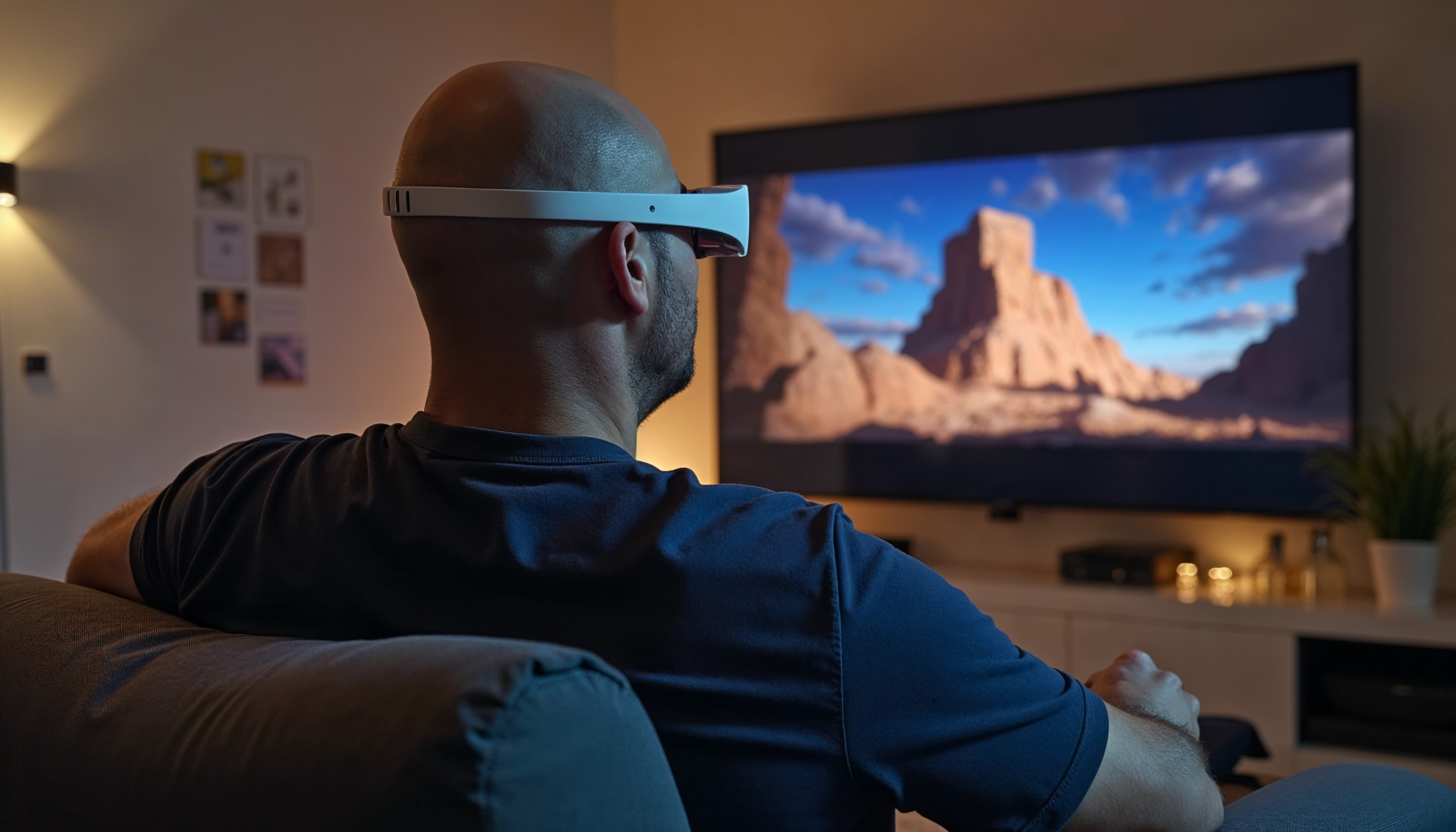
Remember 3D TV? Launched with blockbuster hype after Avatar, it was declared the next big thing in home entertainment. Within seven years, it was dead. Its collapse is the perfect case study for the Spectacle Barrier.
The "Glasses Problem" Was a Human Problem
The issue wasn't just the inconvenience of wearing glasses. It was the physical discomfort - widespread reports of eye strain and headaches. It was the social friction — isolating viewers and preventing the casual multitasking that defines home TV viewing. The technology demanded a rigid experience that didn't fit how people live.
The Ecosystem Collapsed
The hardware was expensive and fragmented. This led to a classic chicken-and-egg problem: consumers wouldn't buy the pricey hardware without content, and studios wouldn't produce content without a large audience. Dedicated 3D channels from DirecTV and ESPN fizzled out, starved of both.
The Value Wasn't There
The "wow" factor of a massive cinema screen didn't translate to a 50-inch TV. For most, 3D was a gimmicky add-on, not a revolutionary upgrade worth thousands of dollars.
The Modern Challenge: Three Strategies, One Barrier
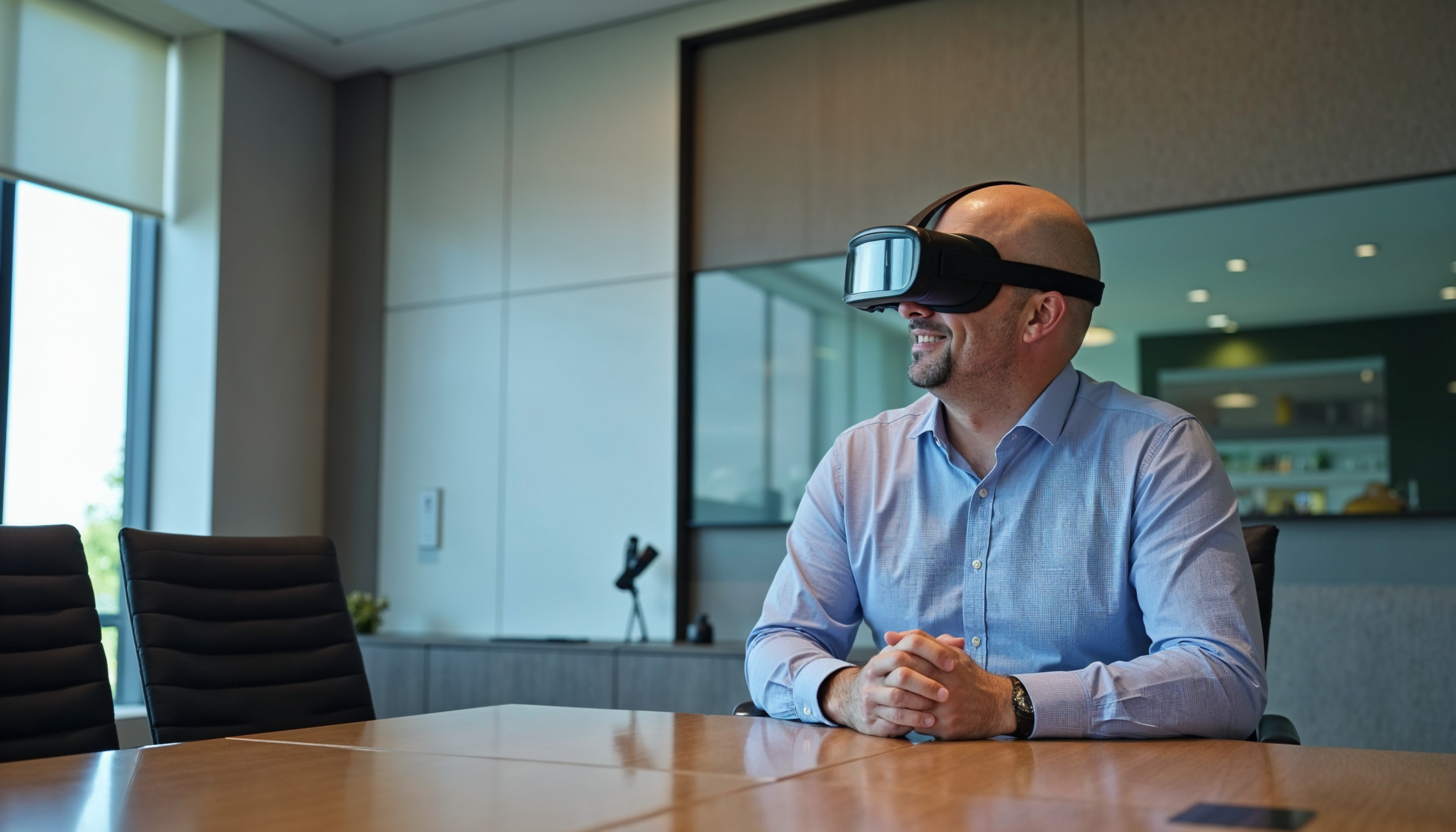
The same forces that doomed 3D TV are confronting today's wearables, but companies are now trying different strategies to break through the barrier.
The "All-In" Headset (Meta Quest)
This is the direct approach: build a powerful, immersive device and convince the world its value justifies the friction. But for enterprise use, the ergonomic wall remains. Current VR headsets are still too heavy for all-day wear, with Meta's own research pointing to a "Goldilocks Zone" of just 20-40 minutes. For most knowledge workers, they fundamentally break the highly efficient workflow built around a keyboard and monitor. The enterprise deployment and security challenges are also significant, making the Total Cost of Ownership (TCO) immense.
The "Socially-Acceptable" Trojan Horse (Ray-Ban Meta)
At the other end of the spectrum are the Ray-Ban Meta glasses. Here, the strategy is reversed. This approach prioritizes overcoming the social barrier above all else. By looking and feeling like a normal pair of sunglasses, they completely avoid the "Glasshole" effect that plagued Google Glass. The trade-off? They sacrifice true AR capabilities for simpler functions like a camera, audio, and an AI assistant. It's a "low-friction, low-initial-value" play, hoping to normalize face-worn tech and build an ecosystem before introducing more advanced features.
The "Holy Grail" of True AR (Meta's Project Orion)
The ultimate ambition, embodied by long-term research projects like Meta's codenamed "Orion," is to merge these two worlds. The goal is to create the power and utility of a full headset within the lightweight, socially-acceptable form factor of everyday glasses. These would be true AR glasses, capable of projecting persistent, context-aware digital information onto the real world. However, the technological hurdles - from miniaturizing processors and displays to solving battery life - are monumental. For now, this remains the stuff of R&D labs, not corporate purchasing orders.
Finding the Foothold: Where the Barrier Crumbles
Despite these challenges, the technology is not a gimmick. The Spectacle Barrier is only overcome when the value delivered is an order of magnitude greater than the friction imposed. Success isn't found in broad, horizontal applications (like virtual meetings), but in specific, vertical niches.
Think of the 3 D's: tasks that are Dangerous, Difficult or Distant and therefore Expensive.
-
Dangerous: Training an engineer on high-voltage equipment. VR provides a perfectly safe, repeatable simulation.
-
Difficult: Teaching a surgeon a complex new procedure. AR can overlay instructions and diagrams in their field of view.
-
Distant: Allowing a remote expert to see what a field technician sees, saving thousands in travel costs.
In these cases, the competitor isn't a Zoom call; it's a dangerous real-world scenario, an expensive physical prototype, or a plane ticket. When measured against these alternatives, the friction of a headset becomes an acceptable and highly profitable trade-off.

A Pragmatic Path Forward
The future of workplace wearables isn't about replacing the office. It's about strategically augmenting it. The path to adoption lies not in forcing everyone into a virtual world, but in identifying the specific, high-friction tasks that can be done radically better, safer, or cheaper with these powerful new tools. For leaders exploring this space, the question shouldn't be "How do we build an enterprise metaverse?" It should be, "What is the most dangerous, difficult, or expensive physical problem we can solve?"
Ready to navigate the future of work and find the right path for your organization? Let's build your technology roadmap together. Learn more at www.strategicpathways.asia.
Delivering this is a capability question. The approach is documented in the Intelligent Workplace.
Explore further: The Intelligent Workplace and Capability Delivery.

Marc A. Rémond is the founder of Strategic Pathways, a business advisory firm helping technology leaders design the business operating models required to scale.
With 25+ years of sales leadership across AV, UC, and enterprise technology, at Alcatel-Lucent, Polycom, and Barco, among others, he has built go-to-market strategies, channel ecosystems, and AI transformation programmes for global technology companies.
He is the creator of the Intelligent Workplace™, the 4W/4D/4C/4P Frameworks, the Strategic Diagnostic Engine, and the Human-AI Intelligence Charter, and the architect of the Synchronised Growth Architecture.
He is the author of EVOLVE-OR-DIE.AI: Leading in the Era of Human and AI Intelligence, available on Amazon and Apple Books, and the architect of the Intelligent Leader Programme, a twenty-eight module executive curriculum.
He runs two authority brands, an advisory practice, seven content pipelines, and the Intelligent Leader Programme as a single operator.
He writes on market expansion, sales execution, market narrative and workplace transformation at strategicpathways.asia and intelligentworkplace.ai.
Follow him on LinkedIn at linkedin.com/in/marcalexremond.
-
Xchange Advocates are recognized AV/IT industry thought leaders and influencers. We invite you to connect with them and follow their activity across the community as they offer valuable insights and expertise while advocating for and building awareness of the AV industry.



Please sign in
If you are a registered user on AVIXA Xchange, please sign in
-
-
-
Visual & Perceptual EffectsSensory Mismatch (VR Sickness)
Neuroplasticity & Adaptation
Attention & Memory Strain
-
-
Psychological & Behavioral EffectsEye Strain & Focus Fatigue
Depth Perception Alteration
Derealization & Dissociation
Reward System Overload
The Best way we can say that
Short-term AR/VR use can be engaging and even therapeutic (e.g., phobia treatment, training).
Long-term or heavy use may disrupt sensory integration, attention, and perception — exactly the “unsuitable for long term” experience which I have noticed (Alfa5 XR | The largest XR Sports center in the world).
Researchers recommend frequent breaks (every 20–30 min), limited daily exposure, and alternating with real-world sensory activities to keep the brain balanced.
When I was working more with VR in college and having people test out my projects, one of the most common issues I encountered was the headset not fitting others well and the dizziness that sometimes came from wearing it. Many of these newer products seem to be easier to wear and are being refined more, so I hope to see that continue.
I think the tactic that Ray-Ban Meta glasses are going with is interesting, more slowly introducing the concept in an already recognizable shell. And I love your point in seeing the value when we look at how we can use these technologies for tasks that are Dangerous, Difficult or Distant. I've also heard of cases where VR and AR were used in user space design to explore things like sightlines and viewing angles before an important installation, so eventually that could become more common. I'm curious to see how workplace wearables will continue to evolve!
Fundamental friction is a great way to capture that notion!