Mapping the Future: Projection, LED, and the New Language of Immersion
Projection mapping once transformed architecture into living canvases. In today’s LED-dominated world, has it become a lost art — or is it finding a new boutique role in immersive design?
Not so long ago, projection mapping was the star of the show.
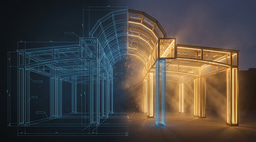
Whether lighting up centuries-old architecture or wrapping a stage in dynamic visuals, mapping felt like magic — a meticulous craft that blended light, geometry, software, and storytelling into something immersive and unforgettable. It took time, skill, and a sense of spatial poetry. Each surface offered a challenge; each mapping show, a moment of wonder.
For me, projection mapping was my first love in AV design. It was my entry point into this field: transforming buildings and walls into something completely new — not replacing them, but making them the canvas of the show.
I remember those early projects vividly: Countless events demanding creative solutions for unusual sizes, shapes, and surfaces. Moments where creativity, engineering, and a bit of fast thinking all came together — this was the essence of the work and what drew me into the world of immersive experiences.
But today, things look different.
From Ubiquity to Specialization
In large-scale events, concerts, and corporate shows, LED walls now dominate. Their flexibility, brightness, ease of deployment, and outdoor readiness have made them the default choice for many producers and designers. In this space, projection mapping — once everywhere — is now rare.
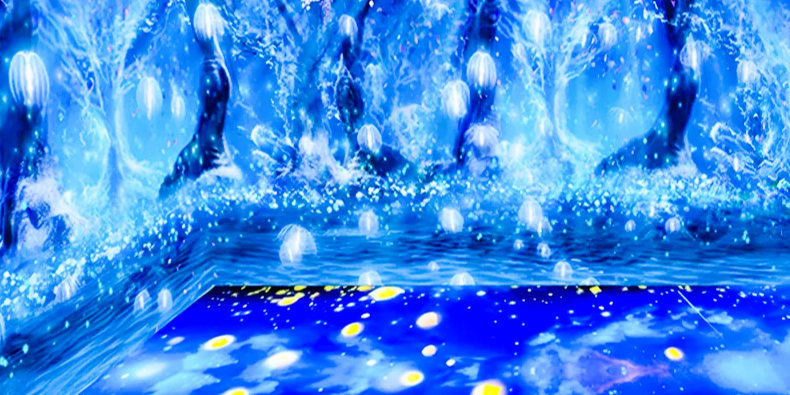
However, that doesn’t mean mapping has disappeared. Instead, it has found a new stronghold in immersive experiences:
Art installations
Digital museums
Experiential exhibitions
In these contexts, projection often outshines LED because it can wrap entire environments seamlessly, conforming to architectural details and irregular surfaces in ways LED simply can’t.
Even though not all immersive experiences use projection mapping in the strict sense (complex 3D geometry warping and masking), many still rely heavily onprojection as the primary medium — and that’s significant.
What Mapping Still Offers — That LED Can’t Replace
Projection mapping wasn’t just a visual gimmick. It was — and remains — a dialogue with the physical world. It celebrates imperfection. It transforms real structures into part of the narrative.
A crumbling wall becomes a portal, a dome becomes a universe, a column becomes a character.
Mapping respects context. It forces designers to ask: “How do I transform this space as it is?” instead of “Where can I mount a screen?”
It’s ephemeral, too — light and time, not hardware. That temporality is part of its beauty.
A More Focused Role, A New Opportunity
Far from dying, projection mapping is evolving. It’s no longer the ubiquitous choice for all event visuals — but it thrives where architecture, storytelling, and immersion matter most.
The best immersive projects I’ve seen lately experiment with this idea: LED walls providing dynamic, bright focal points; projection wrapping rooms, ceilings, and irregular surfaces; spatial audio completing the experience.
But I believe we’re only beginning to understand what’s possible when these tools fully merge. Light — in all its forms — should be the unifying energy: projection, LED, laser beams, ambient lighting, all integrated into one cohesive narrative environment.
Just as projection mapping once transformed old buildings by sculpting them with pure light, immersive spaces today are our new playground — and we haven’t yet used all the toys in the box.
A Call to Fellow Designers
To my fellow AV professionals, designers, artists, and technologists:
Are you still using projection mapping in your projects?
How do your clients approach this choice today — do they favor LED by default, or are they open to immersive projection when the space calls for it?
Where do you see the balance between these technologies evolving?
Projection mapping continues to thrive where its unique qualities matter most. It’s become a craft for selective applications — and that makes it worth celebrating, preserving, and evolving.
Because not every immersive story needs a screen. Sometimes it just needs light, space, and imagination.