Smart Glasses with Display Overlay: AV Possibilities
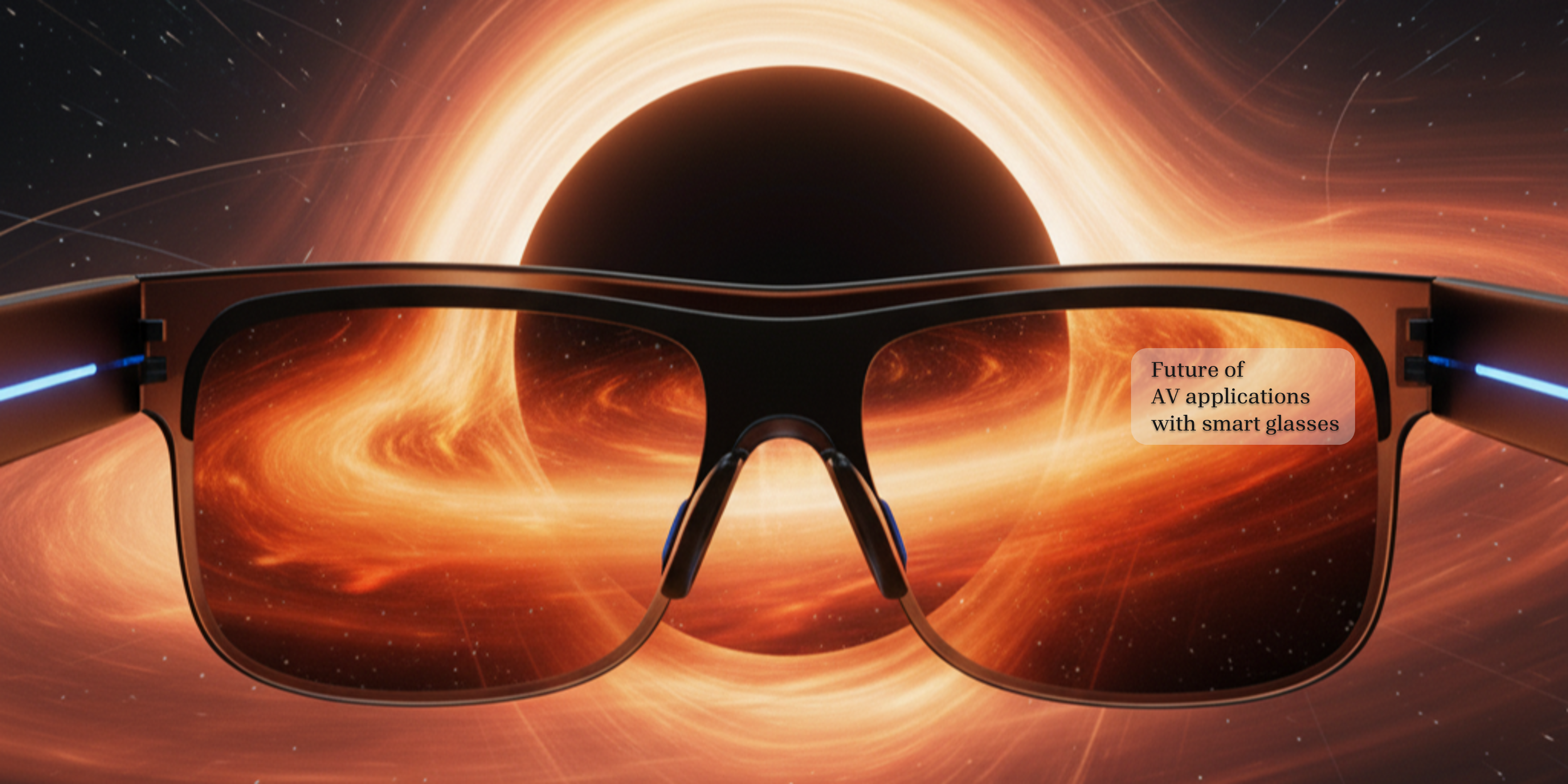
Lightweight smart glasses with display overlays hint at the next leap: personal, real-time visuals in every viewer’s line of sight. Here are five ways this could transform AV.
The AV industry is always evolving in how we create experiences. From projectors, LED walls to immersive audio, each step has reshaped what audiences see and hear.
Display overlays aren’t new. Heads-Up Displays (HUDs) have existed for decades in military aircraft and helmets, but their bulky size and weight kept them out of everyday life.
With the recent launch of lightweight smart glasses with display overlay, that barrier is gone. This could be the next frontier of personal devices — overlays that bring content straight into each person’s view, reshaping how AV is delivered.
Here are some exciting ways this could apply in AV:
1. The Interpreter
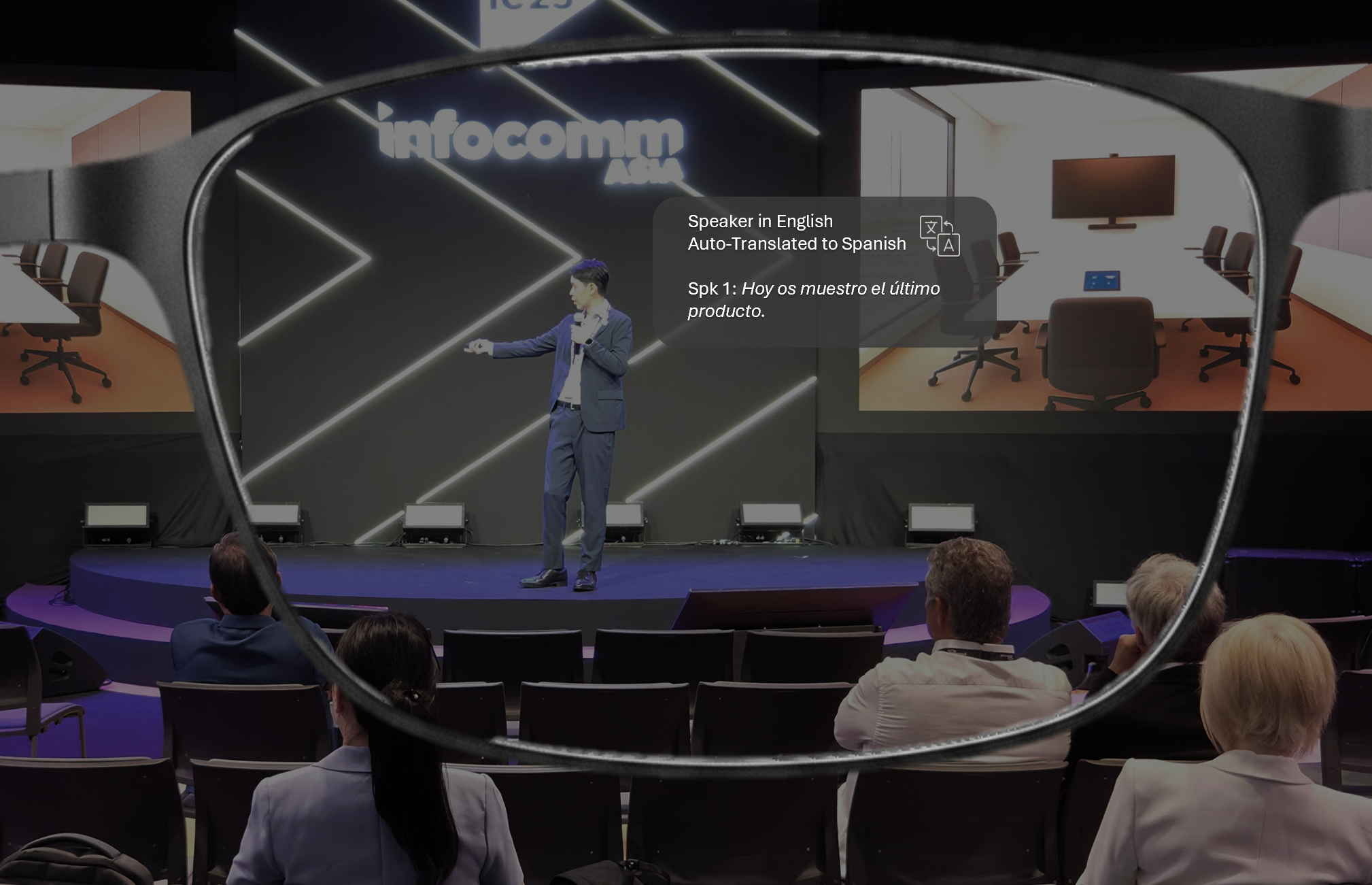
Concept 1: AI-powered captions in any language, right in view
Currently, conference venues invest heavily on interpreter booths, belt pack receivers, headsets, and dedicated AV system to support multilingual events.
Imagine attending a global event where participants instantly sees captions or translations in their own language. Smart glasses can deliver:
Closed captions for the hearing-impaired
Real-time translation for international guests
Simultaneous interpretation without bulky headsets
Result: Conferences and events are more inclusive and easier to follow for global audience.
2. Confidence Monitor in Your Glasses
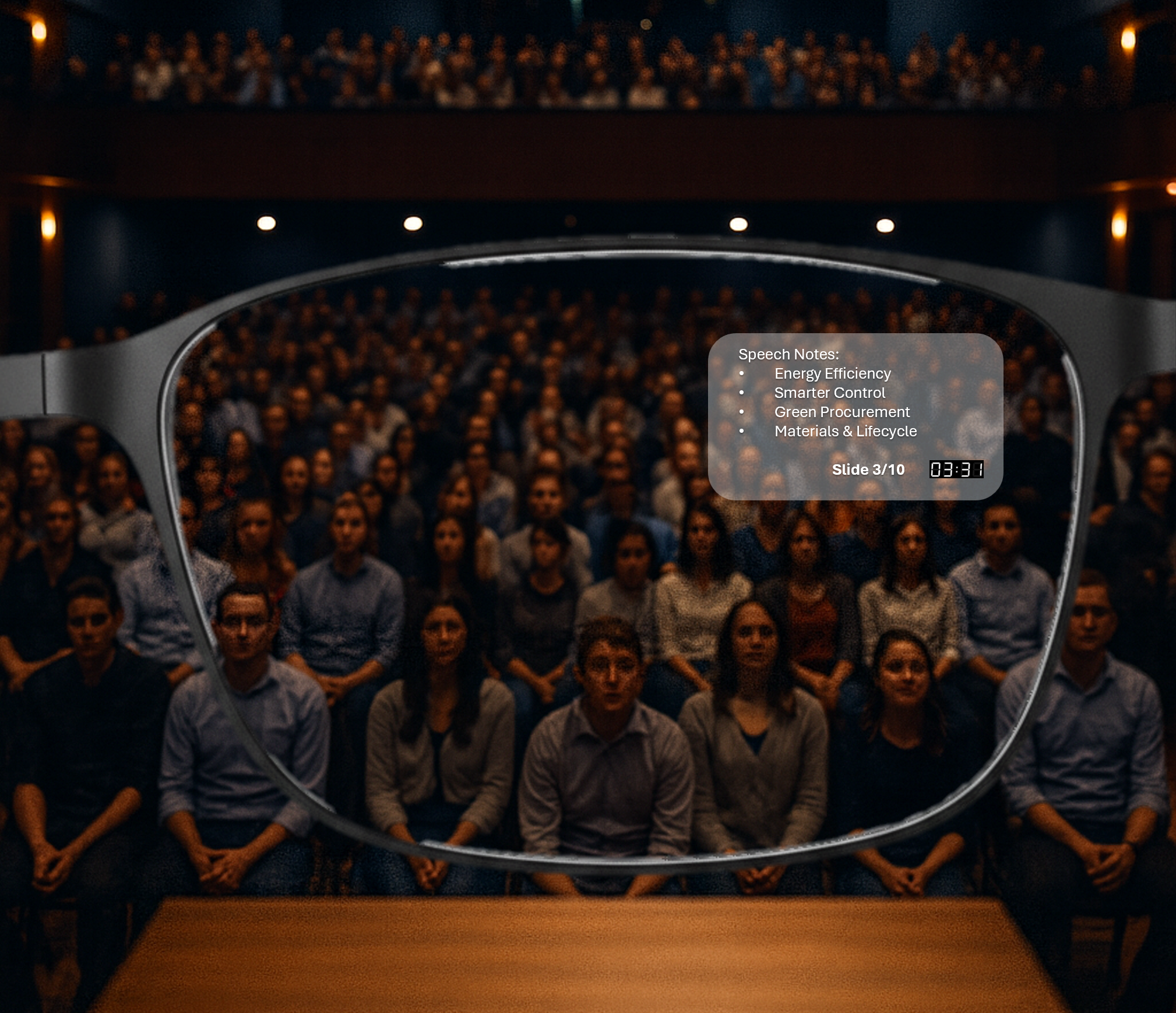
Concept 2: Notes and timers, right in your view. Focus on speaking confidently with eye contact.
On stage confidence monitors with timers are a basic requirement in most presentation spaces today.
But with display overlays, presenters no longer need to glance at side screens.
Notes, slides, and timers appear directly in view.
Teleprompter-style text supports natural eye contact with the audience.
Subtle prompts and countdowns help keep the presentation on track.
The result: Smoother presentation and a cleaner stage without confidence monitor hardware.
3. Surtitles and Lyrics for Performing Arts
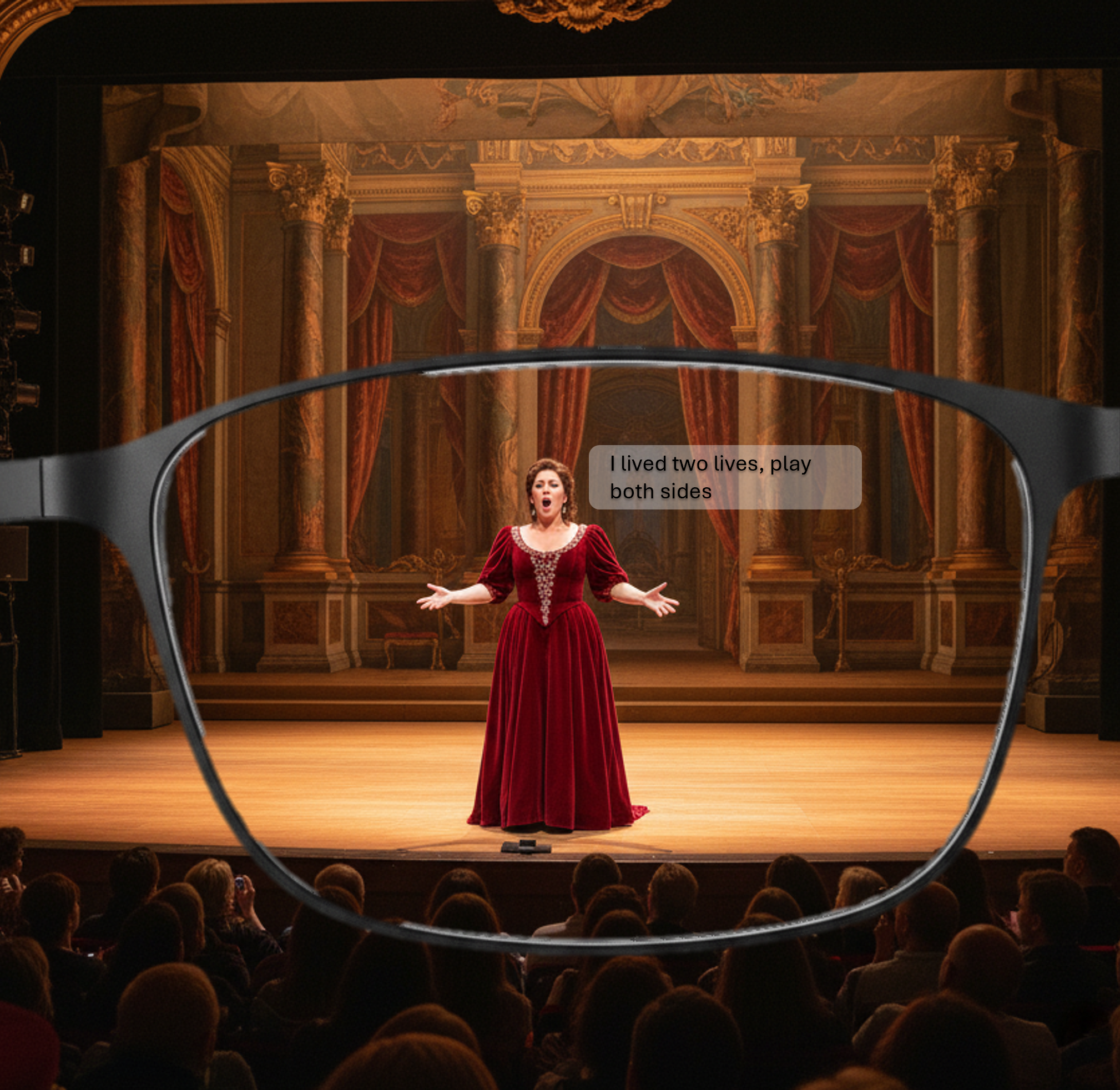
Concept 3: Follow every word without looking away from the stage.
When I watched a foreign-language show, I kept glancing up at the surtitles above the stage, splitting my attention between the performance and the translation.
While effective, it can also pull focus away from the performers.
With smart glasses, translations and lyrics appear directly in the viewer’s line of sight:
Viewers choose their preferred language
Inclusive features also support the hearing-impaired
Stage design remains uncluttered and immersive
Audience attention stays on the performers, not on overhead screens. This opens up theatre, concerts, and opera to a wider global audience, including non-native speakers who might otherwise miss out on the experience.
4. Smarter Event Operations
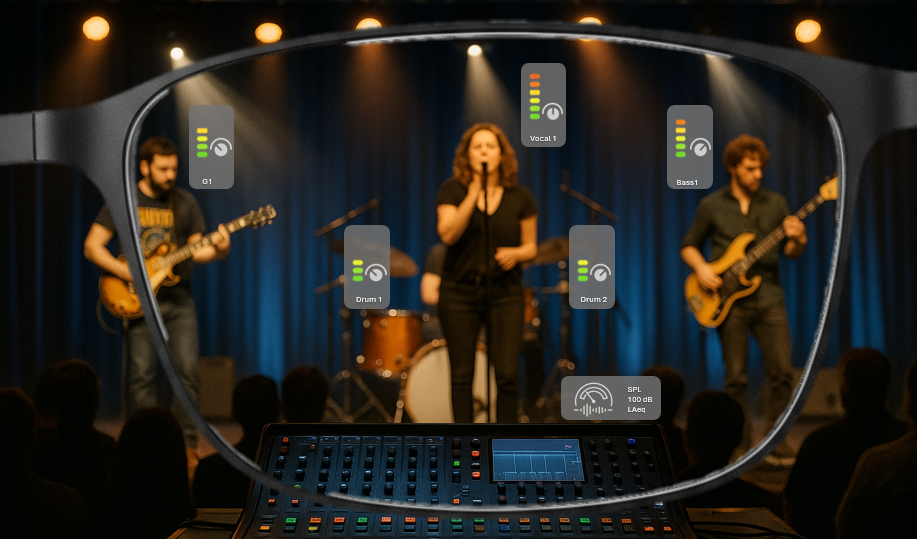
Concept 4: Live Audio mixing data integrated and overlaid onto the real world
Will touch screen displays on digital mixing consoles be enough for the future? Can we move beyond today’s workflows to redefine how live events are operated?
For live event crews, smart glasses could bring key information directly into their line of sight:
Mixing console audio levels, channel labels tag to performers, and SPL readings appear directly in view, reducing head-down time.
Stage cues delivered in mixed reality. Lighting, video, and mic prompts appear as visual overlays, synchronized with show control.
Visual intercom messaging instead of relying only on comms headsets. Crew can also see discreet on-glass text prompts (“Camera 2 standby,”).
This keeps operators focused, speeds up cue execution, and reduces errors during complex productions.
5. Extending Immersion Beyond the Screen
Concept 5: A dragon breathes fire off the LED wall and into your smart glass display.
LED walls, projection and lighting already wow audiences in immersive galleries. What's next?
Smart glasses can take immersion even further:
Time-aligned digital content can spill into each audience member’s personal view
Brands and storytellers can layer on richer, more interactive engagement
Museums and experience centres can extend exhibits with overlays
While mixed reality headsets have attempted this, smart glasses win on size and practicality, making them a more natural extension of the physical display medium for storytelling.
The concepts above are future possibilities with smart glasses — not yet fully feasible today. Like all emerging tech, adoption may be uncertain at first. But as software and network reliability improve, these ideas will move closer to reality — opening the door to a new era of AV experiences.
Xchange Advocates are recognized AV/IT industry thought leaders and influencers. We invite you to connect with them and follow their activity across the community as they offer valuable insights and expertise while advocating for and building awareness of the AV industry.