HDMI 2.2 Announced at CES 2025
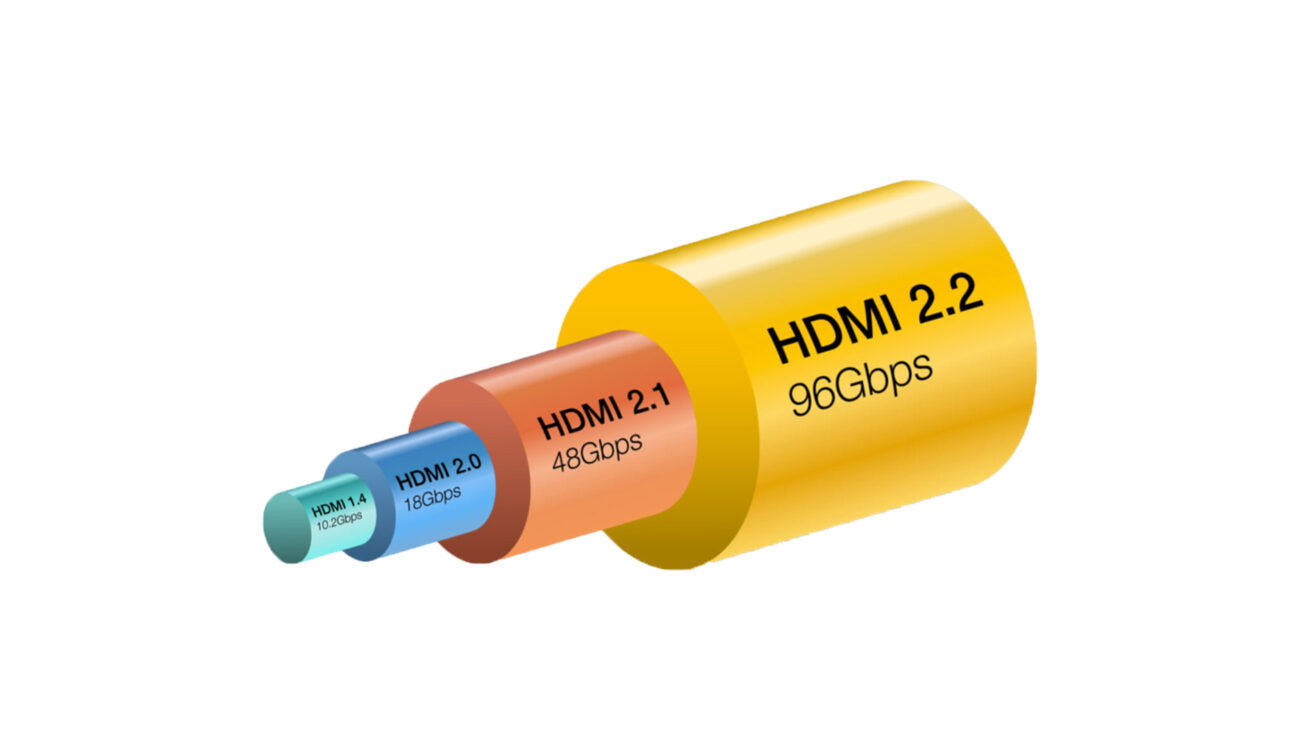







Image Credit: CineD
HDMI Forum Inc. announced the newest specification of HDMI at CES 2025 this week, known as HDMI 2.2. While hints at the announcement have been building up over the course of this past December, the announcement revealed the new capabilities of HDMI 2.2 including a 96Gbps bandwidth, support for 16K resolution, and an enhanced audio/video syncing protocol. While these statistics sound impressive on paper, the real applications skew heavily towards commercial AV usage.
HDMI for Consumers
HDMI's improvements have been steadily building for audio and video applications over time, providing higher bitrates for displays that support higher-fidelity media. However, for consumer purposes, the evolving standards run into the same stumbling blocks that most display technology faces: Diminishing returns. Currently, the consumer AV fidelity "target" arguably sits at 4K, for streaming, display and manufacturing purposes. 4K has been exceeded by 8K strictly in fidelity, in recent years, but there is a significant contrast as major manufacturers remain apprehensive in their demand forecasting. The introductions of 12 and 16K (unique to HDMI 2.2), by turn, would be hard-pressed to change that forecasting.
HDMI for Commercial Businesses
According to HDMI Forum Inc., where HDMI 2.2 will have the most application is in more specific data-heavy applications. For consumers, this is most relevant for AR and VR applications, where having a strong bitrate is vital to a consistent experience. Commercial AV benefits are much more tangible, as HDMI 2.2's bitrate outpaces that of DisplayPort's UHBR20 by 16 Gbps, a considerable advantage for high-resolution commercial displays. (As a caveat, though, the cables that can support HDMI 2.2 will be available later in 2025.)
The Benefits of HDMI 2.2's LIP
The most universally applicable benefit HDMI 2.2 features is the Latency Indication Protocol, or LIP, designed to eliminate synchronization issues between audio and video streaming. LIP enhances the AV experience primarily for multi-device setups, a relatively common arrangement in both consumer and commercial use cases. By eliminating the synchronization issues between these devices and the display included, LIP is the clearest enhancement provided by HDMI 2.2 across the board.
New standards and specifications mean new manufacturing needs to catch up with this technology. Even in commercial applications, manufacturers will take time to adjust, as businesses continue to opt for tried-and-tested solutions before opting towards products that take full advantage of a 16K resolution. Still, we may see a new demand for these products, as commercial applications seek out unique solutions that satisfy the needs of clients.

Community building specialist, with 10+ years of experience in technology! Love meeting new people, learning more about them, cultivating insightful discussions, and helping however I can. Passionate about video games, cars, and swordfighting!
Recommended Content
SONY AV Tech Expo coming to Chicago, IL!

The Translation Problem Nobody Budgets For