Common AV Mistakes We Still See on Project Sites & How to Avoid Them
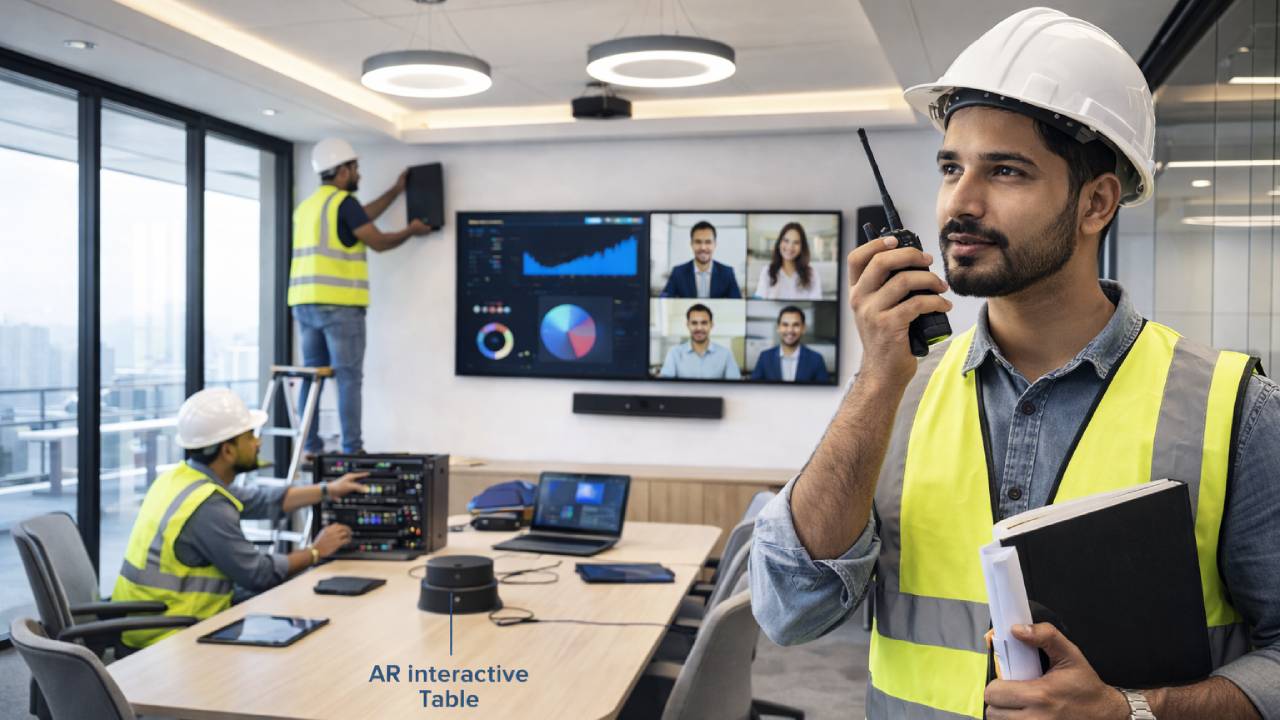
As audio visual systems become an integral part of modern workplaces, education spaces, and commercial environments, the complexity of AV projects has increased significantly. However, even today, many project challenges arise not from technology limitations but from planning and execution gaps.
Based on on site experience across multiple projects, here are some of the most common AV mistakes still seen on project sites and how they can be avoided.
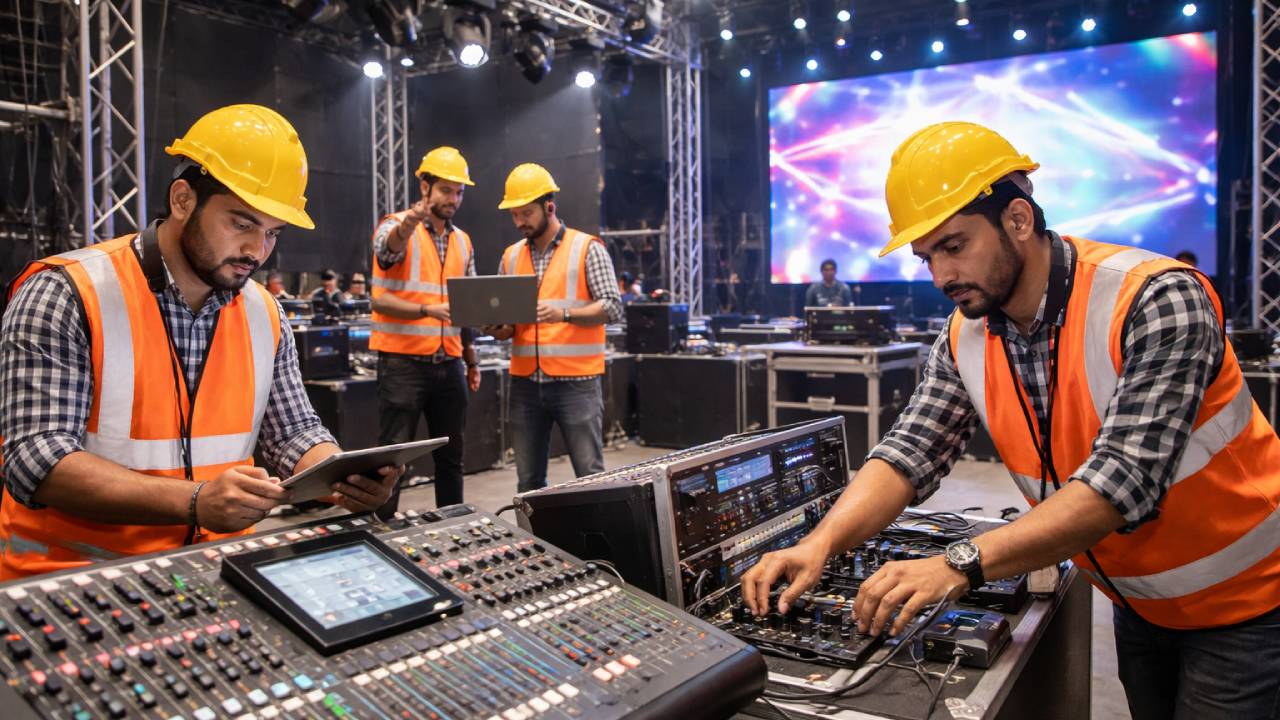
1. AV Planning Done Too Late in the Project Lifecycle
One of the most frequent issues is AV being considered after architectural, electrical, and interior work is already completed. This often leads to compromised speaker placement, poor sightlines, and expensive rework.
How to avoid it:
Include AV requirements during the early design stage. Early coordination with architects, MEP consultants, and IT teams ensures seamless integration and better system performance.
2. Ignoring Room Acoustics
High quality displays and microphones cannot compensate for poor acoustics. Hard surfaces, untreated ceilings, and incorrect room dimensions often result in echo, poor speech intelligibility, and listener fatigue.
How to avoid it:
Conduct basic acoustic analysis and incorporate acoustic treatments such as panels, ceiling solutions, and proper speaker positioning as part of the AV design.
3. Improper Speaker and Microphone Placement
Incorrect placement of speakers and microphones is a common on site issue. This results in uneven sound coverage, feedback problems, and poor audio clarity especially in meeting and training rooms.
How to avoid it:
Design audio systems based on room size, seating layout, and usage scenarios. Avoid generic placements and follow coverage calculations and pickup patterns.
4. Network Infrastructure Not Designed for AV
AV systems increasingly depend on network connectivity, yet network planning often overlooks AV traffic requirements. This can cause latency, dropouts, and unreliable system behaviour.
How to avoid it:
Coordinate with IT teams to ensure the network supports AV protocols, bandwidth needs, VLANs, and quality of service requirements from the start.
5. Overcomplicating User Interfaces
Advanced systems sometimes fail simply because end users find them difficult to operate. Complex control interfaces often result in frequent support calls and underutilized systems.
How to avoid it:
Design user centric control interfaces with simplicity in mind. Focus on the most common use cases and provide clear labelling and basic user training.
6. Inadequate Cable Management and Documentation
Poor cable routing and lack of documentation can make future troubleshooting and maintenance extremely difficult, especially in large installations.
How to avoid it:
Follow structured cable management practices, label all connections clearly, and provide built documentation at project handover.

Final Thoughts
Most AV project issues are not caused by technology itself but by gaps in planning, coordination, and user focused design. Addressing these challenges early can significantly improve system reliability, user satisfaction, and long term value.
By treating AV as an integrated part of the built environment rather than an afterthought, project teams can deliver more effective and sustainable AV solutions.
What common AV mistakes do you still encounter on project sites today, and what practical steps have you found most effective in preventing them?
Vallect is a pioneer infrastructural technology AV integrator. Since our inception in 2018, we started off as a ProAV system integrator with a vision to create an organisation to deliver finest customer experience from project inception to execution.
With our focused resolute towards providing state of art yet simplified solutions to our customers & to better serve our client base, we pivoted & diversified our offerings to unified communication, lighting management system, building management solutions, led videowall installs, ELV solutions & Active-Passive IT Infrastructure. We are a tech company with a vision to offer smart, immersive & sustainable system integration solutions by designing, integrating and supporting technology solutions with AV, UC,BMS, LMS (Lighting Management and beyond.
In the last 7 years, Vallect has enabled over 800+ customers (including government, corporates, hospitality, educational institutes etc.) to cater to their infrastructural technology challenges while ensuring finest customer experience which has helped us emerge as a leading technology system integration brand in the industry. We have transformed Corporate Offices, Auditoriums, Museums, Classrooms, Boardrooms, stadiums, airports etc with our integrated technology solutions.
Vallect is a turnkey technology solution provider, with focus on being one stop solution from inception to execution to simplify the process & provide top quality services to our customers.