Boom's Top 5 Conferencing Trends For 2026

Boom Collaboration has pinpointed the top five conferencing trends for 2026, in a multi-billion-dollar market it expects to rise by over 10 per cent.
In association with distributors, MSPs, resellers and their customers, Boom has identified the latest changes reshaping the industry, where simplicity, interoperability and flexibility are some of the most in-demand trends.
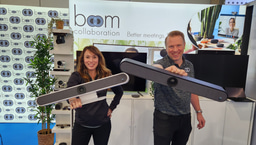
“The video conferencing market continues to evolve, but the priority is clearer than ever. We’ve reached the point where simplicity beats features. If a system isn’t easy, it won’t get used, and that’s what will drive conversations and decisions in 2026.” confirmed Co-Founder, Holli Hulett.
“The landscape is changing quickly. Simplicity is becoming the standard. There’s no need to overcomplicate, overspec or oversell. The simpler approach often delivers the best results.”
Fellow Founder, Fredrik Hörnkvist, highlighted: “Bring Your Own Meeting (BYOM) has moved from an alternative to the primary workflow in many environments. We’re seeing clear acceleration, particularly in smaller rooms where cost, flexibility and real-world usability win over complex in-room systems.”
1 - Simplicity
People want everything to be simple. They expect their video conferencing experiences to be easy, platform agnostic and user-friendly, based on the ability to just plug in and go.
2 – BYOM v In-Room The Battle Is Over
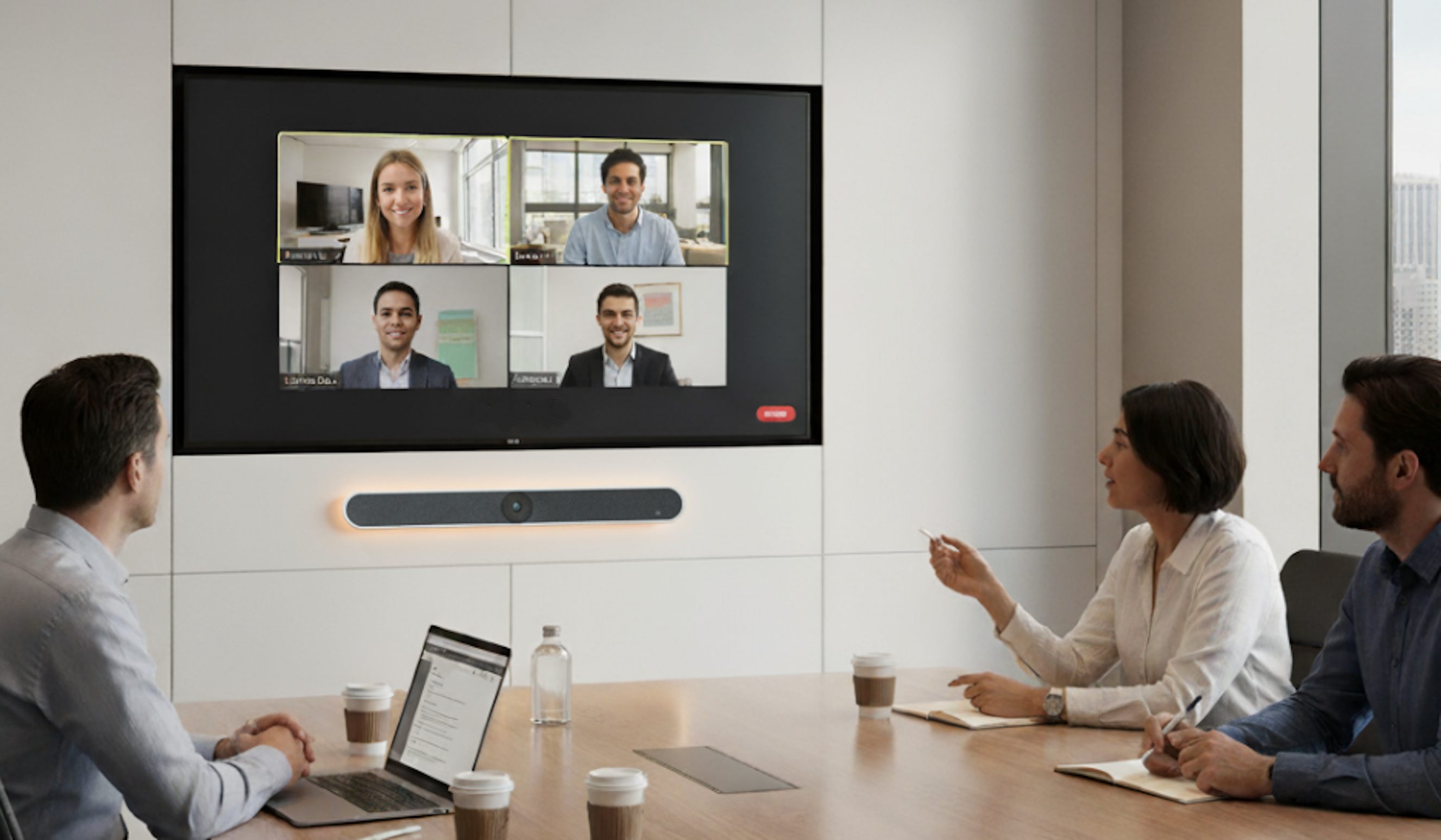
BYOM deployments are outstripping in-room systems 5:1. They rule the roost with total cost of ownership much less, especially in the medium to smaller spaces. Customers can have the best of both worlds, combining the advantages of BYOM deployments with existing in-room systems. The latest connectivity hubs ensure organizations don't need to rip out their existing equipment and start again. It’s a have your cake and eat it approach.
3 – Interoperability
The market has changed forever. People no longer wear just a Teams or Zoom badge. It’s about being vendor agnostic - any device, on any platform in any room. Users demand total flexibility.
4 – Certification
Officially certified products are often part of an ecosystem that isn’t actually end-to- end certified. Certification still has value, but real-world meeting rooms rarely use fully certified ecosystems. Displays, switches, ceiling mics, laptops, smartphones, and BYOM workflows are almost never certified end-to-end. And yet they’re what people actually use. As meeting rooms become more flexible and more complex in 2026, organizations will prioritise compatibility and real-world performance over strict certification checklists.
5 – AI Balance
The rise of AI in both hardware and software will continue to accelerate. But ‘over speccing’ can be a big problem. Often, the newest systems that offer every bell and whistle, including multiple cameras and extensive automated controls, come with not only a higher cost, but also a steep learning curve and ongoing investment in maintenance, licensing, and support. A balance needs to be struck, especially in challenging economic times.
Texas-based Boom offer a full portfolio of cameras, videobars, audio, connectivity hubs, controllers and complete room kits. It operates in over 35 countries worldwide from distribution centres in the US, Europe and Asia.
Hulett concluded: “Video conferencing is now deeply embedded as a key business enabler, where jumping on a call has become the norm. We expect the overall market will grow by 10-15% in 2026 and the winners will be the ones who make collaboration effortless.”