
The AGI Awakening: Why Your Clients' Expectations Are About to Change Forever



Your client just called with an unusual request. "We want our boardroom to know when we're brainstorming versus making decisions, and automatically adjust the lighting, acoustics, and even the display layout to optimize for each type of thinking. Is that possible?"
Six months ago, you might have politely explained the limitations of current technology. Today, that same client expects you to have an answer and a plan.
Welcome to the AGI awakening, where client expectations evolve faster than most AV professionals realize.
The Challenge: When "Smart" Isn't Smart Enough
For years, we've been selling "smart" AV solutions: displays that automatically turn on when someone enters the room, audio systems that adjust volume based on ambient noise, and cameras that track speakers and frame shots appropriately. These impressive capabilities deliver real value.
But here's what's happening in your clients' minds: they're starting to understand the difference between automation and intelligence. Automation follows rules: "If this, then that." Intelligence reasons: "Given this context, that outcome would be optimal."
Your corporate clients are reading about AI assistants that can understand meeting agendas and suggest optimal room configurations. Your educational clients hear about learning environments adapting to real-time student engagement levels. Your healthcare clients want spaces that detect stress patterns and automatically create calming environments.
They're not asking for better projectors or clearer audio anymore. They're asking for environments that understand and respond to human needs at a level that current "smart" systems can't deliver.
This shift represents a fundamental challenge for AV professionals who've built their expertise around technology performance specifications rather than intelligent experience design. The conversation moves from "How many lumens?" to "How will this space understand what users need?"
The Solution: Becoming Fluent in the Language of Intelligence
The path forward requires developing what I call "AGI literacy"—the ability to understand and communicate about Artificial General Intelligence's implications for physical spaces. This isn't about becoming a computer scientist; it's about understanding how intelligence technologies will transform the environments your clients inhabit.
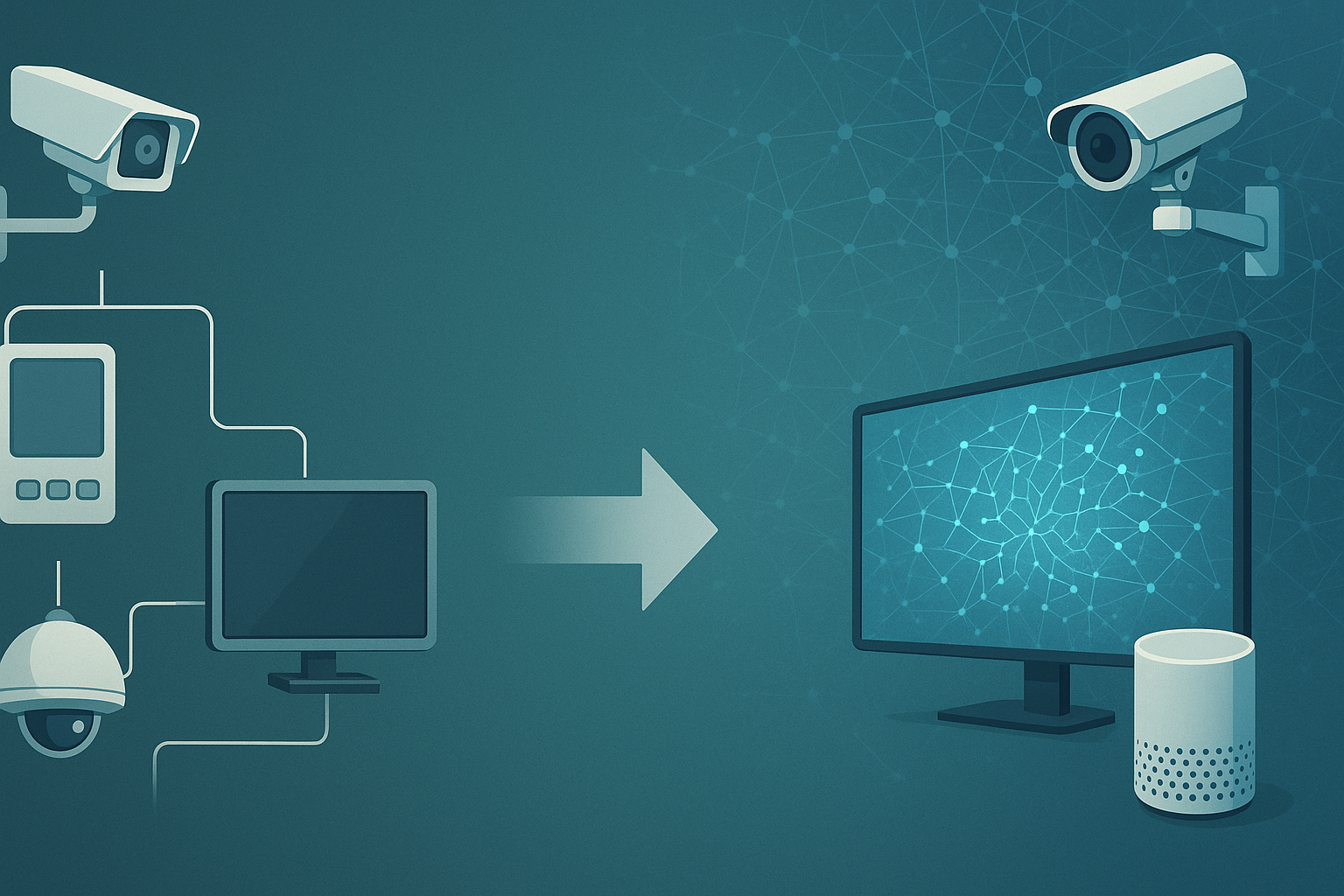
Start by reframing how you think about AV systems. Instead of considering displays, cameras, and speakers as individual technologies, consider them the sensory and communication nervous systems for intelligent environments. Your cameras become the "eyes" that help spaces understand occupant behavior and needs. Your audio systems become the "ears" that detect conversation patterns, stress levels, and engagement indicators. Your displays become the primary communication channel through which intelligent spaces interact with users.
This shift in thinking enables entirely new conversations with clients. Instead of discussing technical specifications, you're talking about experience outcomes. Instead of proposing equipment, you're designing intelligent ecosystems that serve human needs.
For example, when that boardroom client asks about meeting-aware environments, you can explain how cameras with behavioral analysis capabilities could distinguish between collaborative brainstorming (lots of movement, overlapping conversations, gesturing) and focused decision-making (structured turn-taking, document review, note-taking). The intelligent system could then automatically adjust lighting to support creative thinking or analytical focus, modify acoustics to encourage open dialogue or concentrated discussion, and reconfigure displays to support ideation or information analysis.
Introduce clients to "Human+" thinking – environments that amplify human capabilities rather than deliver technology functionality. Help them envision spaces that don't just respond to explicit commands but anticipate needs based on context, behavior, and environmental factors.
Building Strategic Partnerships for Intelligence
This transformation also requires evolving your role from technology implementer to strategic advisor. Clients will need guidance navigating the complex landscape of AI vendors, integration partners, and emerging standards. They'll need someone who understands both the technical possibilities and the human implications of intelligent environments.
Build relationships with AI software developers, data analytics companies, and systems integrators who understand machine learning and behavioral analysis. These partnerships will become essential as projects increasingly require seamless integration between AV hardware and intelligence software.
Position yourself as the bridge between the human experience and the technical implementation. While IT departments focus on data infrastructure and software developers focus on algorithms, you become the professional ensuring the resulting intelligent environment effectively serves human needs.
The Results: First-Mover Advantage in the Intelligence Economy
AV professionals who develop AGI literacy now will capture disproportionate value as this market emerges. Early adopters are already seeing several significant advantages:
- Premium Positioning: Instead of competing on equipment costs, you're selling strategic expertise and experience design. Clients pay premium fees for guidance through complex transformation rather than commodity pricing for technology installation.
- Deeper Relationships: You become a trusted advisor for fundamental business transformation rather than a vendor for periodic equipment upgrades. These relationships tend to be longer-term and more strategic.
- Project Leadership: As projects become more complex and interdisciplinary, clients need someone to coordinate between architects, IT professionals, software developers, and facilities managers—your understanding of human needs and technical capabilities positions you for this leadership role.
- Competitive Moats: Once you've successfully implemented intelligent environments for clients, the switching costs become enormous. You understand their unique needs, system integrations, and user behaviors in ways competitors can't easily replicate.
Your Next Steps
The AGI awakening is happening whether you're ready or not. Whether you'll lead this transformation or scramble to catch up when clients start demanding intelligence capabilities you can't deliver.
Start by educating yourself about AI and machine learning applications in physical environments. Begin conversations with existing clients about their evolving needs and expectations. Identify potential AI partners and start building relationships that will enable future intelligent integrations.
Most importantly, start thinking about your role differently. You're not just an AV professional anymore – you're an intelligent experience designer who helps create environments that amplify human potential.
The clients who embrace this transformation early will gain significant competitive advantages. Make sure you're positioned to guide them there.

As an architect by training (BS Architecture, Cal Poly SLO) and a collaborative technologist with four decades of practice, I’m passionate about mentoring the next generation of AV professionals at the intersection of technology, strategy, and leadership. I have been active in AVIXA since 1986 and served on the national board from 1993–2000. I am a Fellow of the Society for Marketing Professional Services (SMPS) and an Associate member of the American Institute of Architects.
I serve as Director of Digital Experience Design at Clark & Enersen, a 200-person interdisciplinary architecture and engineering firm, where I lead the planning and design of integrated audiovisual and digital experience environments for higher education, healthcare, and research clients.
My expertise spans systems design, integrated building technology planning, and strategic business development. I bring an award-winning, B2B design-thinking approach developed through leadership roles with national AEC and technology firms.
Across both institutional and consulting roles, I have led marketing and growth strategy, designed future-ready learning and simulation environments, and helped organizations implement AI-powered tools that scale expertise and performance.
-
Xchange Advocates are recognized AV/IT industry thought leaders and influencers. We invite you to connect with them and follow their activity across the community as they offer valuable insights and expertise while advocating for and building awareness of the AV industry.





Please sign in
If you are a registered user on AVIXA Xchange, please sign in