Deepfakes Are Now an AV Problem, the Industry Must Step Up.


⚠️ Deepfakes Are Now an AV Problem, the Industry Must Step Up.
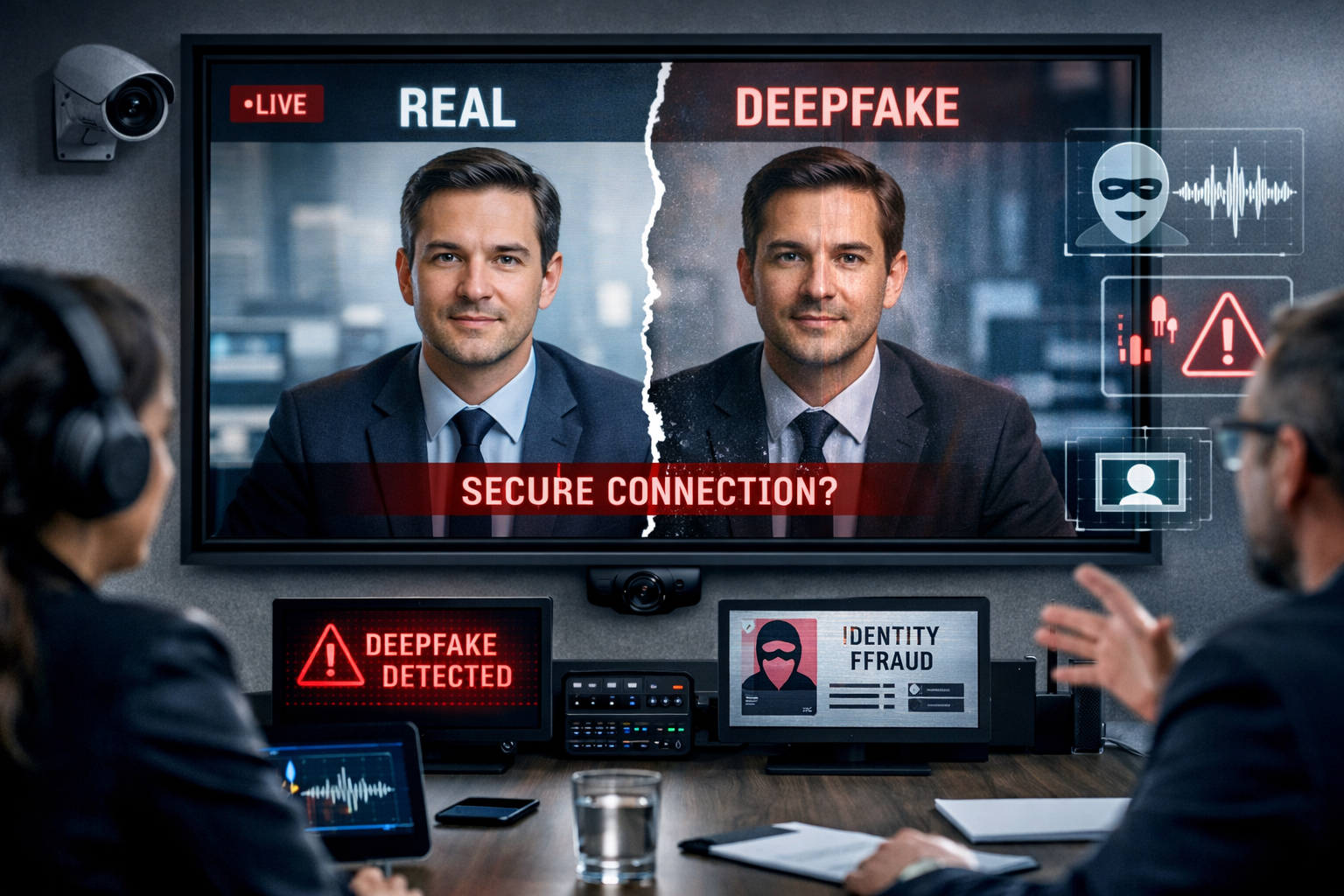
Deepfakes have moved from online curiosity to operational threat. In the last two years alone, deepfake incidents have surged by 3,000%, with attackers now using AI‑generated video and voice to infiltrate meetings, impersonate executives, and manipulate live content streams.
This isn’t just a cybersecurity issue anymore. It’s an Audio‑Visual (AV) integrity issue.
We’ve already seen real‑world cases:
👉🏼 A multinational firm lost $25 million after a deepfake CFO instructed staff to transfer funds.
👉🏼 Voice‑cloning scams are now so convincing that UK regulators classify them as a “critical emerging threat.”
👉🏼 Deepfake candidates have joined virtual job interviews using AI‑generated faces and voices.
👉🏼 Manipulated video has been injected into live broadcasts and signage networks.
These attacks rarely enter through firewalls, they enter through AV systems.
Why the AV Industry Is Now on the Front Line:
AV systems capture, process, and present audio and video. That makes them the first point where deepfakes can be detected, or the easiest point where they can slip through.
Here’s where AV can protect users:
✔️ Secure the Capture Layer.
Authenticity starts at the source.
AV hardware can embed device identity, cryptographic signatures, and tamper‑evident metadata into every audio/video stream.
✔️ Real‑Time Deepfake Detection.
AV endpoints already process video and audio at the edge. We must enable them to detect:
Lip‑sync inconsistencies.
Cloned‑voice artefacts.
Frame‑level manipulation.
Abnormal facial micro‑movements.
This is a massive opportunity for AV manufacturers.
✔️ Harden the Signal Chain.
Deepfakes often enter through unverified content sources.
AV‑over‑IP needs:
End‑to‑end encryption.
Source validation.
Zero‑trust content handling.
✔️ Protect Collaboration Spaces
Meeting rooms and hybrid events are now high‑risk environments. We must implement:
Participant authentication
Watermarked live video
Controlled screen‑sharing
AI‑based identity verification
This is how we stop impersonation in real time.
The Bottom Line
Deepfakes are not just a digital threat, they’re a trust threat and trust is the AV industry’s domain. If AV systems are getting smarter, their governance, authenticity controls, and risk management must get stronger.

CTS with 20+ years in Pro AV, specialising in secure, resilient, and human‑centric technology environments.
With credentials including ISO 27001 Practitioner, CompTIA Security+, AVIXA CTS, and service on the AVIXA Standards Steering Committee, I bring a multidisciplinary perspective that spans security governance, systems engineering, AV risk, and operational resilience.
I also serve as a Steering Committee Member for the AV User Group (London Chapter), supporting industry knowledge‑sharing, manufacturer engagement, and the advancement of best practice across enterprise AV and workplace technology.
Across my career, I’ve delivered multi‑regional and global AV/UC deployments, designing and optimising secure collaboration ecosystems across Europe, North America, Africa, and APAC. My work spans Microsoft Teams environments, enterprise meeting rooms, hybrid working platforms, and high‑stakes spaces such as Boardrooms, AGMs, and multi‑site collaboration environments.
I approach AI as a socio‑technical system — where risks emerge not only from algorithms, but from architecture, data flows, user behaviour, and the integrated AV/UC environments that shape real‑world experience.
I am now expanding my leadership into AI governance and responsible technology, developing capability in ISO/IEC 42001 (AIMS) and the NIST AI RMF to help organisations operationalise AI safely, ethically, and at scale — particularly within AV, workplace, and smart‑building systems.
-
Xchange Advocates are recognized AV/IT industry thought leaders and influencers. We invite you to connect with them and follow their activity across the community as they offer valuable insights and expertise while advocating for and building awareness of the AV industry.
Recommended Content

The Autonomous Workplace Threat Surface: AI Agents Are Now Exploiting AV & IT Systems.
When AI Turns Adversarial: The JadePuffer Incident and the Rise of Autonomous Cyber Threats.

AV/IT Is Officially Inside the EU AI Act Compliance Window; Here’s What That Really Means.

Why AV Manufacturers Need to Pay Attention to the OWASP LLM Top 10