
360° Projection Mapping: The Technology Redefining Immersion
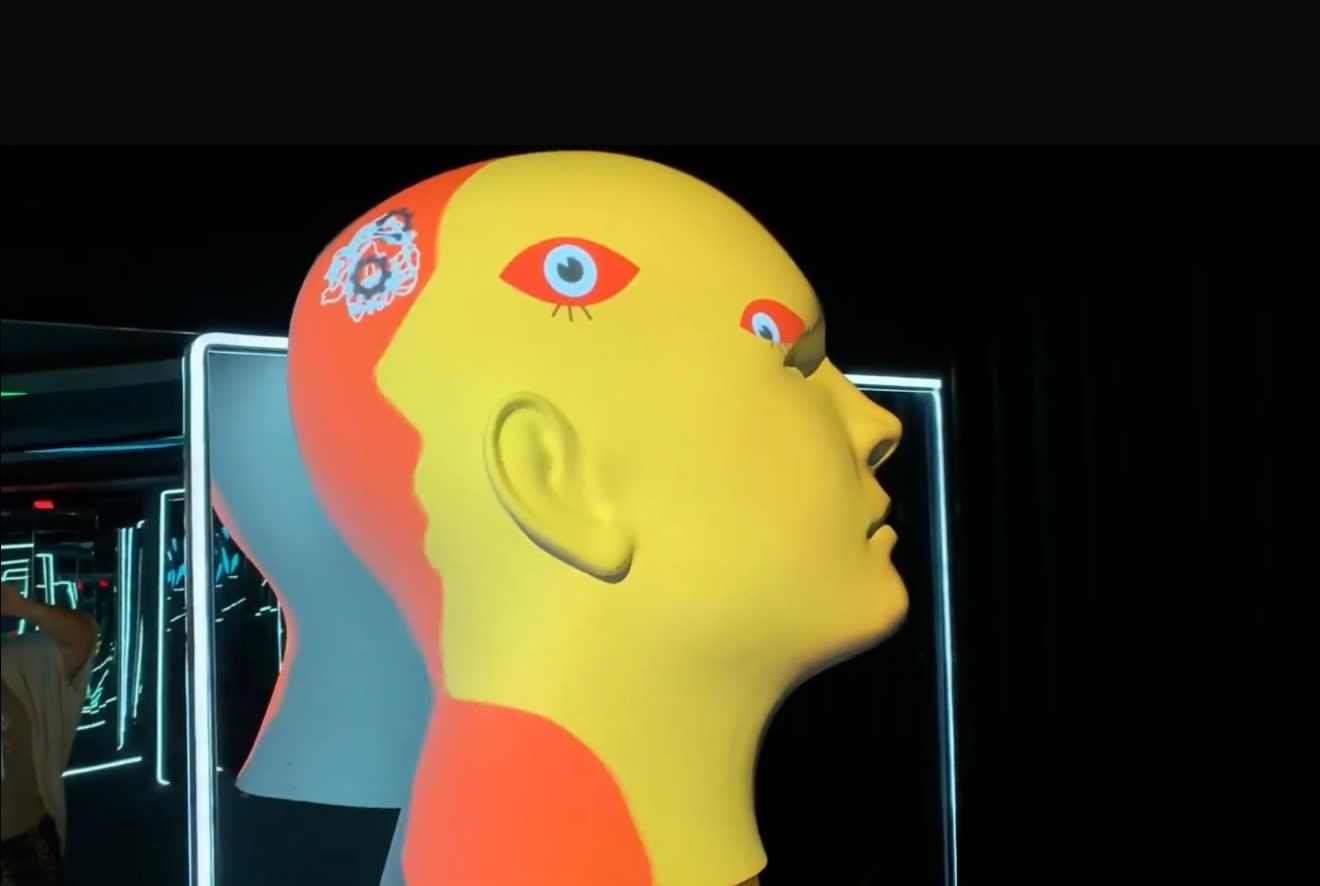


At a time when brands, museums, restaurants, and live events are searching for differentiated experiences, immersive 360° projection stands out as a solution capable of transforming entire spaces into living, dynamic, and emotionally charged environments.
To better understand this technology and its applications, we spoke with Lilian Ronchel, CEO of Class TechExperience, who shared insights into the creative process, technical challenges, and the trends already shaping the future of audiovisual immersion.
The Technology That Places the Audience “Inside the Scene”
Unlike traditional projection — limited to a flat surface — 360° projection mapping wraps ceilings, walls, floors, columns, and even three-dimensional objects. This makes it possible to create environments completely covered in visual content, fully immersing the viewer in the narrative.
According to Lilian, “it’s not just about watching a video; it’s about stepping inside it. The content dresses the space.” This volumetric approach turns any environment into a living, immersive organism.
From Storytelling to Pixel: How a 360° Projection Is Created
The creative process begins long before the projectors are turned on. The first step is storytelling: defining the narrative that will unfold in the space. From there, the visual script and key emotional moments are developed.
On the technical side, the team performs a 3D scan of the environment or digitally models the room or object, ensuring millimeter precision to create volumetric content. Software such as Cinema 4D, Blender, and Unreal Engine shape the animations, while platforms like Resolume, Disguise, and TouchDesigner manage playback.
Projector calibration is a chapter of its own: geometric alignment, edge blending, and synchronization are required to merge multiple beams of light into one seamless image.
“Without 3D modeling, there is no precision. It’s what allows us to predict how every pixel will behave on the real surface,” Lilian explains.
Why Brands and Cultural Spaces Are Embracing this Format
360° projection transforms complex messages into emotional experiences. The impact is so powerful that audiences don’t just understand the narrative — they feel it. That is why brands, museums, and even restaurants have adopted this technology to create deeper, more memorable engagements.
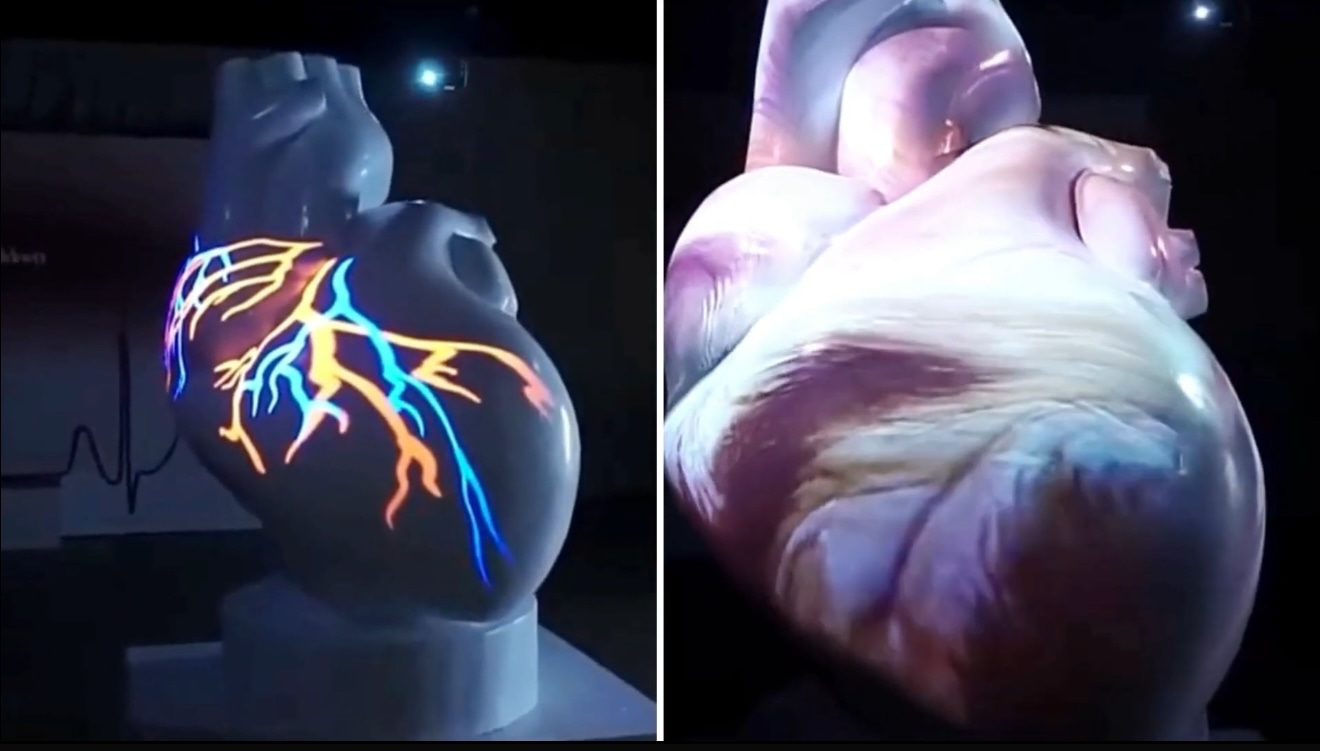
One of the most surprising sectors, according to Lilian, is healthcare. The company participated in the launch of a cardiac medication by showcasing a 2.5-meter human heart, complete with blood flow, synchronized beats, and spatial sound. The result deeply moved the cardiologists in attendance, demonstrating how science and emotion can merge through immersion.
Memorable Experiences: An Immersive Restaurant
Among Class TechExperience’s most iconic projects is O Alaric, an immersive restaurant where each course is accompanied by a 360° visual narrative projected throughout the space.
Audience reactions are consistently intense: surprise, laughter, smartphones capturing every moment, and often genuine emotion. As Lilian summarizes, “people describe it as stepping inside a movie.”
Technical Challenges: Calculation, Precision, and Sensory Engineering
Producing volumetric projection demands rigorous technical discipline. Content must align perfectly with the physical space; each projector must be calculated according to brightness, position, and coverage; and synchronization must be flawless.
Non-conventional surfaces — ceilings, columns, circular rooms — add further complexity, requiring precise pixel mapping to ensure impeccable alignment.
Trends: From the Sphere in Las Vegas to Responsive Immersion
For Lilian, the future of projection is moving toward increasingly responsive experiences, where content reacts to people’s movement and presence. Technologies such as 360° spatial audio, Kinect and LiDAR sensors, and interaction without VR headsets are already part of the company’s projects.
She also highlights the influence of Sphere in Las Vegas — a global milestone that elevated volumetric content creation to another level, whether through LED or projection.
Content First, Technology Second
For those looking to invest in 360° projection mapping, Lilian offers simple but powerful advice: think about the content before the technology.
Projectors and software are merely tools; the narrative is what truly transforms a space and moves an audience. And of course, having an experienced team that combines engineering, art, and experiential design is essential to ensure everything works in full harmony.

A University of Central Florida double-alum with a Master’s in Digital Media, I'm a content creator who loves bringing people together over shared interests. As AVIXA's Coordinator of Digital Content, I produce articles on a myriad of technology topics. I've also worked on virtual reality projects, transforming Romanian folk tales into VR narratives.





Please sign in
If you are a registered user on AVIXA Xchange, please sign in
360° projection mapping is really evolving fast indeed. Great post!i
It's crazy when you see all the examples laid out. And I'm glad you enjoyed the article! I always enjoy your posts too @Benedict Onodu. CTS.MBCS