Immersive Experiences, Workforce Development, Learning Solutions, The Podcast Channel, Celebration of AV Excellence, and 2 more
Wave Theory for Sound Propagation
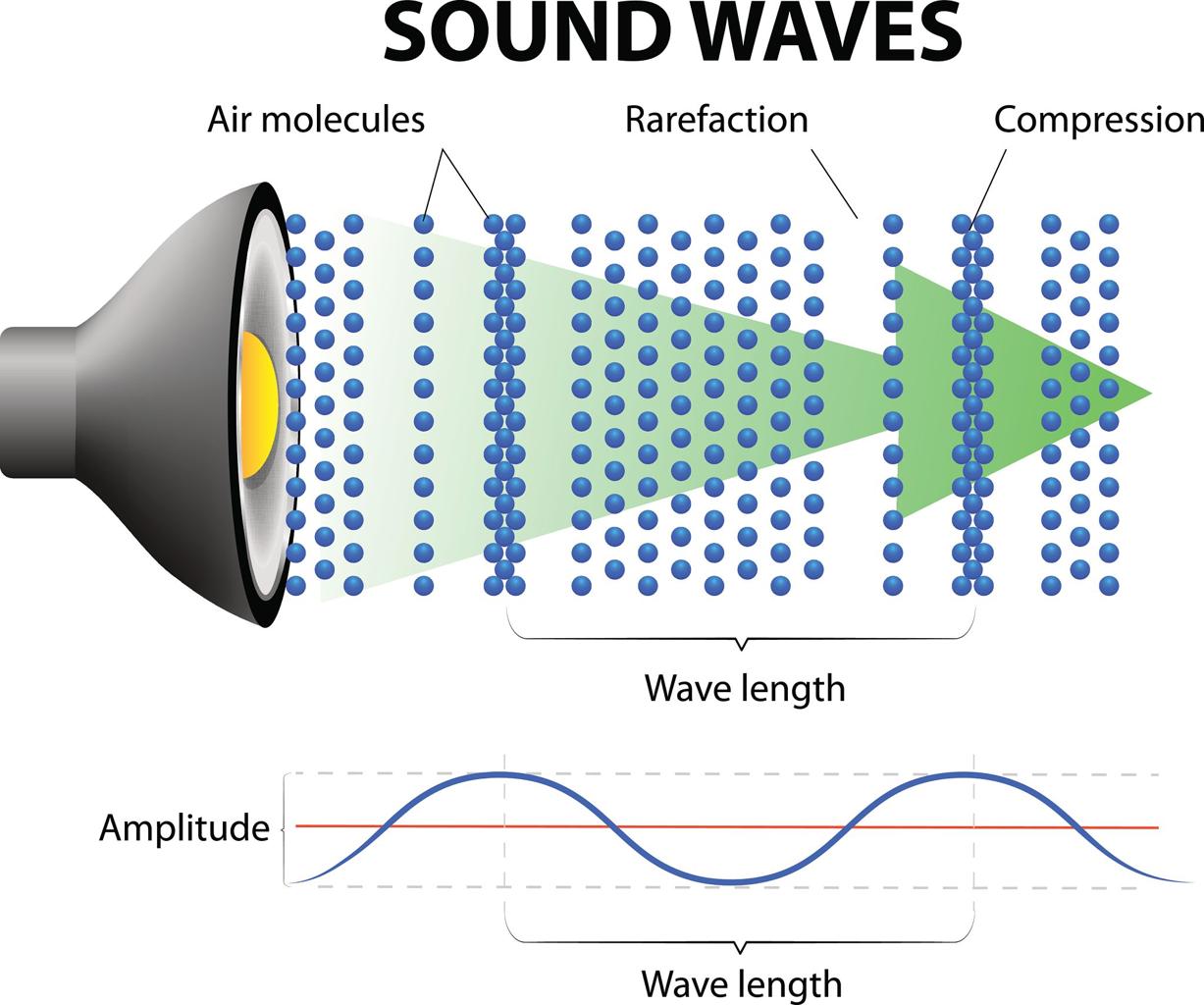
Wave theory explains that sound propagates through a medium as longitudinal pressure waves created by alternating compressions and rarefactions of particles.


Basic Principle
Wave theory of sound propagation explains that sound travels through a medium (air, water, or solids) as a mechanical longitudinal wave.
Instead of the sound source moving through space, energy travels by vibration of particles in the medium.
When a sound source vibrates (like a loudspeaker diaphragm):
-
It pushes nearby air molecules together → Compression
-
Then molecules spread apart → Rarefaction
-
This repeating process creates a pressure wave that travels outward.
So, the air molecules oscillate back and forth, but the wave energy moves forward.
Key Elements of Sound Waves
Compression
-
Region where air molecules are close together
-
High pressure region
Rarefaction
-
Region where molecules are spread apart
-
Low pressure region
Wavelength (λ)
Distance between two consecutive compressions or rarefactions.
Frequency (f)
Number of wave cycles per second.
-
Measured in Hertz (Hz)
-
Determines pitch
Amplitude
Height of the wave.
-
Determines loudness
-
Related to sound pressure level (SPL)
Wave Speed Relationship
Sound propagation follows a fundamental relation:
v=fλ
Where:
-
v = speed of sound
-
f = frequency
-
λ = wavelength
Example in air:
-
Speed of sound ≈ 343 m/s at 20°C
Example calculation:
| Frequency | Wavelength |
|---|---|
| 100 Hz | 3.43 m |
| 1 kHz | 0.343 m |
| 10 kHz | 0.034 m |
This is extremely important in AV acoustic design because wavelength determines:
-
Speaker spacing
-
Phase interaction
-
Room modes
-
Acoustic treatment thickness
Types of Sound Waves
Longitudinal Waves
Sound propagates parallel to particle motion.

Example:
-
Air sound waves
-
Loudspeaker output
Spherical Waves

-
From a point source sound spreads in all directions.
-
Used in room acoustic modeling.
Plane Waves
-
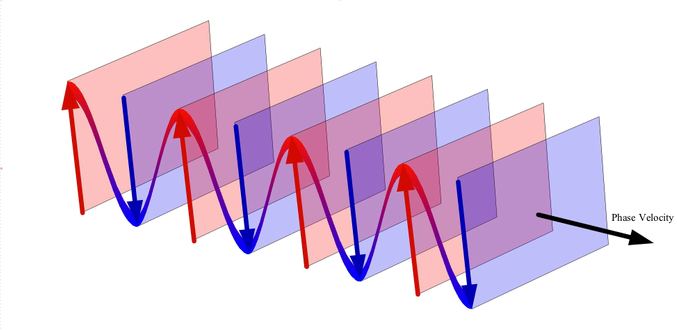
Sound propagates in a single direction with flat wavefronts.
-
Used in waveguide and line array theory.
Sound Propagation in Different Mediums
| Medium | Speed of Sound |
|---|---|
| Air | 343 m/s |
| Water | 1480 m/s |
| Steel | 5960 m/s |
Reason: particle density and elasticity.
Wave Behaviors in Rooms (Important for AV Engineers)
When sound propagates in rooms, waves interact with surfaces.
Reflection
Sound bounces from surfaces.
Used in:
-
concert hall design
-
room acoustics
Diffraction
Sound bends around objects.
Important for:
-
speaker placement
-
coverage prediction
Absorption
Materials convert sound energy to heat.
Used in:
-
acoustic panels
-
bass traps
Interference
Two waves combine.
Results:
-
constructive interference
-
destructive interference
Critical in:
-
line array tuning
-
multi-speaker systems
Practical Example (AV System Design)
In sound system design (EASE / AV modeling) wave theory helps determine:
-
speaker spacing
-
phase alignment
-
delay settings
-
room mode frequencies
-
coverage prediction
-
acoustic treatment thickness
Example:
Low frequency 100 Hz, Wavelength ≈ 3.4 m
So acoustic treatment must be ~0.8–1 m thick to fully absorb it.
Sound propagation = Energy traveling through particle vibrations forming pressure waves in a medium.

Solution Design Engineer and Consultant, AV Industry
- Started Journey as Live sound System Engineer For small AV company in 2007.
- Then join one Dubbing studio and Done Some Movies Dubbing and Music Mixing Till 2008.
- After 2008 Started working as Freelancer for Audio Jobs as Recording, Dubbing and Mixing engineer for regional language Music and Movies.
- From 2010 corporate journey Started with Manufacturer of AV Acessories in India.
- Till 2012 worked as Technical Marketing team Head for the Product developments and Possible solutions for Pro Audio and Video Industry Acessories.
- After 2013 Started working for Pro Audio Industry Products as BDM for West India.
- From 2016 Working as Individual Audio, Video and Acoustics Design Consultant for freelance projects across India and in global market.
-
Xchange Advocates are recognized AV/IT industry thought leaders and influencers. We invite you to connect with them and follow their activity across the community as they offer valuable insights and expertise while advocating for and building awareness of the AV industry.
Recommended Content
Immersive Experiences, Workforce Development, Sustainability in AV, AI in AV, Conferencing & Collaboration, Learning Solutions, Business of AV, Xchange Community Chat, Celebration of AV Excellence, Sustainable AV , AV/IT Buyers, AV Education for The Next Generation, Xchange Advocate Room
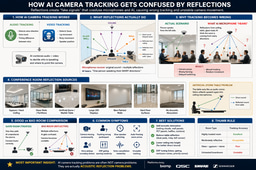
How AI camera tracking gets confused by reflections
Immersive Experiences, Sustainability in AV, Broadcast AV, Live Events / Performance Entertainment, Business of AV, The Podcast Channel, AVIXA Consultants Council, Xchange Community Chat, Celebration of AV Excellence, Sustainable AV , AV Education for The Next Generation, Xchange Advocate Room
Calibration in audio isn’t just “making it sound good”