
Building Beyond: Smart Was Never the Point
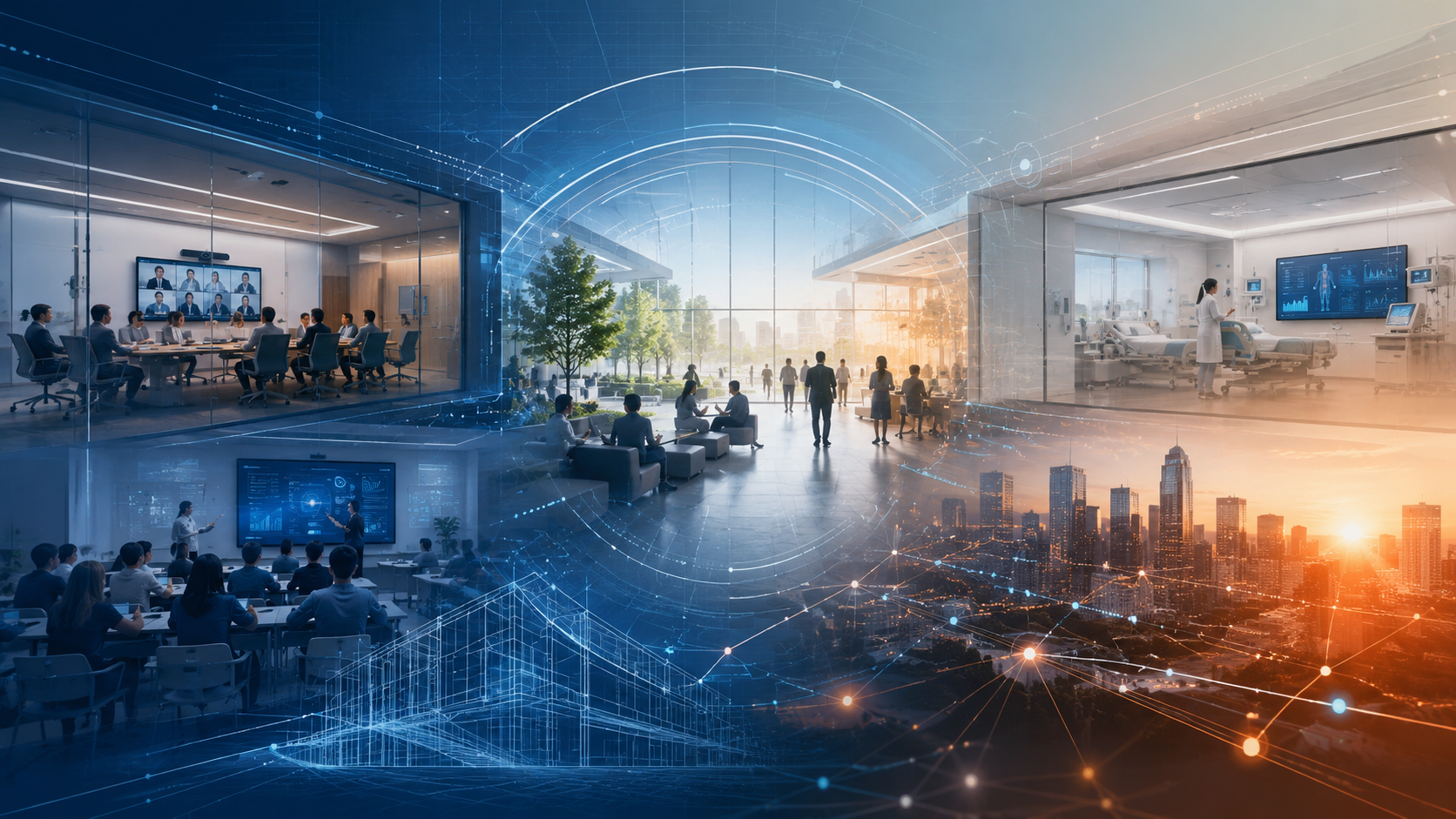
We've been sold "smart" as the destination. Every budget cycle brings a smarter display, a smarter sensor, a smarter building, and the brochure always implies the same thing — smarter is better. It isn't, and the gap between the two is where a great deal of our money quietly goes to die.
I've spent my career in this technology, so I'm not here to dismiss it. I'm here to question the word. A "smart" building is one packed with capability. But capability is not benefit. I've walked through buildings with occupancy sensors in every ceiling tile, lighting that tunes itself to the hour, and a dashboard that will report the carbon dioxide level in any room on demand — where the people inside still couldn't get a meeting to start, still couldn't find a quiet place to think, and mostly felt watched rather than served. All that intelligence, aimed at nothing in particular.
That is what it looks like to perfect the means and forget the end.
Last week I argued that experience is the infrastructure — the thing every system exists to serve. This week, the corollary, stated plainly. Technology is the means. Experience is the end. So the first question on any project is not "what can this system do?" It is "what should the person in this space be able to do, feel, and accomplish?" The technology earns its place by providing that answer, or it isn't specified at all.
That single reversal is what the book means by building beyond — beyond AV, beyond "smart," beyond the feature list. Not beyond the technology itself, but beyond the belief that more of it is the point. The point was always the people inside. The systems are only how we reach them.
When you design in that order, two things follow. You stop buying capability no one uses — the dashboard nobody opens, the conferencing feature nobody can find, the automation everybody overrides within a week. And the spend that survives goes toward what people actually feel: the meeting that starts on time, the room that fits the work, the building that gets out of the way. More often than not, the budget gets smaller while the experience gets larger. That is the opposite of the trade we've been taught to make.
The question worth sitting with — the one this whole series keeps circling — is not whether our buildings are getting smarter. They plainly are. It is whether they are getting better for the people inside them. Those are different questions, and we have spent a long time answering the easy one.
Next week: even when you design for experience, you're aiming at a moving target. Why the most valuable thing you can build into an environment is the capacity to change.
Next in the Building Beyond Series
If experiences have become the true output of intelligent environments, what exactly are we designing for? In the next article, we'll explore why human experience should be treated as infrastructure itself—not a byproduct of design decisions, but the primary outcome every technology investment is intended to create.
# # #
This series of articles is based on my forthcoming book, Building Beyond: Human Experience and the Future of the Built Environment, a framework for building places that adapt, perform, and elevate human potential, to be published in Q4 2026 by Laquilan Press.
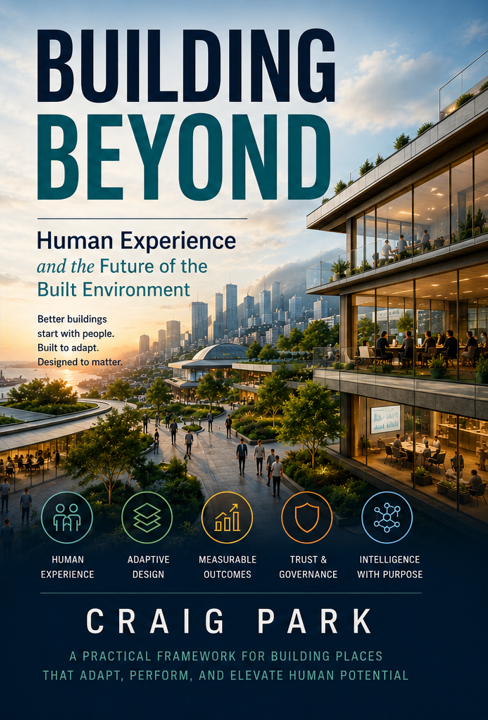
If you are interested in reading and commenting on an Advanced Review Copy, please drop me a note at craig@craigpark.com.

As an architect by training (BS Architecture, Cal Poly SLO) and a collaborative technologist with four decades of practice, I’m passionate about mentoring the next generation of AV professionals at the intersection of technology, strategy, and leadership. I have been active in AVIXA since 1986 and served on the national board from 1993–2000. I am a Fellow of the Society for Marketing Professional Services (SMPS) and an Associate member of the American Institute of Architects.
I serve as Director of Digital Experience Design at Clark & Enersen, a 200-person interdisciplinary architecture and engineering firm, where I lead the planning and design of integrated audiovisual and digital experience environments for higher education, healthcare, and research clients.
My expertise spans systems design, integrated building technology planning, and strategic business development. I bring an award-winning, B2B design-thinking approach developed through leadership roles with national AEC and technology firms.
Across both institutional and consulting roles, I have led marketing and growth strategy, designed future-ready learning and simulation environments, and helped organizations implement AI-powered tools that scale expertise and performance.
-
Xchange Advocates are recognized AV/IT industry thought leaders and influencers. We invite you to connect with them and follow their activity across the community as they offer valuable insights and expertise while advocating for and building awareness of the AV industry.
