
Building Beyond: Human Experience as Infrastructure
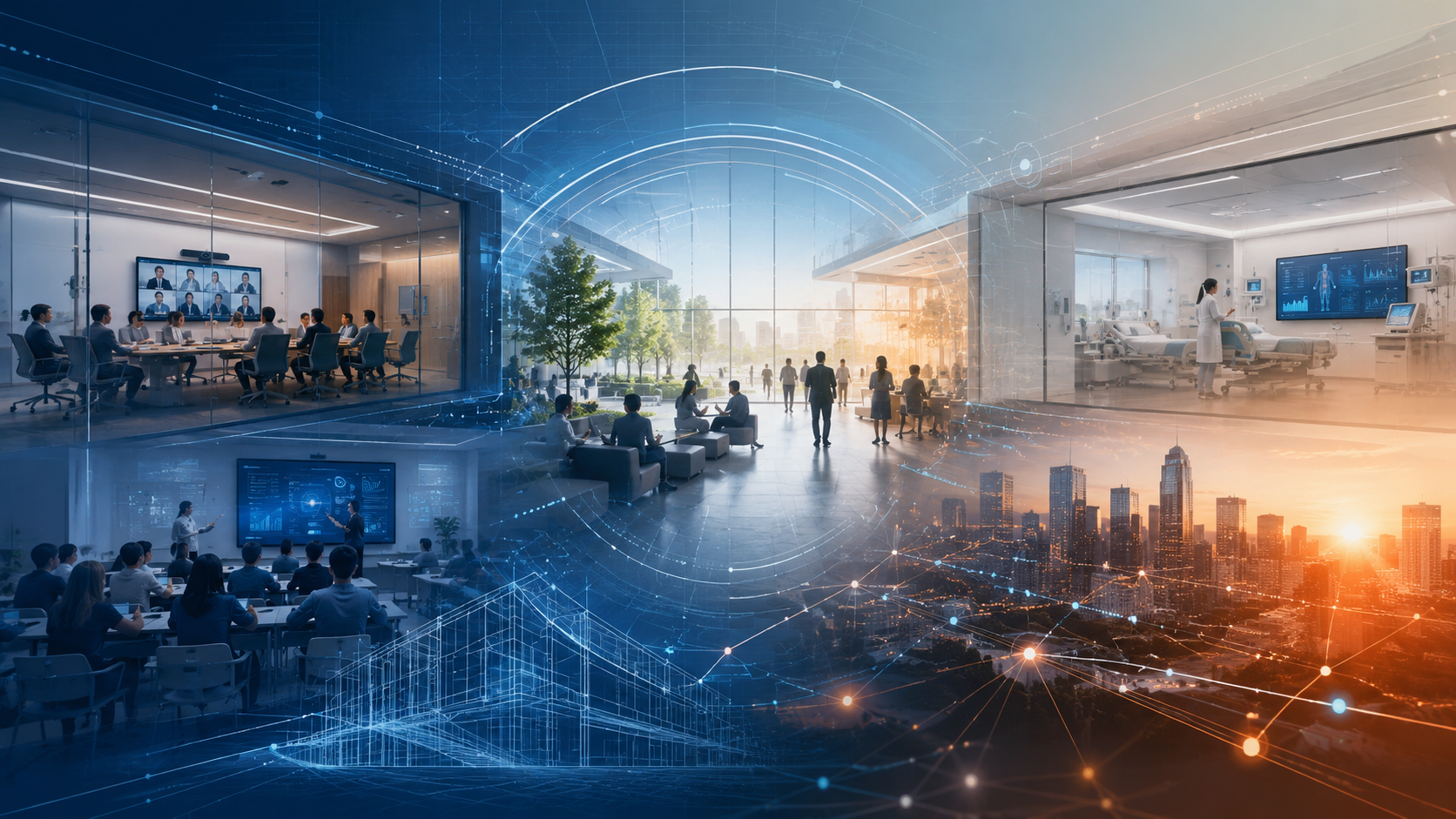
Most environments are at their best the day the ribbon is cut. From there, they decline. We pour months of design and a year of construction into a single opening-day moment, then ask that moment to hold up for fifteen years while the world around it refuses to sit still.
The reason is something we rarely say out loud: the parts of a building move at completely different speeds. A building, the writer Stewart Brand pointed out, is really several layers sliding past one another at different rates. The structure is meant to stand for fifty years or more. The mechanical systems get reworked every fifteen or twenty. The technology — the displays, the network gear, the control systems — turns over every three to five. The software on top of it changes every few months. These are not one thing aging gracefully together. There are several clocks running at different speeds, bolted together as if they all kept the same time.
That mismatch is what turns a proud new building into a frustrating old one. We fasten a fast-moving layer to a slow-moving one — wire the displays into the millwork, hard-code the room logic into the structure — and then, on the day the technology needs to change, we find we can't touch it without tearing into something meant to last for decades. So we don't change it. We live with it. The building stops keeping up, not because anyone chose obsolescence, but because we left no room to move.
The discipline that prevents this is simple to state and hard to practice: design for change as a first-class requirement, not an afterthought. Assume every layer will need to change on its own schedule, and build the seams between them so the fast layers can turn over without disturbing the slow ones. Make the technology layer reachable. Keep the structure neutral. Decouple what moves quickly from what is meant to stand still.
Do that, and the economics of a building invert. Instead of depreciating from opening day, an environment designed for change absorbs new capabilities as they emerge — and sidesteps the brutal rip-and-replace cycles that drain capital budgets and shut down spaces for months. The building ages into relevance instead of out of it.
This is also where the promise of "future-proof" technology quietly falls apart. You can't future-proof a device; everything on the rack will be obsolete soon enough. What you can do is design the environment so that obsolescence is survivable — so the next change is a swap, not a demolition.
Next in the Series
Next week we get concrete. The framework at the center of the book: the five layers every environment is built from, and why most projects are designed upside down.
# # #
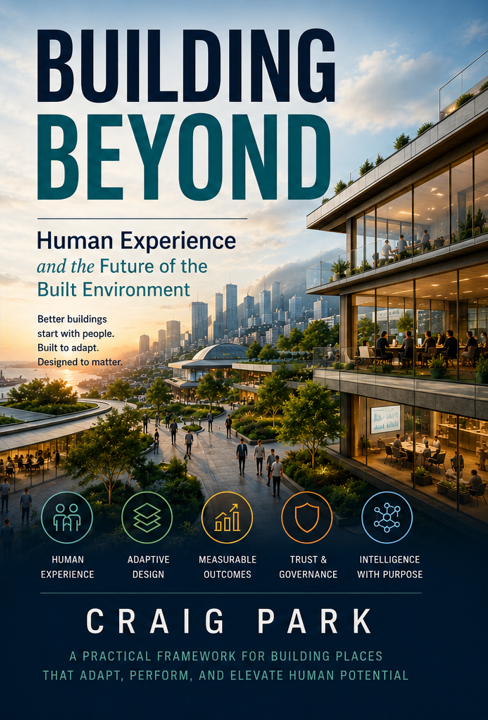
This series of articles is based on my forthcoming book, Building Beyond: Human Experience and the Future of the Built Environment, a framework for building places that adapt, perform, and elevate human potential, to be published in Q4 2026 by Laquilan Press.
If you are interested in reading and commenting on an Advanced Review Copy, please drop me a note at craig@craigpark.com.

As an architect by training (BS Architecture, Cal Poly SLO) and a collaborative technologist with four decades of practice, I’m passionate about mentoring the next generation of AV professionals at the intersection of technology, strategy, and leadership. I have been active in AVIXA since 1986 and served on the national board from 1993–2000. I am a Fellow of the Society for Marketing Professional Services (SMPS) and an Associate member of the American Institute of Architects.
I serve as Director of Digital Experience Design at Clark & Enersen, a 200-person interdisciplinary architecture and engineering firm, where I lead the planning and design of integrated audiovisual and digital experience environments for higher education, healthcare, and research clients.
My expertise spans systems design, integrated building technology planning, and strategic business development. I bring an award-winning, B2B design-thinking approach developed through leadership roles with national AEC and technology firms.
Across both institutional and consulting roles, I have led marketing and growth strategy, designed future-ready learning and simulation environments, and helped organizations implement AI-powered tools that scale expertise and performance.
-
Xchange Advocates are recognized AV/IT industry thought leaders and influencers. We invite you to connect with them and follow their activity across the community as they offer valuable insights and expertise while advocating for and building awareness of the AV industry.
