
Public Address (PA) Systems in Aircraft: A Critical Component of Aviation Communication Infrastructure
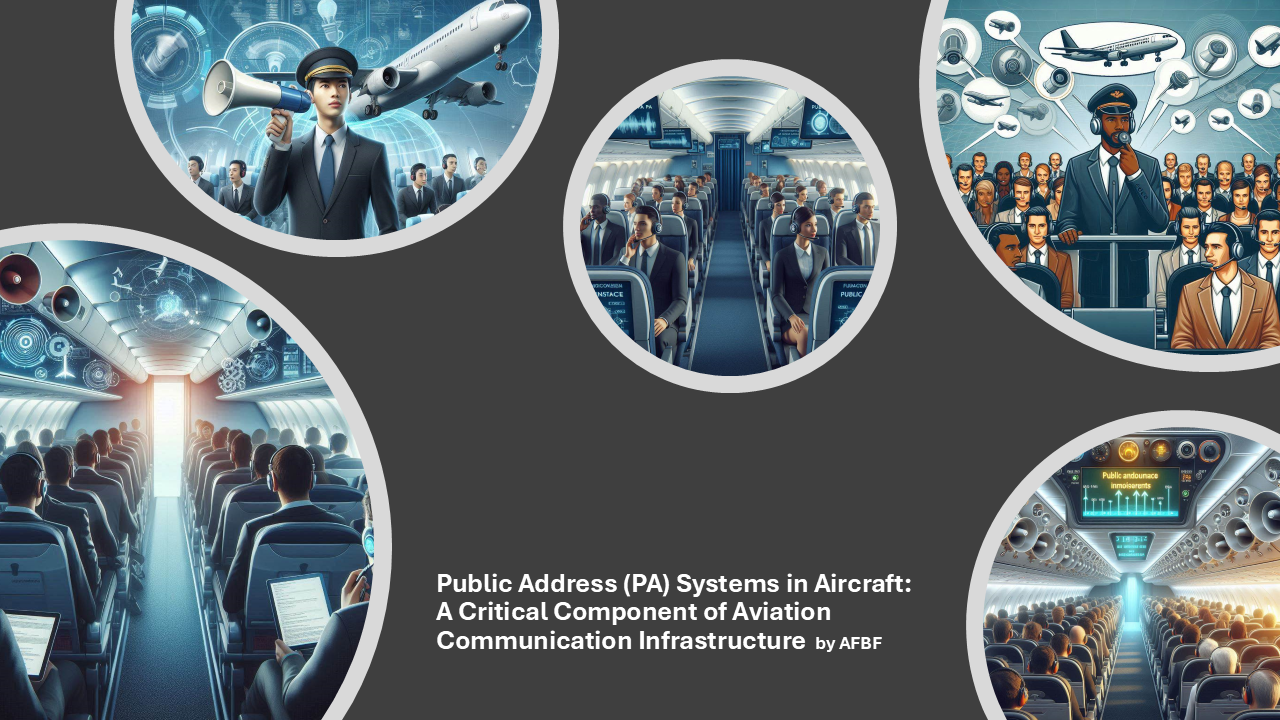




In the aviation industry, Public Address (PA) systems are crucial for ensuring passenger safety, comfort, and effective communication. These systems, often taken for granted, form an integral part of an aircraft's communication infrastructure. I will try to list all technical aspects of PA systems in airplanes, exploring their design, functionality, regulatory requirements and technological advancements.
1. Design and Components of Aircraft PA Systems
The design of aircraft PA systems is carefully engineered to meet the stringent requirements of the aviation environment. Key components include microphones, control panels, amplifiers, and speakers. Microphones and control panels are strategically located in the cockpit and at crew stations, serving as the primary interfaces for pilots and cabin crew to communicate with passengers.
Amplifiers are essential in the PA system, as they boost audio signals to ensure clear communication throughout the aircraft. Speaker placement is critical for uniform sound distribution and the system is integrated with other communication systems like the intercom and Cabin Intercommunication Data System (CIDS) for seamless operation and coordination.
2. Functionality and Operations
The primary function of an aircraft PA system is to relay essential information to passengers and cabin crew . This includes routine announcements, safety instructions and updates on flight status. In emergency situations, the PA system becomes a vital tool for conveying safety procedures and instructions, ensuring passenger compliance and safety.
The system is designed to provide clear and audible announcements, even in the noisy environment of an aircraft cabin. This ensures that passengers can hear and understand important messages, regardless of varying background noise levels.
3. Safety and Regulatory Standards
Aviation authorities, such as the Federal Aviation Administration (FAA) and the European Union Aviation Safety Agency (EASA), enforce stringent regulations for PA systems in airplanes. These regulations address system redundancy, fail-safes and audio clarity. Redundancy is a key feature, ensuring that the system remains operational even if a component fails.
Audio clarity and intelligibility are critical, as passengers must understand safety instructions clearly. The systems are rigorously tested to meet these standards, with specific guidelines on sound pressure levels and frequency response to ensure messages are comprehensible for all passengers.
4. Technological Advancements
Recent technological advancements have significantly enhanced PA systems in aircraft. The transition to digital PA systems and IP-based solutions has provided greater flexibility and integration with other onboard systems. These advancements allow for more precise control over audio distribution and the capability to broadcast different messages to specific zones within the aircraft.
The incorporation of noise-canceling technology and advanced audio processing has improved sound quality, mitigating the effects of ambient noise. Additionally, the integration of PA systems with inflight entertainment systems facilitates synchronized announcements and visual displays, enhancing the overall passenger experience.
5. Challenges and Considerations
Designing PA systems for aircraft involves unique challenges. The cabin environment presents acoustic challenges, such as engine noise, airflow and varying cabin layouts, which can affect sound quality. Maintenance and reliability are also critical, as the system must function flawlessly throughout the flight.
Another consideration is balancing passenger privacy and comfort. While ensuring that all announcements are heard, the system must avoid being overly intrusive, allowing passengers to enjoy a peaceful flight experience.
Finally, as technology continues to advance, PA systems in airplanes are set to become more sophisticated, with improvements in sound quality, system integration and functionality. These systems are indispensable in the aviation industry, ensuring safety, effective communication and an enhanced passenger experience. Ongoing innovation and strict adherence to regulatory standards will drive the development of even more advanced PA systems, further improving the safety and comfort of air travel.

With over 20 years of experience in the AV and ELV industries, I specialize in AV system design, installation, management, and integration across diverse sectors, including corporate, education, sports, healthcare, hospitality, and government. My career began in 2003 with the AV team at a 5-star hotel in Lebanon, where I developed a passion for AV systems.
Technical leadership spans advanced audiovisual ecosystems including digital signage networks, broadcast and media systems, large-format LED environments, video mapping, PAVA and emergency communication systems, intelligent wayfinding, collaboration spaces, lecture theatres, hospitality technologies, and integrated control platforms.
Known for bridging the gap between consultants, architects, operators, and technology vendors to ensure cohesive design delivery and future-ready infrastructure. Strong focus on user experience, operational efficiency, scalability, and reliability across complex facilities.
Certified Project Management Professional (PMP) and AVIXA CTS-D / CTS-I, demonstrating mastery in AV system design, integration, and project governance. Active contributor to the global AV community as an AVIXA Xchange Advocate across the Middle East and GCC.
Industry speaker at the Integrated Systems Europe (ISE) 2023 & 2025 in Barcelona, Infocomm India Sep 2025, representing Qatar and contributing insights on evolving AV technologies, project delivery practices, and knowledge collaboration within the global AV community.
Currently, I am part of BLINQ, a division of IMAR Trading and Contracting in Qatar, where I serve as the ELV Projects Manager, focusing on ELV systems and immersive AV solutions. I am committed to continuous learning, staying ahead of industry trends, and mentoring emerging professionals to elevate the AV field
-
Xchange Advocates are recognized AV/IT industry thought leaders and influencers. We invite you to connect with them and follow their activity across the community as they offer valuable insights and expertise while advocating for and building awareness of the AV industry.
Recommended Content


SONY AV Tech Expo coming to Chicago, IL!


Please sign in
If you are a registered user on AVIXA Xchange, please sign in
Great topic. I decommissioned several PA systems (2010-12) from commercial aircrafts to convert them into cargo flights. The technology was merely analog, which had an audio player and a circuit that interrupted it when the cabin microphone was activated. I will like to interact with new digital designs to understand the complexity for playing movies’ audio, with PA integrate features, plus, the capabilities to use background music and/or other audio.
Thank you @PABLO CORTES
From a military viewpoint this is just as important, though perhaps things like in-flight entertainment and passenger comfort aren't quite as high priorities! Interestingly the graphic used reminded me of the checks we used to have to do on the Hercules aircraft, a loudhailer was part of the equipment we had to test and change the batteries on every so often - makes you think of backups in case of emergencies.
Thank you for Your comments