How Universities Can Scale Broadcast Communications for Growing Production Demands

As collegiate athletics and live event production continue to evolve, universities are facing increasing pressure to deliver more content, across more venues, with tighter timelines and limited resources. For many institutions, expanding broadcast operations means rethinking one critical element: communications.
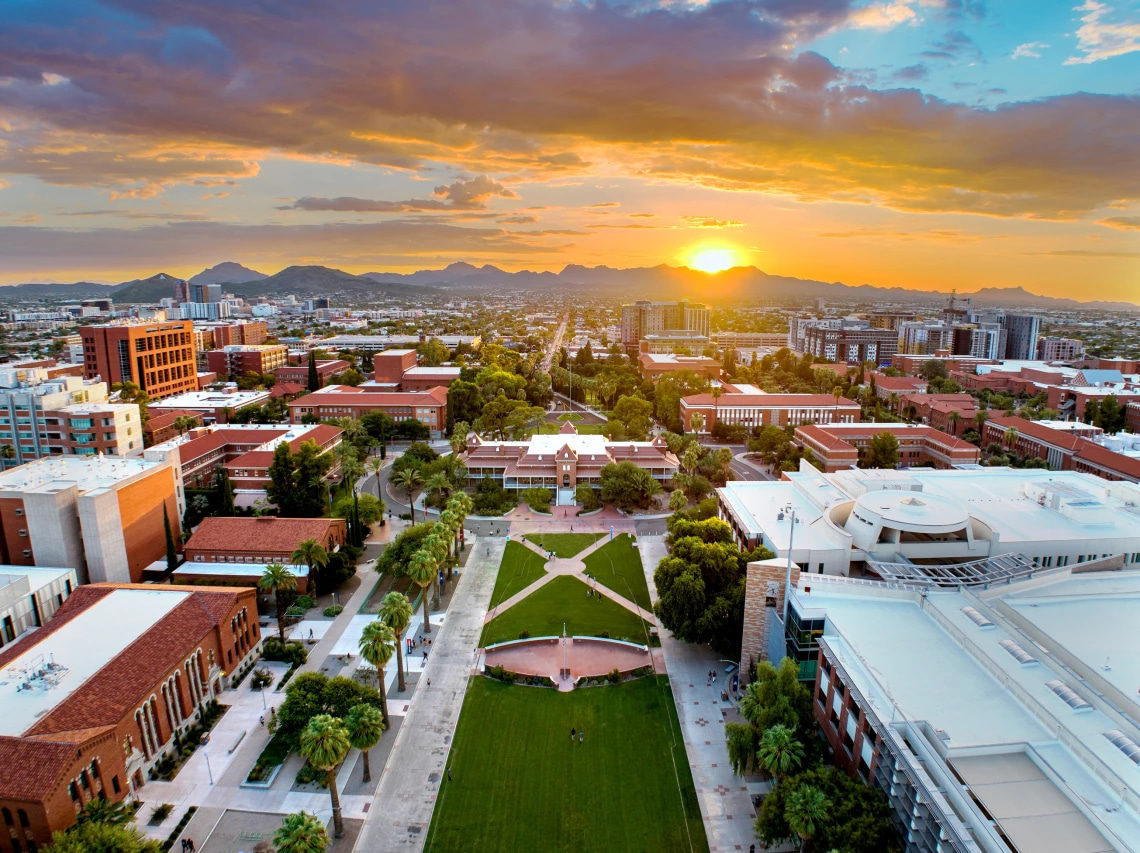
The University of Arizona (UofA) recently faced this challenge head-on as it entered the Big 12 Conference and dramatically increased its production commitments. With more than 125 ESPN+ broadcasts annually — two to three times more than previous seasons — the university needed an intercom solution capable of supporting larger, more complex workflows without adding unnecessary complexity.
Their experience offers a practical roadmap for institutions looking to scale broadcast communications efficiently.
1. Build a Communications System That Can Grow With Production Needs
Growth in live production rarely happens all at once. New venues, additional events, and expanded broadcast schedules often arrive in stages, making scalability essential.
UofA implemented a communications ecosystem built around the Riedel Artist-1024 matrix intercom platform, integrating:
- 15 Bolero wireless beltpacks
- More than 20 PunQtum digital partyline beltpacks
- Six-plus 2300 Series SmartPanels
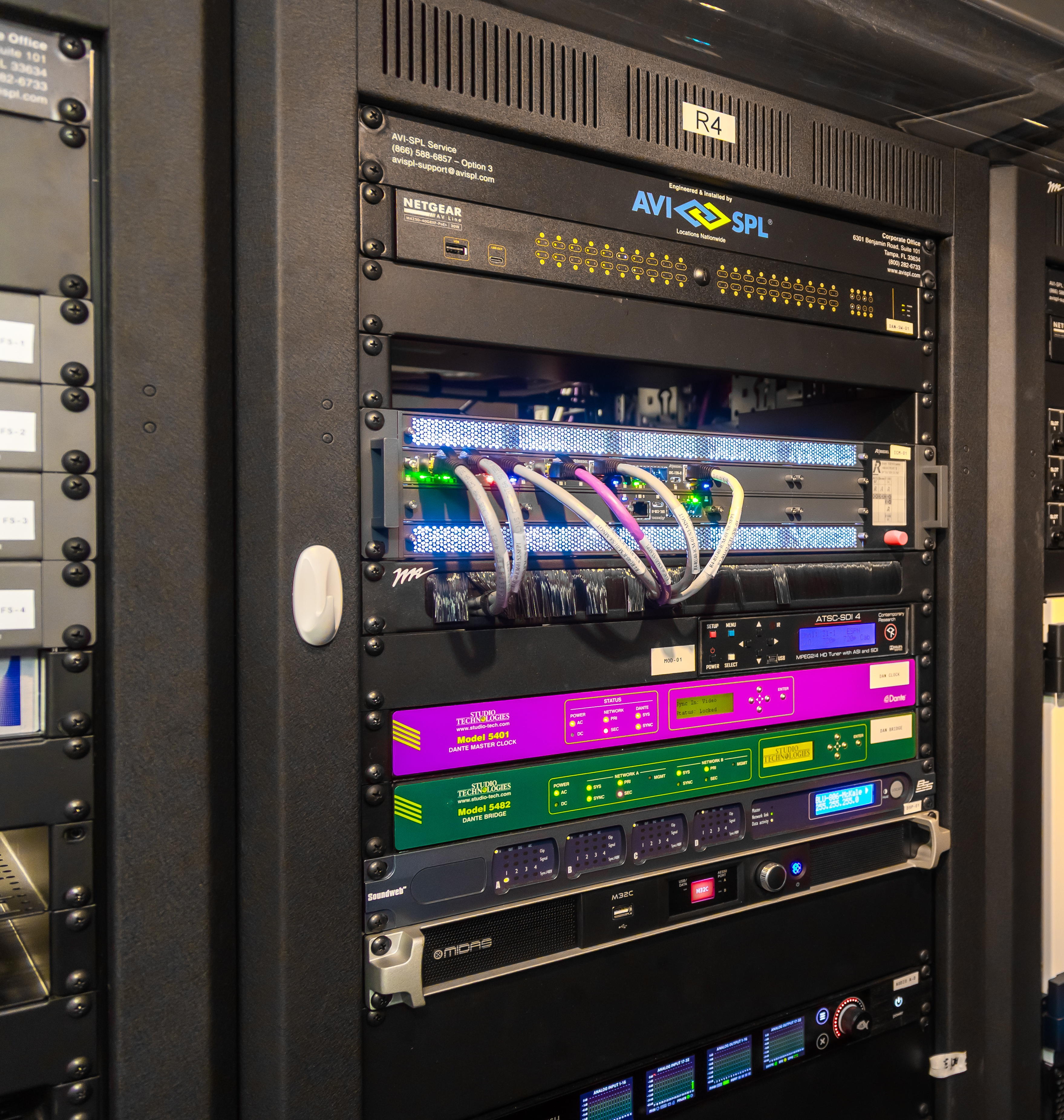
- Dante-enabled connectivity across the university fiber network
Rather than creating isolated communications systems for each venue or event type, the university established a centralized architecture designed to expand over time.
Located in Tucson across a 380-acre campus, UofA now uses its main broadcast control room as a communications hub supporting ESPN+ productions while preparing for future venue expansion.
2. Combine Wireless Mobility With Reliable Fixed Communications
Many production teams face a familiar challenge: balancing mobility with dependable communications for stationary operators - all while staying within budget.
UofA addressed this through a hybrid approach.
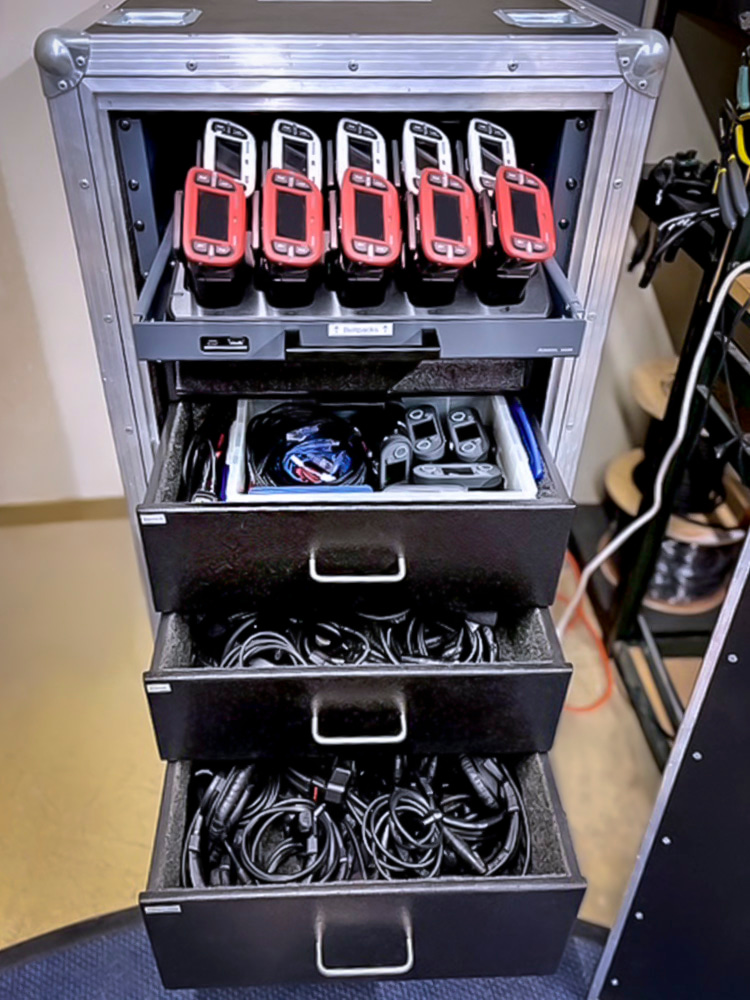
PunQtum wired beltpacks became essential for fixed positions such as:
- Replay operators
- Graphics teams
- Marketing and support staff
Meanwhile, Riedel Bolero wireless beltpacks provide mobility throughout facilities including McKale Center and Arizona Stadium.
“We needed something that could grow with us, adapt to different types of productions, and be intuitive enough for both professionals and students,” said Mike Patton, Multimedia Specialist, Broadcast at the University of Arizona. “Riedel offered that flexibility. Bolero gives us unmatched wireless freedom, and PunQtum has been a huge asset in getting more people on comms efficiently and affordably.”
This blended communications strategy helps maximize resources while maintaining professional-level coordination.
3. Eliminate Legacy Infrastructure Challenges
Older venues often present communications challenges that can affect both workflow and user experience.
At Arizona Stadium — nearly 100 years old — long cable runs previously introduced loud buzzing and interference that complicated communication during football productions.
The new system eliminated those issues, improving clarity across the facility and enabling crews to communicate more effectively during live events.
Clear communications are more than a convenience — they directly influence production quality, operational speed, and crew confidence.
4. Prioritize Fast Reconfiguration for Multi-Use Venues
Universities rarely operate a single production model.
A venue may support:
- Televised broadcasts
- In-venue entertainment
- Athletic events
- External rentals
- Graduation ceremonies
Historically, changing between workflows often required manual rewiring and lengthy setup processes.
With the Artist 1024 intercom matrix, UofA can now load preconfigured profiles for different productions.
“The ability to rapidly switch between sports and event modes, from ESPN+ streams to in-venue live shows to external rentals like graduations, has been a gamechanger,” said Patton. “Before, we were manually rewiring systems. Now, we just load a file and go.”
This flexibility allows communications infrastructure to support multiple use cases without rebuilding workflows each time.
5. Use Existing Network Infrastructure to Reduce Setup Time
Scalable communications do not always require building from scratch.
By leveraging Dante and the university’s existing fiber backbone, UofA significantly streamlined deployment and daily operation.
The result was dramatically faster setup.
“With everything connected via Dante and deployed across our fiber backbone, setup times have been cut dramatically,” Patton explained. “For football, what used to take two hours now takes minutes. We just bring the packs, and they’re live.”
For universities managing lean production teams and demanding schedules, these time savings can have a substantial operational impact.
6. Invest in Technology That Supports Student Development
For educational institutions, communications systems serve a dual purpose — supporting today’s production demands while preparing students for careers in the industry. By working with professional-grade communications technology, students gain hands-on experience with the same tools used across broadcast and live production environments. The result is more than an investment in production quality; it’s an investment in developing the next generation of industry professionals. As universities evaluate new technology, the combination of operational performance and educational value is becoming increasingly important.
Looking Ahead
The University of Arizona’s deployment demonstrates that scaling broadcast communications is not simply about adding more equipment — it is about creating a flexible, interconnected infrastructure that supports evolving production requirements and student's education.
For universities facing growing production demands, UofA’s approach highlights a clear strategy: combine scalable architecture, wireless flexibility, IP connectivity, and simplified workflows to build communications systems ready for the future.
Visit us at InfoComm 2026 - North Hall - Booth #N7105 to learn more.
Read the full official press release: https://www.riedel.net/en/news/news-detail/universityofarizona
Learn about Bolero: https://www.riedel.net/en/products-solutions/intercom/bolero-wireless-intercom
Learn about Artist: https://www.riedel.net/en/products-solutions/intercom/artist-matrix-intercom/overview
Learn about PunQtum: https://www.riedel.net/en/products-solutions/intercom/punqtum-by-riedel-digital-partyline-intercom
Riedel Communications is a leading provider of live production tools in the worlds of media, sports, and entertainment. The company's hard- and software solutions span from distributed video and audio networks over intercom and replay solutions to WAN and MPLS applications. Thanks to Riedel's holistic approach, its three business units — Product Division, Managed Technology Division, and Networks Division — can leverage powerful synergies to provide flexible infrastructures, tools, and services for both fixed and temporary installations around the globe, enabling Riedel customers to run even the most complex projects on-site, remotely, or in the cloud. Riedel is locally headquartered in Santa Clarita, California, with its global headquarters in Wuppertal, Germany. Riedel employs over 1,000 people in 30 locations throughout Europe, Australia, Asia, and the Americas.
https://www.riedel.net/en/
Recommended Content
SONY AV Tech Expo coming to Chicago, IL!
The Translation Problem Nobody Budgets For