
How to Build a Cinematic Live Production Workflow Without Compromising Broadcast Reliability
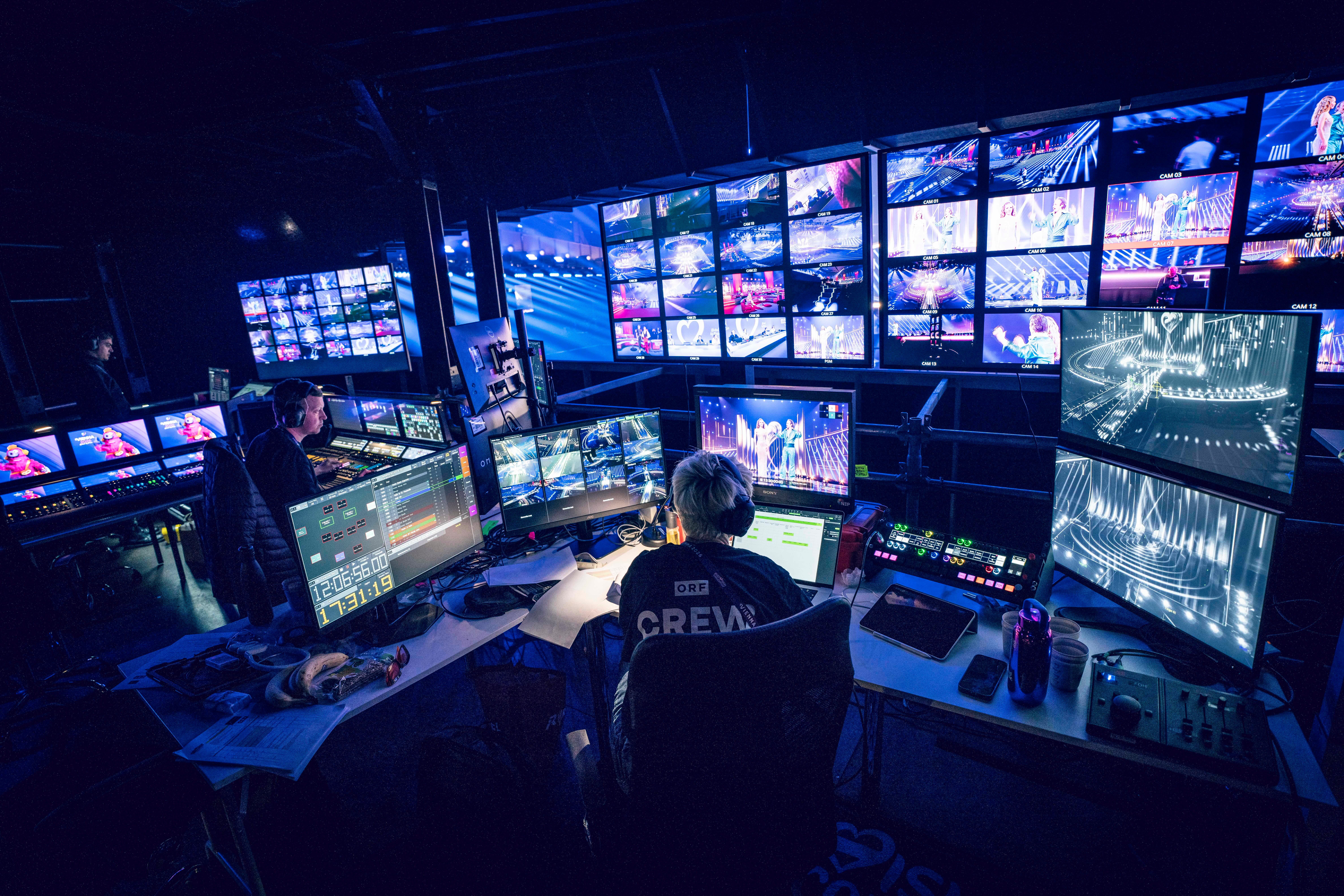

Audiences have grown accustomed to the visual language of premium film and television. Rich depth of field, intimate close-ups, and cinematic camera movement are no longer reserved for scripted content—they're becoming the new expectation for live entertainment.
But bringing cinema cameras into a live production environment isn't as simple as replacing broadcast cameras.
The challenge is maintaining the deterministic, low-latency reliability that live television demands while introducing new creative tools and workflows.
The 2026 Eurovision Song Contest demonstrated that this is possible. By combining ARRI's Alexa 35 Live camera system with Riedel's DIVA+ production infrastructure, host broadcaster ORF delivered a cinematic viewing experience to more than 132 million viewers—without sacrificing the operational resilience required for one of the world's largest live broadcasts.
Here's what broadcasters can learn.
1. Start with the Production Network—Not the Cameras
Many organizations begin by selecting cameras.
The better approach is to first ensure the underlying infrastructure can transport every signal reliably.
A unified production network should carry:
- Video
- Audio
- Intercom
- Tally
- Return video
- Data
- Camera control
Rather than building isolated systems for each workflow, integrating everything into a common infrastructure simplifies deployment while improving operational visibility.
At Eurovision, Riedel's DIVA+ infrastructure unified all of these services into a single production environment, allowing new camera technology to be introduced without disrupting established broadcast workflows.
2. Design Communications as Part of the Camera Workflow
Adding more cameras also means adding more operators, engineers, shader positions, and technical coordination.
Reliable communications become even more critical when introducing specialty camera systems such as:
- Cable cams
- Telescopic cranes
- Wireless Steadicams
- Remote dollies
These systems must remain tightly synchronized with production teams throughout the event.
For Eurovision, Artist intercom, Bolero wireless intercom, SmartPanels, and extensive radio integration ensured every operator remained connected regardless of camera position or production area.
3. Preserve Deterministic Signal Paths
Creative innovation should never come at the expense of operational reliability.
Cinema cameras introduce additional processing requirements, but signal transport must still remain predictable and low latency.
An IP backbone capable of transporting video, intercom, tally, and return signals across the venue ensures every production element remains synchronized—even as new camera platforms are introduced.
Using its MediorNet infrastructure, Riedel connected every specialty camera system while preserving the deterministic performance required for live broadcast.
4. Integrate New Technology Into Existing Broadcast Workflows
One of the biggest misconceptions about cinematic live production is that everything must change.
In reality, successful deployments preserve proven operational workflows wherever possible.
During Eurovision, ARRI camera systems were integrated into a traditional outside broadcast environment while maintaining familiar production processes for:
- Camera shading
- Tally
- Return feeds
- Communications
- Camera control
This allowed production teams to adopt new creative capabilities without retraining every operator or redesigning the entire broadcast infrastructure.
5. Build an Ecosystem—Not Individual Products
No single technology delivers cinematic live production.
Success depends on how well cameras, networking, communications, control systems, and broadcast integration work together.
At Eurovision, ORF, Riedel, ARRI, NEP, Sennheiser, and additional technology partners collaborated to create a unified production ecosystem that balanced creative ambition with operational resilience.
The result was a workflow capable of delivering cinematic images while maintaining the robustness expected from one of the world's most demanding live broadcasts.
The Future of Live Production
As audiences continue to expect higher production values, broadcasters will increasingly look to combine cinematic imaging with live production efficiency.
The key isn't simply adopting cinema cameras.
It's building an integrated production ecosystem where networking, communications, control, and camera technology operate as one.
When the underlying infrastructure is designed for reliability, creative teams gain the freedom to tell richer visual stories—without compromising the resilience that live productions demand.
Read the press release: https://www.riedel.net/en/news/news-detail/riedel-and-arri-at-the-eurovision-song-contest
Read the behind the scenes article on CineD: https://www.cined.com/arri-12-points-how-eurovision-2026-was-shot-on-24-alexa-35-live-cameras/
Riedel Communications is a leading provider of live production tools in the worlds of media, sports, and entertainment. The company's hard- and software solutions span from distributed video and audio networks over intercom and replay solutions to WAN and MPLS applications. Thanks to Riedel's holistic approach, its three business units — Product Division, Managed Technology Division, and Networks Division — can leverage powerful synergies to provide flexible infrastructures, tools, and services for both fixed and temporary installations around the globe, enabling Riedel customers to run even the most complex projects on-site, remotely, or in the cloud. Riedel is locally headquartered in Santa Clarita, California, with its global headquarters in Wuppertal, Germany. Riedel employs over 1,000 people in 30 locations throughout Europe, Australia, Asia, and the Americas.
https://www.riedel.net/en/
Recommended Content
SONY AV Tech Expo coming to Chicago, IL!
The Translation Problem Nobody Budgets For

Please sign in
If you are a registered user on AVIXA Xchange, please sign in