Five Best Practices for Modernizing Theater Communications and Production Workflows

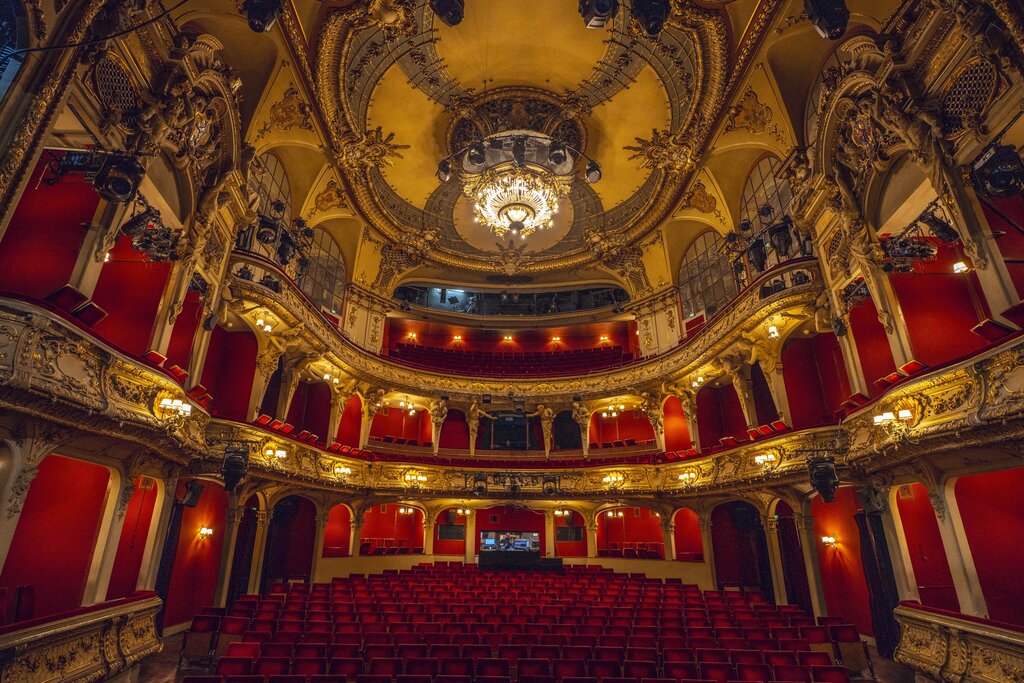
Theater productions have become increasingly complex. Productions often require seamless coordination between stage managers, technical directors, lighting operators, audio teams, video departments, and backstage crews — all while working within historic venues, tight schedules, and limited technical resources.
As theaters evaluate technology upgrades, the goal should not simply be replacing aging equipment. The most successful projects focus on creating integrated workflows that improve communication, streamline operations, and provide flexibility for future productions.
Here are five best practices theaters should consider when modernizing backstage infrastructure.
1. Design Around Workflows, Not Equipment
A common mistake in technology upgrades is treating communications, signal transport, recording, and control as separate systems. While each serves a distinct purpose, theater teams use them together every day.
Before selecting technology, map how information moves through the organization. Consider how stage managers communicate with crews, how signals are distributed across the venue, and how operators interact with production systems during rehearsals and performances.
When systems are designed around actual workflows rather than individual products, operations become more efficient and easier to manage.
2. Build a Unified Communications Backbone
Reliable communication remains the foundation of every successful production.
Modern theater environments benefit from an integrated communications infrastructure that connects all departments — including stage management, lighting, audio, video, and technical operations — through a common platform.
A unified backbone reduces operational complexity, improves coordination, and ensures information reaches the right people at the right time, whether they are backstage, in the control room, or moving throughout the venue.
3. Treat Signal Distribution as a Venue-Wide Resource
Many theaters continue to operate with isolated signal paths that limit flexibility and increase setup time.
Instead, consider signal transport infrastructure as a shared resource that can distribute audio and video throughout the facility. A centralized approach allows teams to route content wherever it is needed without adding temporary cabling or creating workarounds for each production.
This becomes particularly valuable for larger campuses, multi-stage facilities, and venues that regularly host guest productions.
4. Simplify Operations Through Centralized Control
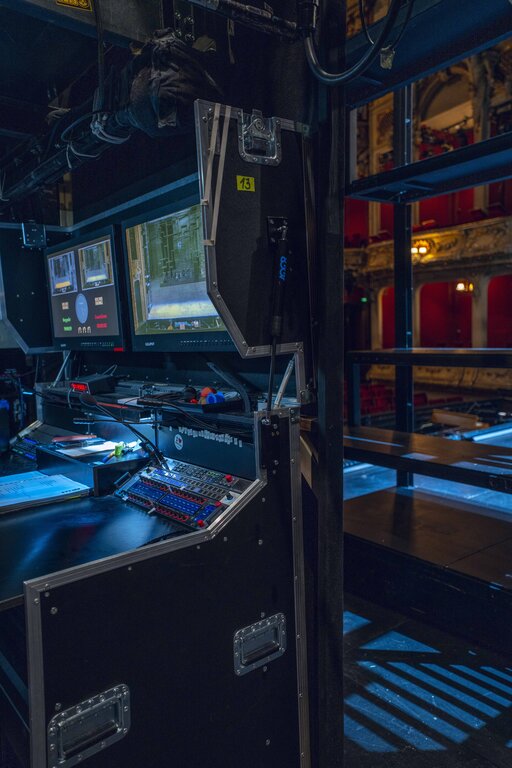
The most powerful systems are often the easiest to use.
Modern production environments increasingly rely on centralized interfaces that bring together communications, monitoring, and control functions within a single operating environment. Rather than requiring staff to move between multiple systems, teams can access the tools they need from a common interface.
This approach reduces training requirements, minimizes operational errors, and allows technical teams to focus on the production rather than the technology.
5. Plan for Change From Day One
Theater requirements rarely remain static. New productions, guest performances, touring companies, and evolving creative demands all place new requirements on technical infrastructure.
When designing a system, prioritize flexibility and scalability. Infrastructure should support future expansion, allow temporary resources to be added when necessary, and adapt to changing workflows without requiring major redesigns.
Future-ready systems protect technology investments while ensuring the venue can continue supporting creative innovation for years to come.
The Bottom Line
Theater modernization is no longer just about upgrading communications equipment or replacing legacy infrastructure. It is about creating connected production environments where communication, signal transport, recording, monitoring, and control work together as part of a unified workflow.
By focusing on integration, operational simplicity, and scalability, theaters can improve day-to-day efficiency while building the flexibility needed to support the next generation of productions.
Check out the Berliner Ensemble Theatre Press Release: https://www.riedel.net/en/news/news-detail/berliner-ensemble-riedel-stage-systems
Video: : https://www.youtube.com/watch?v=FBx3Rz_QLgc
Learn about Riedel's Stage System and theatre solutions: https://www.riedel.net/fileadmin/user_upload/800-downloads/02-Brochures/EN/Solutions_for_Theater_EN.pdf
If you are at INFOCOMM - stop by Booth N7105 in the North Hall - and see the stage system in person.
Riedel Communications is a leading provider of live production tools in the worlds of media, sports, and entertainment. The company's hard- and software solutions span from distributed video and audio networks over intercom and replay solutions to WAN and MPLS applications. Thanks to Riedel's holistic approach, its three business units — Product Division, Managed Technology Division, and Networks Division — can leverage powerful synergies to provide flexible infrastructures, tools, and services for both fixed and temporary installations around the globe, enabling Riedel customers to run even the most complex projects on-site, remotely, or in the cloud. Riedel is locally headquartered in Santa Clarita, California, with its global headquarters in Wuppertal, Germany. Riedel employs over 1,000 people in 30 locations throughout Europe, Australia, Asia, and the Americas.
https://www.riedel.net/en/