Modern national libraries are no longer just book repositories, they are evolving into intelligent knowledge hubs, immersive learning environments and digitally connected public spaces. 🌐🏛️
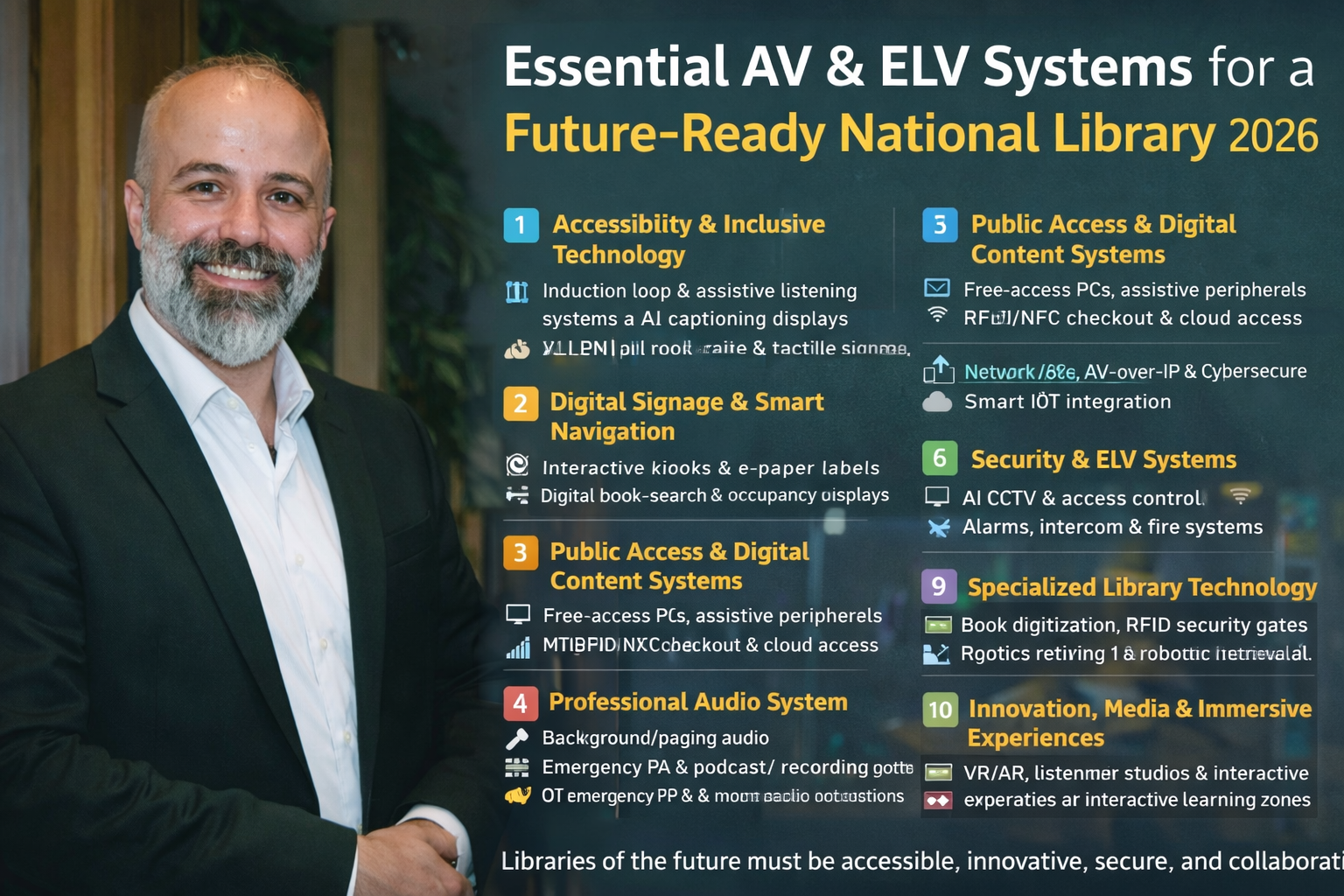
Recently, I was asked to recommend the essential AV and ELV systems for a Future‑Ready National Library 2026.
To ensure accessibility, innovation, security and seamless user experiences, I’ve outlined the key systems every modern library should consider in 2026, presented in simplified bullet points for clarity:
🎧 1. Accessibility & Inclusive Technology:
♿ Induction loop systems for hearing aid users. 🎙️ FM / DM infrared assisted listening systems. 🧠 Real-time AI captioning displays. 👆 Tactile signage & Braille navigation systems. 🔊 Audio description devices for visually impaired users. 🪑 Height-adjustable accessible workstations.
Accessibility is no longer optional, it’s foundational. ✅
🖥️ 2. Digital Signage & Smart Navigation
📍 Interactive wayfinding kiosks 📚 Digital book-search touchscreens 🧭 Floor-plan navigation displays 📺 LCD/LED public information screens 📖 E-paper shelf labels with live catalog updates 🕒 Event & occupancy display systems
Smart signage improves visitor flow and enhances user engagement. 🚶♂️🚶♀️
💻 3. Public Access & Digital Content Systems: 🖥️ Free-access PCs with e-books & archive access ♿ Assistive peripherals (Braille displays, large-print keyboards) 🖨️ Secure print / copy / scan stations 📱 RFID / NFC self-checkout kiosks ☁️ Cloud-based digital archive access 🔐 User authentication & session management systems
Libraries are rapidly evolving into digital learning ecosystems. 📚💡
🔊 4. Professional Audio System:
🎵 Background music & paging systems. 🚨 Emergency voice evacuation PA systems. 🎤 Auditorium AV with wireless microphones & DSP. 🔇 Sound masking systems for silent study areas. 🎙️ Public podcast & recording booths. 🎧 Acoustic treatment for study & media rooms.
Clear sound = better communication, safety and user comfort. 🔉
📺 5. Video & Collaboration Systems:
🖼️ Large-format LED video walls for exhibitions. 🎥 Laser projectors & motorized screens. 🧑🏫 Interactive whiteboards & collaboration displays. ☕ Digital café menu boards. 🖥️ Hybrid meeting & video conferencing systems. 🎬 Media presentation systems for events & seminars.
Libraries are increasingly becoming collaborative community spaces.
🌐 6. Network & AV-over-IP Infrastructure :
📶 High-speed Wi-Fi 6/6E for guests & staff. 🔌 Wired data ports in study desks & meeting rooms. 📡 AV-over-IP distribution systems. 🛠️ Centralized remote monitoring & management. 🔐 Cybersecure segmented networks. ☁️ Smart IoT integration for building systems.
Reliable infrastructure powers the entire smart library ecosystem.
Efficient space management improves user satisfaction significantly.
🛡️ 8. Security & ELV Systems:
📹 AI-enabled IP CCTV surveillance. 🚪 Access control integrated with library cards. 📞 Two-way intercom & emergency help points. 🚨 Intrusion alarm systems. 🔥 Fire alarm integration with voice evacuation. 📡 Central security monitoring platform.
Safety and operational control remain mission critical. 🔒
📖 9. Specialized Library Technology:
📚 High-resolution book digitization stations. 🎞️ Media conversion kiosks (VHS, cassette, vinyl → digital). 🎧 Multimedia & audio guide systems. 🚪 RFID / EM anti-theft security gates. 📦 Automated book sorting & return systems. 🤖 Robotic archive retrieval solutions.
Preserving knowledge digitally is now a strategic priority.
🎬 10. Innovation, Media & Immersive Experiences:
🟩 Green screen content creation studios. 🥽 VR / AR learning stations. 🎧 Audiobook listening pods. 🎮 Interactive immersive learning zones. 📡 Livestreaming & webinar studios. 🎥 Creator spaces for students & researchers.
Tomorrow’s libraries are innovation centers, not just reading rooms.
The modern national library must combine accessibility, technology, security, collaboration and digital transformation into one seamless experience.
AV Community " What smart library technologies or AV systems do you think are essential that I may have missed? Share your thoughts and experiences, your input helps shape what “Future‑Ready” really means.
Xchange Advocates are recognized AV/IT industry thought leaders and influencers. We invite you to connect with them and follow their activity across the community as they offer valuable insights and expertise while advocating for and building awareness of the AV industry.