Deepfakes Are Now an AV Problem and the AV Industry Must Take Responsibility.
Now what can AV do to take responsibility for the new AI threat of Deepfakes? Here’s where AV can lead:
➡️ Secure the Capture Layer - Everything starts at the capture layer. If we can’t trust the camera or microphone, we can’t trust anything downstream.
✔️ Authenticity starts at the source. Implement hardware‑level identity for cameras & mics.
✔️ Integrate cryptographic signing of audio/video.
✔️ Implement tamper‑evident metadata (time, device ID, location)
✔️ Disable unused inputs to prevent injection.
If the source is trusted, deepfake insertion becomes far harder.
➡️ Building Deepfake‑Resilient AV Products
The next generation of AV systems must be designed for authenticity and trust. That means embedding:
✔️ Content verification
✔️ Manipulation detection
✔️ Audit‑ready logging
✔️ APIs for enterprise governance tools.
➡️ AV devices already process audio and video in real time, which makes them the perfect place to detect anomalies. What must be monitored at the edge?
✔️ Lip‑sync inconsistencies.
✔️ Micro‑movement inconsistencies.
✔️ Voice cloning artefacts.
✔️ Frame‑level irregularities.
This is where AV manufacturers can lead with built‑in intelligence.
➡️ Protecting the Signal Chain.
Most deepfake content enters through unverified or compromised streams.
A secure AV pipeline is now non‑negotiable. AV vendors must consider:
✔️ End‑to‑end encryption.
✔️ Signed firmware and secure boot.
✔️ Validation of all external sources.
✔️ Zero‑trust for AV‑over‑IP.
Trustworthy content requires a trustworthy chain.
➡️ Securing Collaboration Workflows
Meeting rooms are now high‑risk environments for impersonation and voice. cloning. AV can reduce this risk with:
✔️ Identity verification.
✔️ Watermarked live video.
✔️ AI‑based participant authentication.
✔️ Controlled screen‑sharing.
This is how we protect real‑time communication.
➡️ Governance Is the missing layer, its no longer optional, its a competitive edge. Technology alone won’t solve deepfakes.Governance gives AV teams the structure to act responsibly. What AV must do:
✔️ Establish clear policies for AI‑generated media.
✔️ Mandate Disclosure requirements.
✔️ Aggressive staff training on deepfake indicators.
✔️ Alignment with ISO 42001, ISO 27001, and NIST AI RMF.
The question now isn’t can AV stop deepfakes, it’s will we choose to?

CTS with 20+ years in Pro AV, specialising in secure, resilient, and human‑centric technology environments.
With credentials including ISO 27001 Practitioner, CompTIA Security+, AVIXA CTS, and service on the AVIXA Standards Steering Committee, I bring a multidisciplinary perspective that spans security governance, systems engineering, AV risk, and operational resilience.
I also serve as a Steering Committee Member for the AV User Group (London Chapter), supporting industry knowledge‑sharing, manufacturer engagement, and the advancement of best practice across enterprise AV and workplace technology.
Across my career, I’ve delivered multi‑regional and global AV/UC deployments, designing and optimising secure collaboration ecosystems across Europe, North America, Africa, and APAC. My work spans Microsoft Teams environments, enterprise meeting rooms, hybrid working platforms, and high‑stakes spaces such as Boardrooms, AGMs, and multi‑site collaboration environments.
I approach AI as a socio‑technical system — where risks emerge not only from algorithms, but from architecture, data flows, user behaviour, and the integrated AV/UC environments that shape real‑world experience.
I am now expanding my leadership into AI governance and responsible technology, developing capability in ISO/IEC 42001 (AIMS) and the NIST AI RMF to help organisations operationalise AI safely, ethically, and at scale — particularly within AV, workplace, and smart‑building systems.
-
Xchange Advocates are recognized AV/IT industry thought leaders and influencers. We invite you to connect with them and follow their activity across the community as they offer valuable insights and expertise while advocating for and building awareness of the AV industry.
Recommended Content

The Autonomous Workplace Threat Surface: AI Agents Are Now Exploiting AV & IT Systems.
When AI Turns Adversarial: The JadePuffer Incident and the Rise of Autonomous Cyber Threats.

Deepfakes Are Now an AV Problem, the Industry Must Step Up.
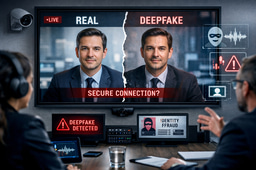
AV/IT Is Officially Inside the EU AI Act Compliance Window; Here’s What That Really Means.