
Building Beyond: The Workplace That Earns the Commute
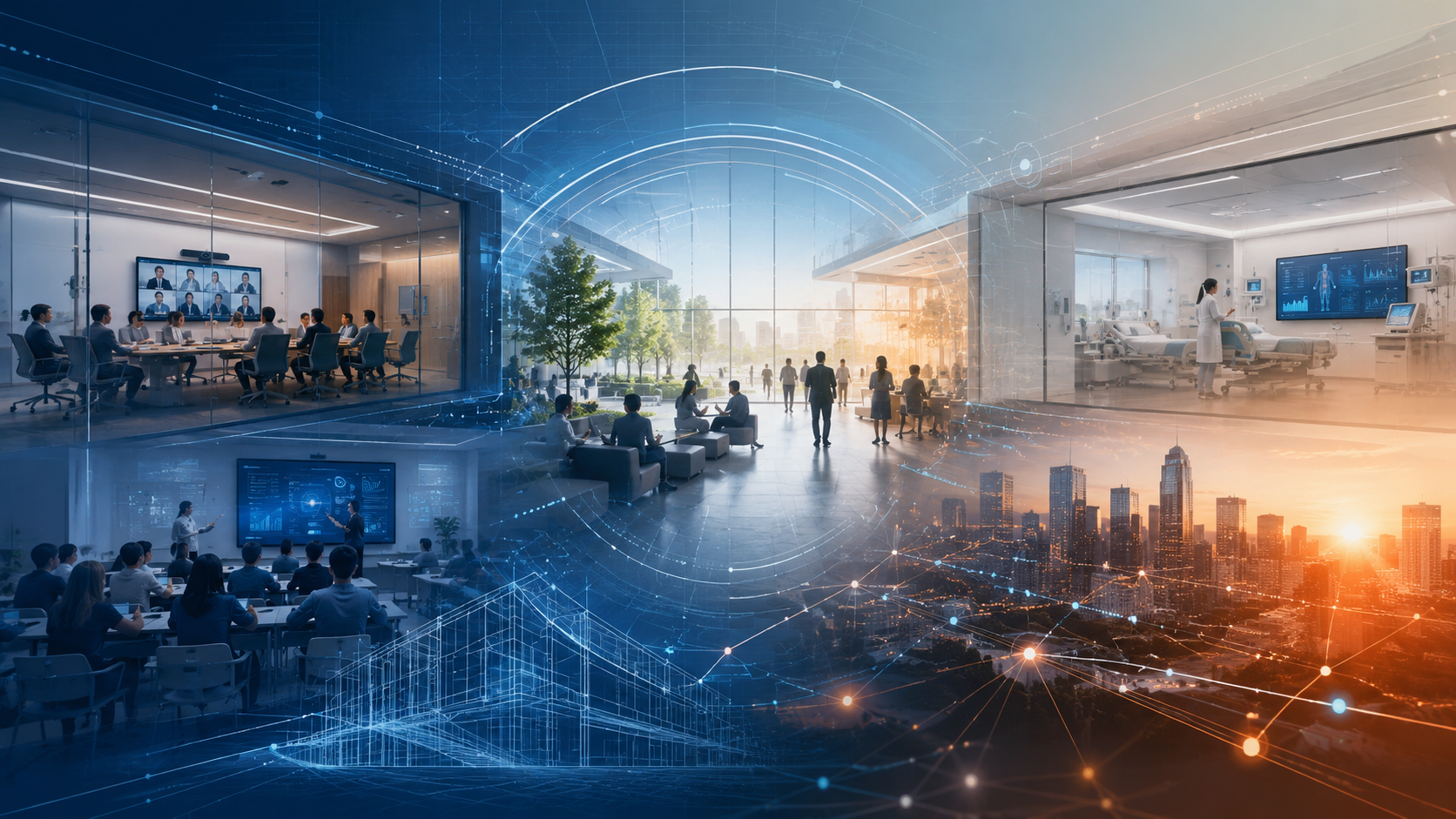
The return-to-office fight gets framed as a question of policy — how many days, which days, who's exempt. It's the wrong question. People don't resist the office because of a calendar. They resist it because, too often, the office offers nothing home doesn't, plus a commute and a hunt for parking. If the best version of someone's workday is the one where they stay home, no mandate fixes that. It only makes people resentful in the building, rather than glad to be there.
And the office has a daily way of proving the point: the meeting that won't start. The first ten minutes lost to a screen that won't wake, a cable that won't carry, a platform that won't connect. That's the failure I opened this series with — and it's most corrosive exactly where being there in person is supposed to pay off.
So apply the framework, starting where it always starts: the human function. What is the office for — what can only happen here, in the same room, that can't happen as well over a link from a kitchen table? Whatever that is, design the space to do it, and design the technology to get out of its way.
In practice, that's three of the book's recurring patterns working together. Frictionless entry: you walk in, and the meeting simply starts, because the room readied itself before you arrived. Cognitive simplicity: no one has to think about the technology to use the room — it behaves the same in every space, so the skill transfers and the whole estate is usable, not only its showpieces. Ambient intelligence: the space senses how the room is really being used and adapts, quietly, without asking anyone to operate it.
None of that is exotic. It's the unglamorous integration work in the seams between systems — the part no single vendor owns, and most projects underfund. But it's the difference between a room that embarrasses you and one that disappears into the work.
Get it right, and the office stops being overhead you have to justify and becomes a reason people choose to come in. Not because they were told to, but because the work goes better there — the unplanned conversation, the fast decision, the meeting that starts on time and ends with something settled. Presence earns itself when the place is better than the alternative. That's the only return-to-office strategy that holds.
The workplace is the first of four environments the book runs the framework through. The next two raise the stakes considerably.
For teams ready to do this now, the Building Beyond Field Guide for the Workplace turns this chapter into a working session — with ideas to set the stage, followed by worksheets and real workplace cases to plan your own space. The diagnostic tools behind the series are in development and arrive after the book.
Next in this series: what happens when a balky room isn't an annoyance but a danger — the clinical and learning environments.
# # #
This series of articles is based on my forthcoming book, Building Beyond: Human Experience and the Future of the Built Environment, a framework for building places that adapt, perform, and elevate human potential, to be published in Q4 2026 by Laquilan Press.
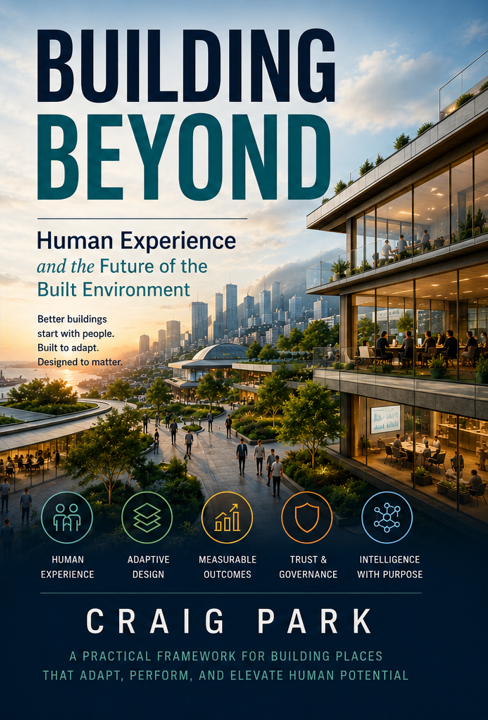
If you are interested in reading and commenting on an Advanced Review Copy, please drop me a note at craig@craigpark.com.

As an architect by training (BS Architecture, Cal Poly SLO) and a collaborative technologist with four decades of practice, I’m passionate about mentoring the next generation of AV professionals at the intersection of technology, strategy, and leadership. I have been active in AVIXA since 1986 and served on the national board from 1993–2000. I am a Fellow of the Society for Marketing Professional Services (SMPS) and an Associate member of the American Institute of Architects.
I serve as Director of Digital Experience Design at Clark & Enersen, a 200-person interdisciplinary architecture and engineering firm, where I lead the planning and design of integrated audiovisual and digital experience environments for higher education, healthcare, and research clients.
My expertise spans systems design, integrated building technology planning, and strategic business development. I bring an award-winning, B2B design-thinking approach developed through leadership roles with national AEC and technology firms.
Across both institutional and consulting roles, I have led marketing and growth strategy, designed future-ready learning and simulation environments, and helped organizations implement AI-powered tools that scale expertise and performance.
-
Xchange Advocates are recognized AV/IT industry thought leaders and influencers. We invite you to connect with them and follow their activity across the community as they offer valuable insights and expertise while advocating for and building awareness of the AV industry.
Recommended Content




Top 10 Real Estate App Development Companies in Dubai, UAE (2026 Guide)
Please sign in
If you are a registered user on AVIXA Xchange, please sign in