
Building Beyond: One Framework, Four Environments, Five Patterns
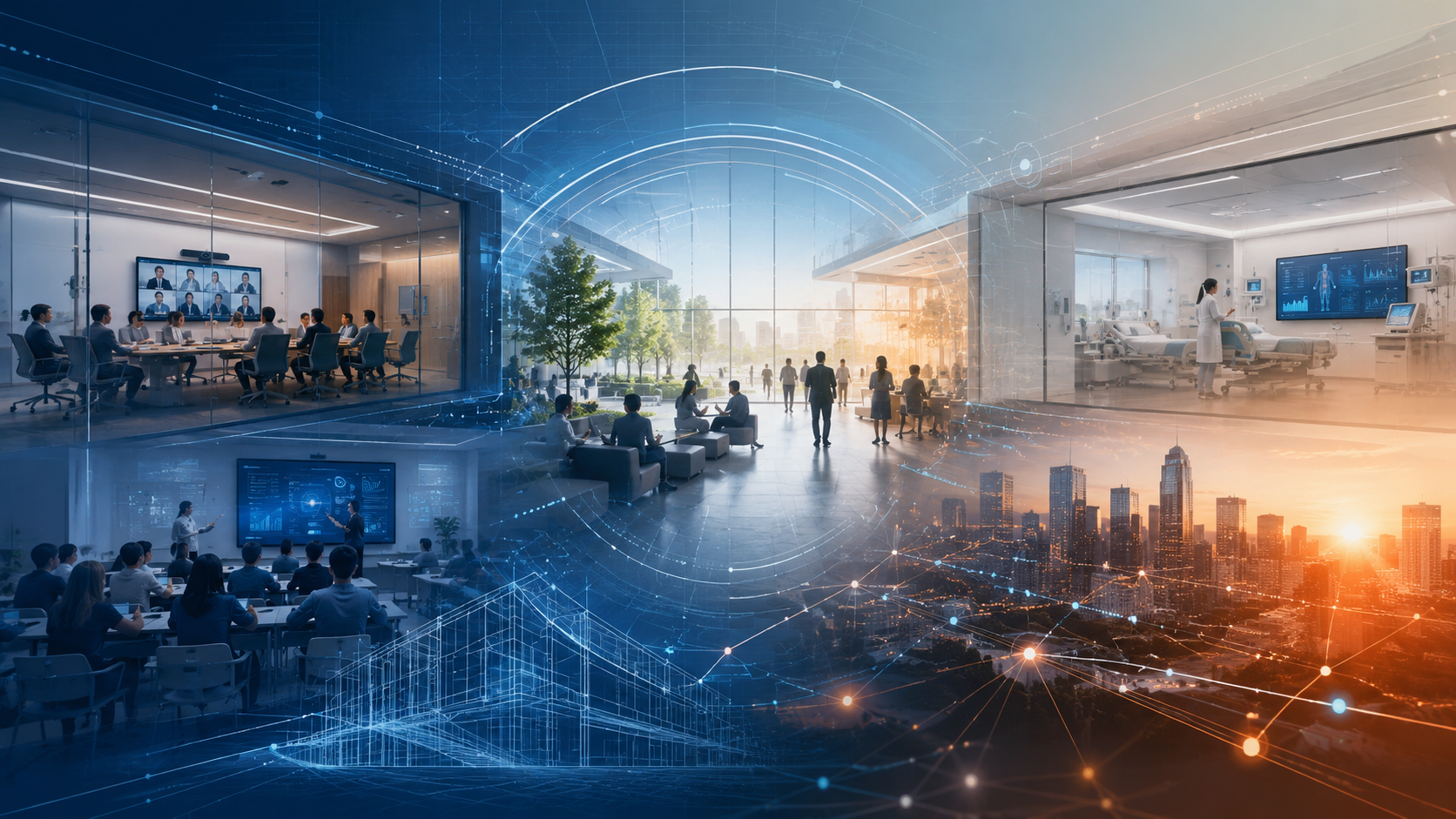
Here's the reasonable objection to everything I've argued so far. Surely a courthouse and a call center, an intensive care unit and a third-grade classroom, each need their own playbook. They have almost nothing in common. A single framework that claims to fit all of them sounds like a framework that fits none of them.
I chose those four environments precisely because they share so little. A workplace exists to produce good collective work. A clinical space exists to keep people safe and help them heal. A learning space exists to develop a mind. A civic space exists to hold a community together. Different people, different stakes, different definitions of success. If this book offered a separate philosophy for each, those chapters should have had nothing in common but a vocabulary.
They didn't turn out that way. The same handful of patterns surfaced in every one — not carried over from chapter to chapter, but arising on their own because each environment needed them.
There are five. Frictionless entry: the cost of beginning what you came to do should approach zero. Cognitive simplicity: impose the least mental load that still serves the function — which matters most across a whole estate, not just the showpiece rooms. Ambient intelligence: intelligence that works in the background, sensing and responding without demanding to be operated. Experience equity: an environment usable by everyone who comes to it, not excellent for a few and baffling to the rest. And operational visibility: you can only improve what you can see is failing people.
The striking part isn't any single pattern. It's that across four environments built for entirely different purposes, only the human function at the top really changed. Everything beneath it rhymed.
That recurrence is the whole payoff, because it means the patterns transfer. Learn them once, and you can read any environment you walk into — and, more usefully, repair it — whether it's a boardroom, a ward, a lecture hall, or a city permit office, where the product is public trust and a hostile, confusing building quietly teaches citizens that their government isn't for them. Four separate problems collapse into one transferable skill.
This is the synthesis that closes the practice half of the book, and the five patterns are cataloged in full — with their forces, their cautions, and how they relate — in the Pattern Language appendix, so they work as a reference rather than just an idea.
Building Beyond will be released October 1, 2026. Each of the four environments now has a field guide of its own — workplace, healthcare, learning, and community — a two-part workshop that puts these five patterns to work on one specific project. The diagnostic tools from the series are still in development and will be released after the book.
Next in this series: we hand the fastest-moving layer to the center of the room — AI, not as another system, but as the thing that finally makes the rest cohere.
# # #
This series of articles is based on my forthcoming book, Building Beyond: Human Experience and the Future of the Built Environment, a framework for building places that adapt, perform, and elevate human potential, to be published in Q4 2026 by Laquilan Press.
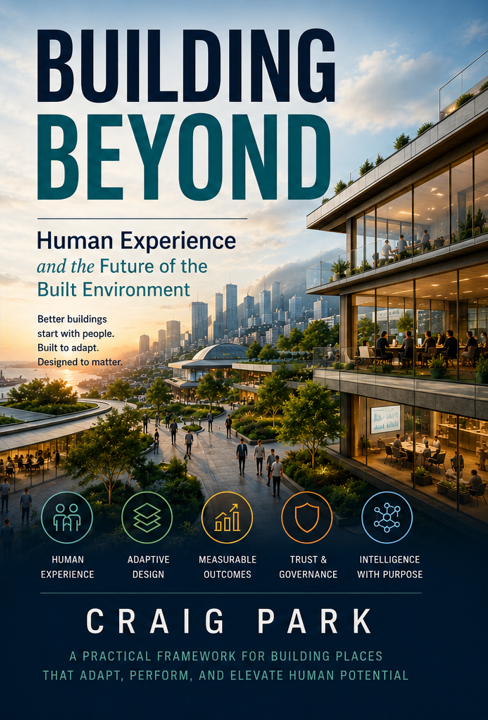
If you are interested in reading and commenting on an Advanced Review Copy, please drop me a note at craig@craigpark.com.

As an architect by training (BS Architecture, Cal Poly SLO) and a collaborative technologist with four decades of practice, I’m passionate about mentoring the next generation of AV professionals at the intersection of technology, strategy, and leadership. I have been active in AVIXA since 1986 and served on the national board from 1993–2000. I am a Fellow of the Society for Marketing Professional Services (SMPS) and an Associate member of the American Institute of Architects.
I serve as Director of Digital Experience Design at Clark & Enersen, a 200-person interdisciplinary architecture and engineering firm, where I lead the planning and design of integrated audiovisual and digital experience environments for higher education, healthcare, and research clients.
My expertise spans systems design, integrated building technology planning, and strategic business development. I bring an award-winning, B2B design-thinking approach developed through leadership roles with national AEC and technology firms.
Across both institutional and consulting roles, I have led marketing and growth strategy, designed future-ready learning and simulation environments, and helped organizations implement AI-powered tools that scale expertise and performance.
-
Xchange Advocates are recognized AV/IT industry thought leaders and influencers. We invite you to connect with them and follow their activity across the community as they offer valuable insights and expertise while advocating for and building awareness of the AV industry.
