
Building Beyond: AI Isn't Another System. It's the Conductor
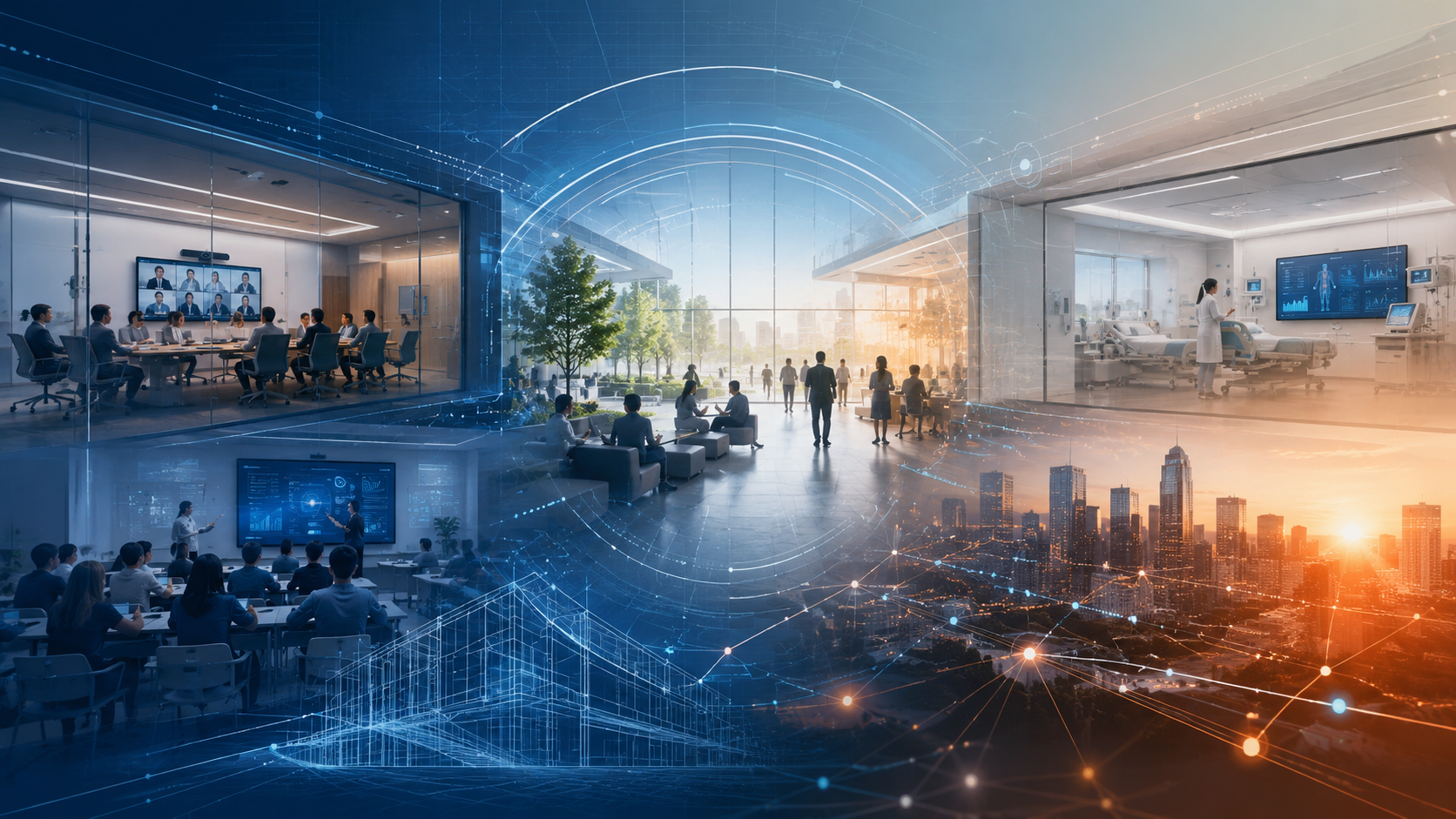
The reflexive move right now is to treat AI as one more thing to buy and bolt on — an AI box in the rack, an AI feature in the platform, an AI line in the proposal. Add it to the pile of systems we already can't get to cooperate, and the likeliest result is one more system that doesn't quite talk to the others. One more thing to break.
That misreads what AI is for in a building.
Go back to the failure I opened this series with — the room where every component worked, and the room still failed, because nothing was responsible for the whole. That gap, the seam between systems, is exactly where AI earns its place. Not as another instrument in the section, but as the conductor: the layer that finally gets the display, the network, the schedule, the lighting, and the climate to act as one coherent thing instead of a pile of parts each doing its own job in isolation. The orchestration layer is the question the whole book asks — who owns the whole? — answered in software.
Mark Weiser, who coined the term "ubiquitous computing," argued decades ago that the most profound technologies are the ones that disappear — that weave themselves into a place until you stop noticing them. That's the bar. Done right, the AI layer isn't something you operate. It's the reason the room is simply ready when you walk in, the reason the space adapts without anyone running it. You feel its absence — the friction that's gone — not its presence.
Two cautions come with that role, and both are threads from earlier in this series. First, the orchestration layer is the fastest-moving layer in the building, turning over on a monthly cycle while the structure around it lasts for decades. That makes it the layer you must couple most loosely — give it room to change without tearing into everything else, or you've built tomorrow's most expensive renovation. Second, the layer that conducts everything is also the layer that sees everything. A conductor with a view of every system is a governance question before it is a technology one — what it senses, keeps, and infers is decided on purpose, never left on by default.
This is also how you design for a future you can't predict. None of us knows what this layer will be capable of in five years. You don't answer that by guessing; you build the environment so the orchestration layer can take on capability as it arrives — the way a good concert hall doesn't need to know next season's program. Treat AI as the conductor, design it loosely and govern it tightly, and the building gets to keep getting better without being rebuilt.
Building Beyond is coming October 1, 2026; the diagnostics behind this series are in development.
Next in this series — the last one (for now): how this gets built, and what happens when the building starts running itself.
# # #
This series of articles is based on my forthcoming book, Building Beyond: Human Experience and the Future of the Built Environment, a framework for building places that adapt, perform, and elevate human potential, to be published in Q4 2026 by Laquilan Press.
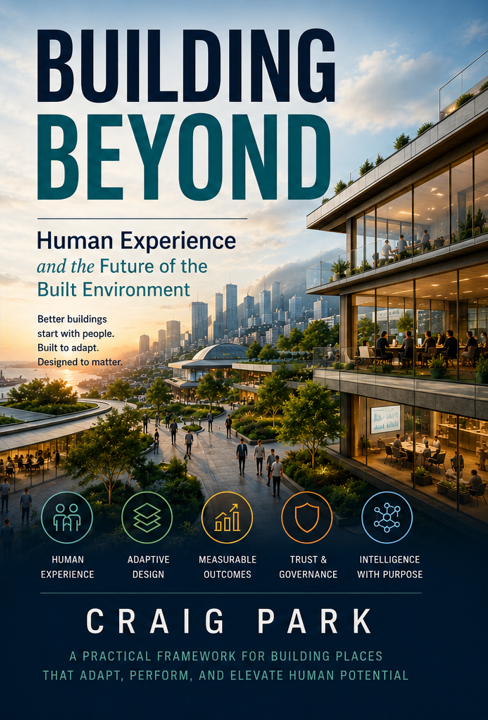
If you are interested in reading and commenting on an Advanced Review Copy, please drop me a note at craig@craigpark.com.

As an architect by training (BS Architecture, Cal Poly SLO) and a collaborative technologist with four decades of practice, I’m passionate about mentoring the next generation of AV professionals at the intersection of technology, strategy, and leadership. I have been active in AVIXA since 1986 and served on the national board from 1993–2000. I am a Fellow of the Society for Marketing Professional Services (SMPS) and an Associate member of the American Institute of Architects.
I serve as Director of Digital Experience Design at Clark & Enersen, a 200-person interdisciplinary architecture and engineering firm, where I lead the planning and design of integrated audiovisual and digital experience environments for higher education, healthcare, and research clients.
My expertise spans systems design, integrated building technology planning, and strategic business development. I bring an award-winning, B2B design-thinking approach developed through leadership roles with national AEC and technology firms.
Across both institutional and consulting roles, I have led marketing and growth strategy, designed future-ready learning and simulation environments, and helped organizations implement AI-powered tools that scale expertise and performance.
-
Xchange Advocates are recognized AV/IT industry thought leaders and influencers. We invite you to connect with them and follow their activity across the community as they offer valuable insights and expertise while advocating for and building awareness of the AV industry.
