
Building Beyond: From Plan to Practice
This is where most frameworks go to die — in the gap between a compelling deck and a live job site. The idea survives the keynote, then dissolves the moment it encounters a budget cycle, a procurement process, and a building already half-built. A framework that can't be implemented is just a worldview.
So the book doesn't end at the idea. It ends at the work — a practical path for putting the framework into a real project: where to start, who has to own the whole, how to sequence the five layers, and how to bring it into existing buildings and existing budgets rather than only new construction. The point was never to admire the model. It was to get a better room built on Monday.
The honest version of implementation is smaller than people expect. You don't transform an estate by decree. You take one space — one room, one floor, one clinic — and you get the whole of it right: function first, the technology in its place, the seams owned by someone with a name. You prove it works, you measure it so the proof can travel, and you let the next project want what that one has. Transformation by demonstration beats transformation by mandate every time, because people believe a room they've stood in.
And then there's the part that's still emerging. As environments climb toward the adaptive level — the top rung of the maturity ladder, where a space adjusts on its own — the job changes under us. We move from running these spaces to governing them. The skill stops being operational and becomes judgment: deciding what the environment should optimize for, what it must never do, and who answers for it when it acts on its own. That isn't a distant scenario. It's the near edge of the work, and the people who shape the built environment will either define those terms or inherit someone else's.
I opened this series with a room that wouldn't connect — every system working, the room still failing, because the whole was no one's job. Twelve weeks of framework come down to a single shift: make the whole someone's job. Own the experience, not just the equipment. Do that, and the same room that used to embarrass you starts doing what it always promised. The people who take that on now will set the standard for the next decade of buildings. The rest will still be behind the credenza, looking for the right cable.
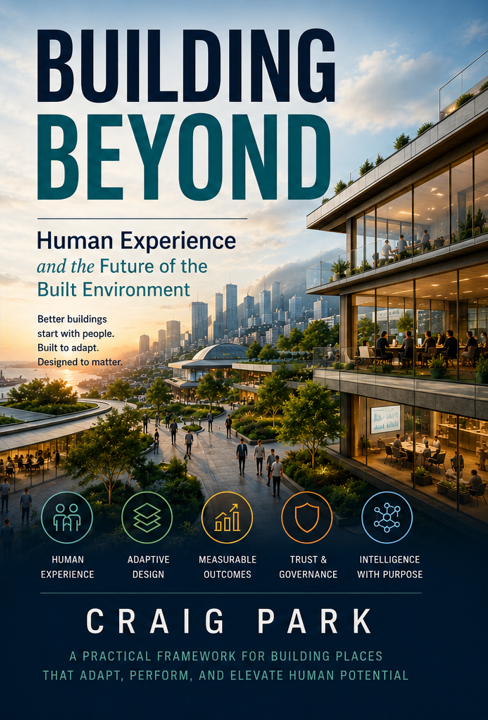
Building Beyond: Human Experience and the Future of the Built Environment releases on October 1, 2026, and is now open for pre-order. It comes with a working kit: a technology taxonomy, the full pattern language, and an implementation guide as its three appendices — and, for each of the four environments, a field guide that turns the framework into a two-part planning workshop you can run on a real project.
Start with one room — and there's a field guide for whichever kind of room it is.
# # #
This series of articles is based on my forthcoming book, Building Beyond: Human Experience and the Future of the Built Environment, a framework for building places that adapt, perform, and elevate human potential, to be published on October 1, 2026, by Laquilan Press.
If you are interested in learning more, please drop me a note at craig@craigpark.com.
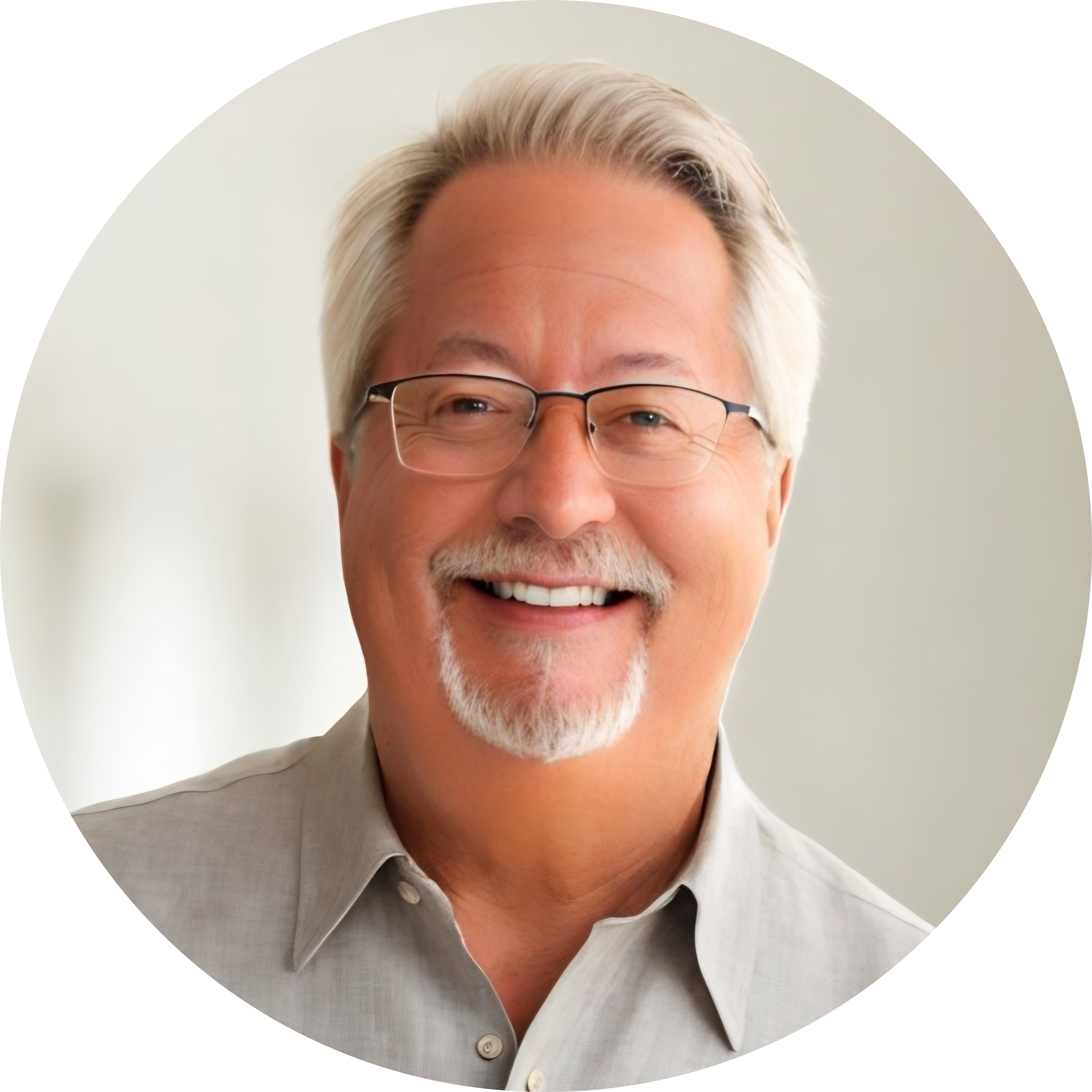
As an architect by training (BS Architecture, Cal Poly SLO) and a collaborative technologist with four decades of practice, I’m passionate about mentoring the next generation of AV professionals at the intersection of technology, strategy, and leadership. I have been active in AVIXA since 1986 and served on the national board from 1993–2000. I am a Fellow of the Society for Marketing Professional Services (SMPS) and an Associate member of the American Institute of Architects.
I serve as Director of Digital Experience Design at Clark & Enersen, a 200-person interdisciplinary architecture and engineering firm, where I lead the planning and design of integrated audiovisual and digital experience environments for higher education, healthcare, and research clients.
My expertise spans systems design, integrated building technology planning, and strategic business development. I bring an award-winning, B2B design-thinking approach developed through leadership roles with national AEC and technology firms.
Across both institutional and consulting roles, I have led marketing and growth strategy, designed future-ready learning and simulation environments, and helped organizations implement AI-powered tools that scale expertise and performance.
-
Xchange Advocates are recognized AV/IT industry thought leaders and influencers. We invite you to connect with them and follow their activity across the community as they offer valuable insights and expertise while advocating for and building awareness of the AV industry.
Recommended Content


SONY AV Tech Expo coming to Chicago, IL!
Please sign in
If you are a registered user on AVIXA Xchange, please sign in