Transparent LED And Architecture – When Glass Becomes Your New LED Screen
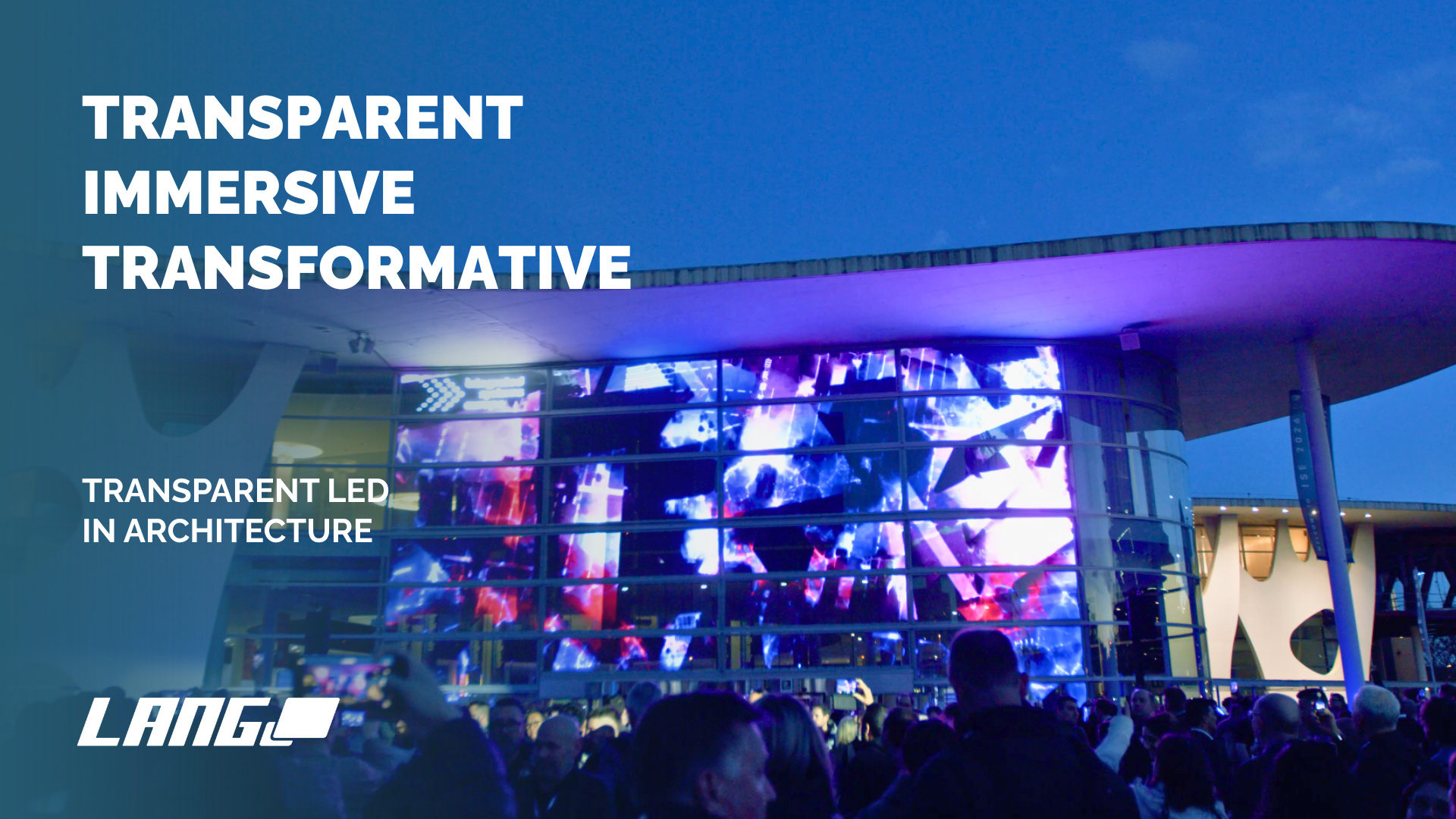
Transparent LED does not change the function of glass surfaces, but extends it. Modern glass facades, entrance areas and shop windows remain part of the architecture while simultaneously gaining an additional communicative layer. This is precisely where the difference from conventional LED solutions lies: the screen is not placed in front of the architecture, but has the ability to integrate itself into an existing structure.
Anyone who has visited ISE in Barcelona over the past few years will already have experienced this. The transparent installation at the south entrance turned the glass facade itself into a medium: visible from a distance and commanding attention from outside, even becoming part of the nightly drone shows, while always remaining open and translucent from the inside. The architecture stayed recognisable, while simultaneously gaining a new presence in the space.
This opens up new possibilities for working with existing surfaces. Instead of integrating additional display structures into rooms or facades, existing glass surfaces can themselves become part of a media concept. Particularly in corporate spaces, retail environments, public buildings, and the trade show and events sector, this creates solutions where content is far more closely connected to architecture and spatial impact.
You install transparent LED, but what about the content?
Transparent LED also calls for a different way of thinking about content compared to conventional LED surfaces. Since the image is created on a transparent surface, visual material needs a high proportion of black, as dark areas disappear optically and allow the transparency to show through. Those who account for this early in the content planning process achieve an effect that conventional display solutions cannot match.
The conversation in its current form is only a few years old, made possible by recent developments in the technology. Modern transparent LED systems now offer a creative and technical flexibility that has significantly expanded their range of applications.
The fact that existing glass structures can today be retrofitted far more easily, while simultaneously combining high transparency with compelling image quality, is attributable to advances in active matrix technology – at least in the case of Muxwave installations.
The factors already familiar from traditional LED setups, such as ambient light, viewing distance, and integration into the existing structure, also play an important role here and should be considered early in the planning process. Both permanent installations and temporary applications can thus be integrated into existing environments with considerably less effort.
Plan beforehand, enjoy the results
This also changes the role of architecture within the planning process. Glass is no longer understood solely as an architectural or functional element, but increasingly as a potential part of an integrated media surface. Content no longer appears only on an additional screen within a space, but becomes part of the building envelope itself.
This is precisely where the potential of transparent LED lies: making digital communication visible without architecture losing its openness. The earlier architecture, media technology and content are thought through together, the more powerfully the result brings space, brand and visual impact into alignment.
Founded in 1978, LANG AG is a globally leading wholesaler of visual presentation technology, offering solutions for both rental and sales. Through innovation and technological pioneering, the company has earned an excellent reputation in the AV industry. LANG identifies promising technologies at an early stage and successfully supports them through to market maturity.
With independent subsidiaries in Switzerland, the United Kingdom, Spain, the United Arab Emirates, and the Netherlands, LANG serves the professional AV market across Europe and internationally. The company operates discreetly in the background, ensuring the highest level of confidentiality toward end customers.
A comprehensive portfolio of cutting-edge AV technology, around 220 dedicated employees, and long-term partnerships underscore LANG AG’s commitment to innovation – today and in the future.
Recommended Content
AV Ecosystems – Why the Best Setup Starts Long Before the First Screen Lights Up