Reducing manpower in drone shows: the 7 operational levers that matter most
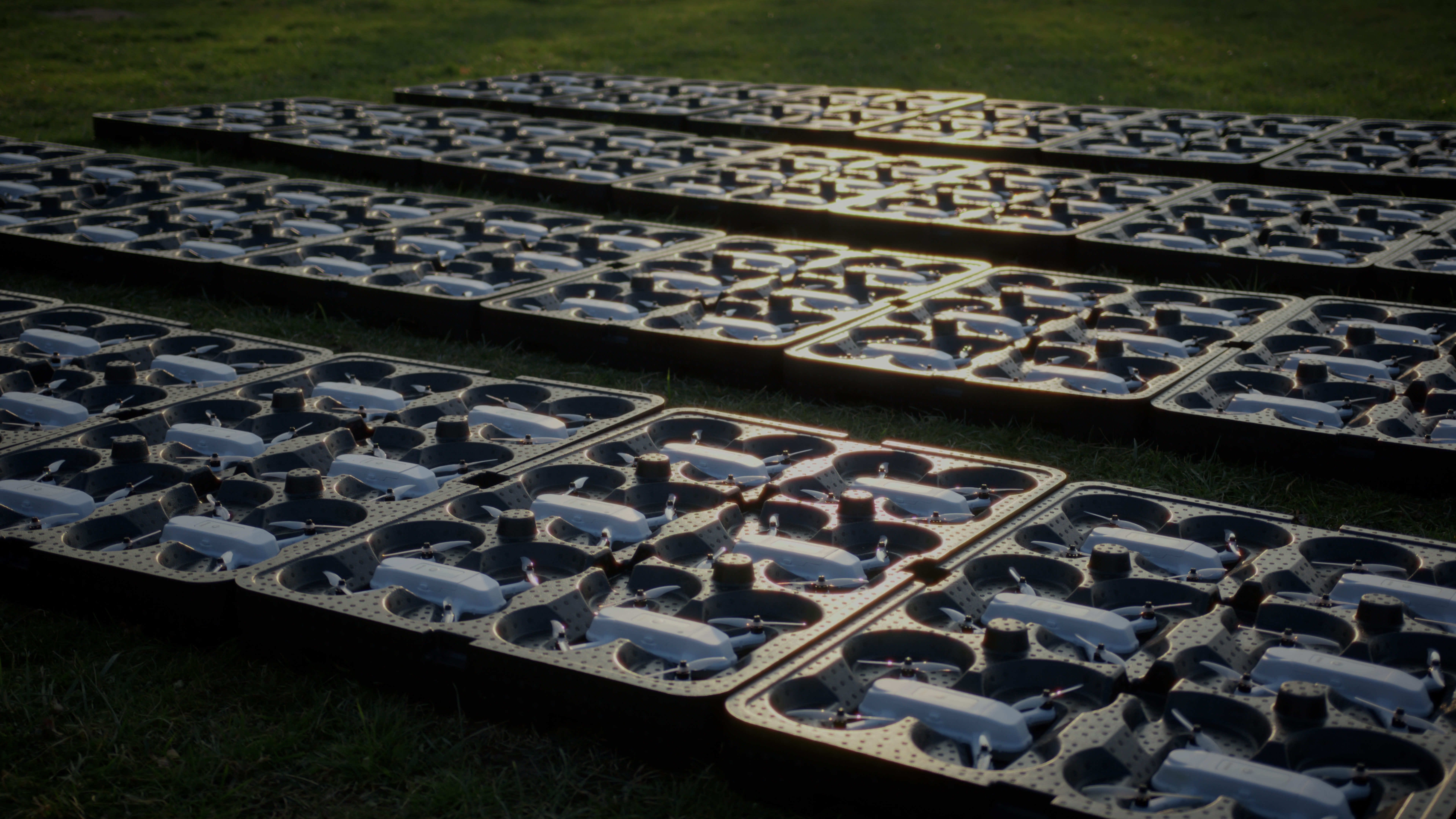
When people talk about “efficiency” in drone shows, the conversation often starts with drone specs. In reality, staffing requirements are usually driven by workflow design more than anything else.
Here are 7 practical levers that consistently reduce setup time, crew size, and turnaround effort—especially as fleets scale from dozens to hundreds of drones:
1) Deployment workflow (setup speed)
How fast can your team go from “cases on the ground” to “ready-to-fly”?
Look for repeatable steps, minimal manual handling, and a layout that doesn’t require constant micro-adjustments on site.
2) Power strategy (not just charging speed)
Charging time is only one piece. The real question is:
How do you manage energy across a full production day (multiple shows, weather variations, limited power access)?
Swap strategy, rotation logic, and clear battery health visibility can save hours (and people).
3) Transport & storage ergonomics
Efficiency is won before the show: stackability, labeling, inventory tracking, and how quickly teams can count, move, and stage equipment without mistakes.
If loading/unloading is chaotic, staffing will creep up fast.
4) Automated health checks
Manual preflight checks don’t scale.
Systems that can run batch diagnostics (GNSS status, comms, battery health, firmware consistency) reduce stress, and crew size.
5) Launch/land workflow & post-show handling
After the show, your team shouldn’t spend an hour “hunting and sorting.”
A clean recovery process (with clear status + easy re-staging) is one of the biggest multipliers on real-world efficiency.
6) Reliability & troubleshooting tools
When something goes wrong, do you have:
- clear error states,
- actionable logs,
- fast root-cause workflows,
- and predictable recovery steps?
If troubleshooting is opaque, you compensate with more experienced people on-site.
7) Support, documentation & repairability
This one is underrated: good documentation and fast support reduce the “human buffer” companies carry to feel safe.
Repairability and parts logistics also determine how many backups—and how many people—you need.
Drotek is a leading French manufacturer of drone light show technology, delivering a fully integrated solution for professionals.
Our ecosystem combines high-performance drones, advanced control systems, and intuitive software to enable large-scale, synchronized aerial shows with precision and efficiency.
Built entirely in-house, our technology ensures reliability, scalability, and seamless deployment worldwide.