Building Beyond: Why AV Design Needs a New Planning Paradigm
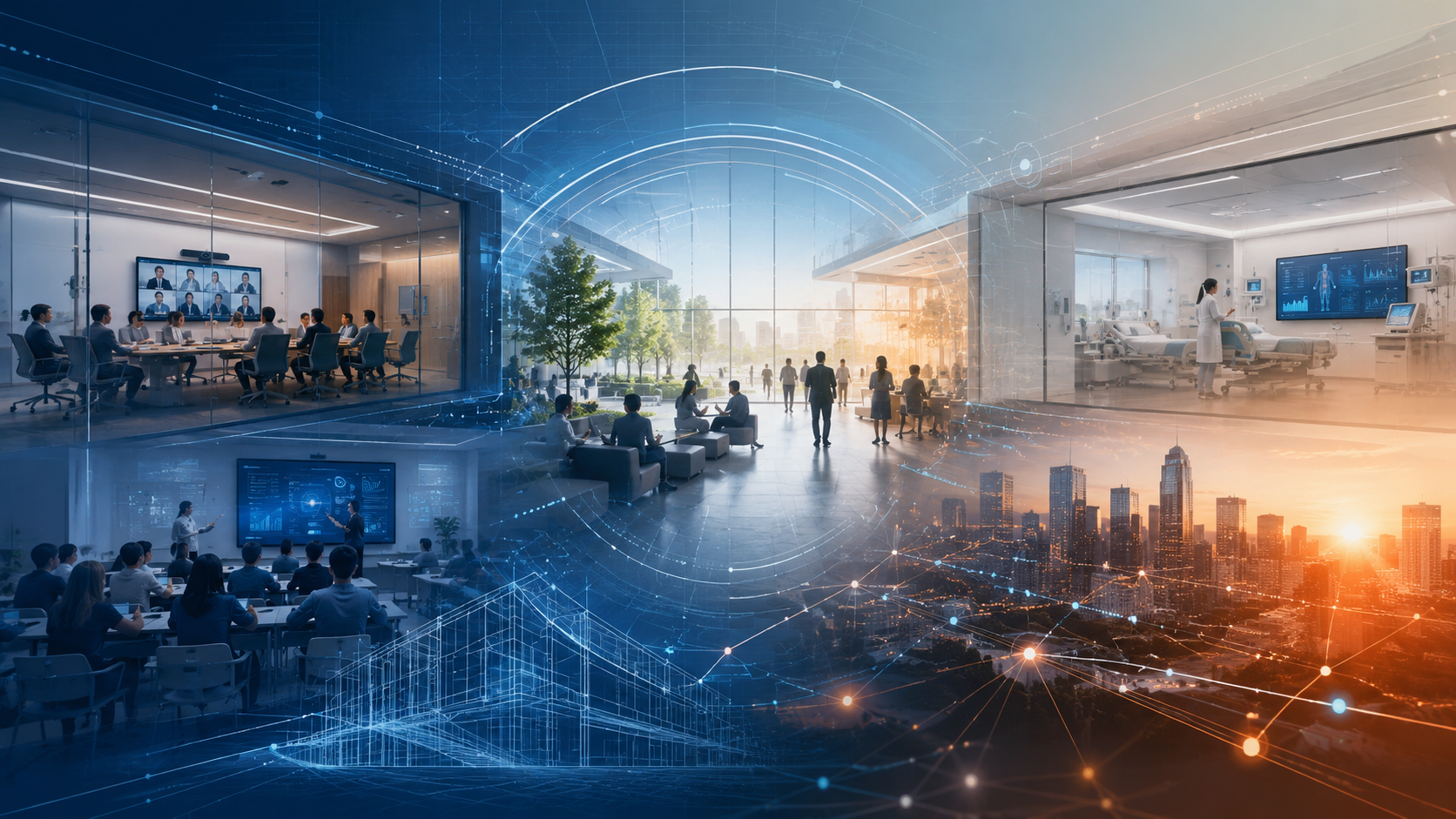
For decades, the audiovisual industry has become progressively better at designing systems.
Displays became larger and sharper. Audio became more intelligible. Networks became faster. Control systems became more capable. Collaboration platforms evolved from conference-room novelties into essential infrastructure.
And yet, despite all this progress, many of the environments we create still fail in surprisingly familiar ways. The meeting starts ten minutes late because the room won't connect. The classroom sits half-used because faculty never fully adopt the technology. The hospital command center has impressive capabilities but creates new operational burdens. The civic facility installs sophisticated systems that few visitors understand how to use.
None of these failures occur because the technology itself is broken. The display works. The network works. The software works. The individual systems perform exactly as specified. The failure occurs somewhere else. It occurs in the gap between systems that function independently and environments that succeed as a whole.
That gap is becoming the defining challenge of our profession.
The End of the Systems Era
The audiovisual industry was built around systems thinking. That approach made sense when technology existed primarily as isolated components. Designers selected products, developed signal flows, coordinated infrastructure, and delivered functional systems. Success was measured by technical performance and operational reliability.
Those skills remain essential. But the environments we now design have changed. The modern workplace is no longer a collection of conference rooms. It is a collaboration ecosystem. The modern classroom is no longer a space containing technology. It is a learning environment shaped by physical, digital, and social experiences.
The modern healthcare facility is no longer simply a building with communication systems. It is an information-rich care environment where technology influences clinical outcomes, staff efficiency, and patient confidence.
Across every sector, technology has migrated from the edge of the environment to its center. As a result, the questions owners ask are changing. They are asking less about equipment and more about outcomes. Less about features and more about experiences. Less about what technology does and more about what people are able to accomplish because it exists. The industry, however, often continues to respond with the language of systems.
And that creates a growing mismatch between what owners need and what designers provide.
People Experience Environments, Not Systems
One of the central ideas behind Building Beyond is remarkably simple: People do not experience systems. They experience environments.
No one walks into a conference room thinking about displays, DSPs, codecs, occupancy sensors, or network switches. They experience whether the meeting begins smoothly.
Students do not judge classrooms based on technical specifications. They judge whether learning feels engaging and accessible.
Patients do not evaluate hospitals based on integration diagrams. They evaluate whether the environment supports trust, clarity, and care.
Occupants experience the whole. Yet our planning processes remain largely organized around parts.
Architects design architecture. IT designs networks. AV designs technology. Facilities manages operations. Security designs protection. Every discipline performs its role well. But no discipline is explicitly responsible for the experience produced by the entire environment. As projects become increasingly interconnected, that gap becomes harder to ignore.
The Rise of Intelligent Environments
A second transformation is accelerating this challenge. Buildings are becoming intelligent. Sensors, analytics, automation platforms, digital twins, occupancy systems, AI-enabled workflows, and adaptive technologies are moving into every category of project.
The conversation surrounding these technologies usually focuses on capability. How smart is the building? How much data can it collect? How much automation can it deliver?
These are important questions. But they are not the most important question. The more important question is:
What human outcome is this intelligence intended to improve?
Technology is not the destination. Human experience is. The intelligent environment is not valuable because it contains artificial intelligence. It is valuable if it helps people learn more effectively, collaborate more naturally, heal more comfortably, work more productively, or engage more meaningfully with their communities.
Capability is a means. Experience is the end.
A Different Starting Point
The traditional planning process typically begins with space programs, technology standards, equipment lists, and budget allocations.
My new book, Building Beyond, argues for a different starting point. Instead of beginning with technology, begin with human function. Instead of asking: "What systems do we need?" Ask: "What outcomes are we trying to create?" That shift sounds subtle.
In practice, it changes everything. It changes how projects are programmed. It changes how stakeholders participate. It changes how technology decisions are evaluated. It changes how success is measured. Most importantly, it changes what gets designed.
The Framework
Building Beyond introduces a practical framework for applying this thinking. The book is organized around four core ideas.
1. Human Experience as Infrastructure
Experience is not a soft outcome layered on top of the "real" infrastructure. Experience is the infrastructure. The ultimate purpose of every technology investment is to influence human behavior, perception, performance, and outcomes. If technology does not improve experience, it has failed regardless of how well it performs technically.
2. The Five-Layer Model
The book introduces a framework for understanding environments as interconnected layers:
-
Human Function
-
Space Typology
-
Operational Maturity
-
Technology Stack
-
Governance and Intelligence
Together, these layers provide a way to design environments as integrated systems rather than isolated components.
3. Designing for Change
Technology changes faster than buildings. Software changes faster than hardware. Human expectations change faster than either. The challenge is no longer designing for today's requirements. It is designing environments capable of adapting to requirements we cannot yet predict. Adaptability becomes a primary design objective rather than an afterthought.
4. Governance and Operational Readiness
Technology alone cannot create intelligent environments. Organizations must possess the operational maturity, governance structures, and leadership discipline necessary to manage them. The most sophisticated technology in the world cannot compensate for weak operational models. In fact, intelligence often amplifies organizational strengths and weaknesses rather than correcting them.
Building Beyond Technology
The title of this book is intentional. The future of AV design is not about moving beyond technology. Technology remains essential. The challenge is moving beyond technology as the primary lens through which we understand the built environment. The environments we create are becoming too interconnected, too adaptive, and too important to be viewed as collections of independent systems. They must be understood as experiences.
The organizations that embrace this shift will help define the next generation of intelligent environments. Those who remain focused solely on systems may continue to build technically successful projects while increasingly missing the outcomes their clients value most. The future belongs to professionals who can bridge both worlds—those who understand systems deeply enough to design them well, and understand people deeply enough to know why those systems matter.
That is the journey Building Beyond explores.
Next in the Building Beyond Series
That is where Building Beyond starts: not with smarter buildings, but with better ones — better for the people inside them. Over the next eleven weeks, I'll walk the whole framework through right here. If you've ever stood in that room, follow along.
The question is becoming, "What experience should this environment create—and how do all its systems contribute to that goal?"
This series of articles is based on my forthcoming book, Building Beyond: Human Experience and the Future of the Built Environment, a framework for building places that adapt, perform, and elevate human potential, to be published in Q4 2026 by Laquilan Press.
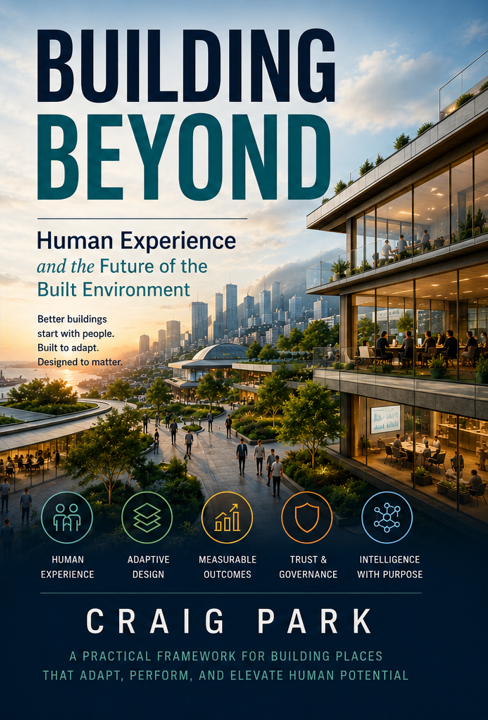
If you are interested in reading and commenting on an Advanced Review Copy, please drop me a note at craig@craigpark.com.

As an architect by training (BS Architecture, Cal Poly SLO) and a collaborative technologist with four decades of practice, I’m passionate about mentoring the next generation of AV professionals at the intersection of technology, strategy, and leadership. I have been active in AVIXA since 1986 and served on the national board from 1993–2000. I am a Fellow of the Society for Marketing Professional Services (SMPS) and an Associate member of the American Institute of Architects.
I serve as Director of Digital Experience Design at Clark & Enersen, a 200-person interdisciplinary architecture and engineering firm, where I lead the planning and design of integrated audiovisual and digital experience environments for higher education, healthcare, and research clients.
My expertise spans systems design, integrated building technology planning, and strategic business development. I bring an award-winning, B2B design-thinking approach developed through leadership roles with national AEC and technology firms.
Across both institutional and consulting roles, I have led marketing and growth strategy, designed future-ready learning and simulation environments, and helped organizations implement AI-powered tools that scale expertise and performance.
-
Xchange Advocates are recognized AV/IT industry thought leaders and influencers. We invite you to connect with them and follow their activity across the community as they offer valuable insights and expertise while advocating for and building awareness of the AV industry.