
3D sound system prediction software, great tools in good hands


Related Content
 AVIXA Xchange
Deaf in the dance floor
Deaf in the dance floor
Magic tools for everyone
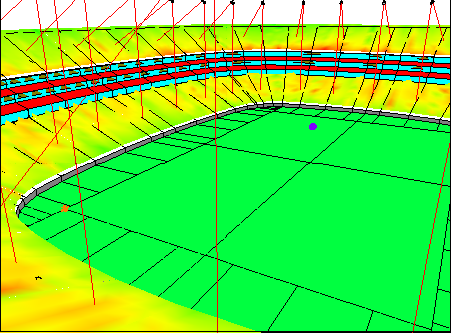
3D sound system prediction software are very useful tools that assist professional designers to determine and evaluate easily different loudspeaker configuration, placement, quantity in regularly complex and large venues application.
These tools can be used for temporal or permanent installation, consultants are very familiar using them constantly. Some of the top loudspeaker brands for professional or commercial application have their own software for design and prediction, the companies have worked on education programs to train the people who use these tools, some years ago the access to this software was more restricted, it required the use of licences or usb tokens to run the software. Nowadays for some brands seems to be accessible and practically anyone can download, install and use it.
Most of the user interfaces of these commercial software are very friendly, they also can have some plugins to import models from other platforms like Sketchup to make the designer´s life easier, that normally are more focus on sound than architecture.
Loudspeaker database and calculation methods
These tools contain the loudspeakers library data that describes its particular characteristic and performance, for example Sensitivity, Maximum power, SPL, Impedance, beam width, polar plot, etc.
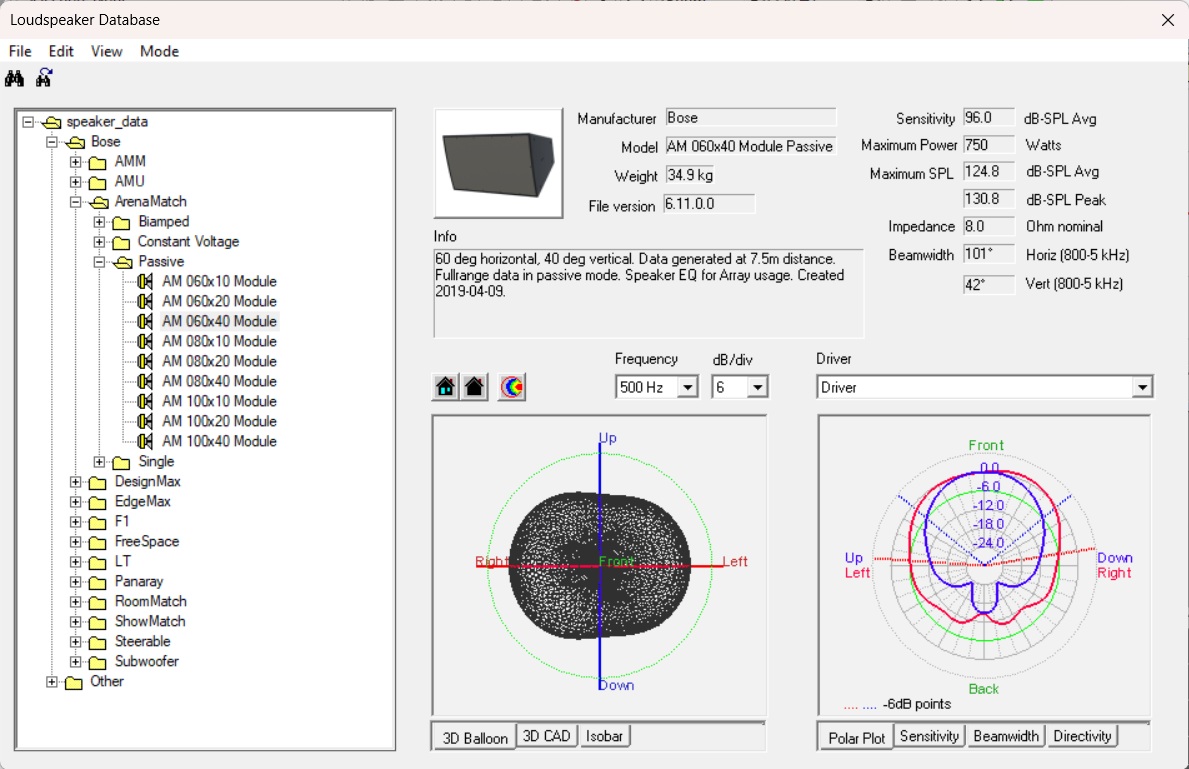
Every software determines the metrics that wants to show and evaluate, the calculation methods might vary also between software, for example wave-based numerical techniques are used for low frequency, Ray tracing algorithms and image source are very common for mid frequencies, the Statistical Energy Analysis (SEA) is used for high frequencies, is not easy to compare prediction results from two different platforms, there might be differences in the numbers but at some point every approach must have its own explanation, a direct comparisons would be hard to interpret, most of the companies don’t share what is behind the calculation methods, the goal of every speaker brand is to confirm and ensure their performance in their applications.
Today there is different 3D sound system prediction software in the market that allows to evaluate acoustic parameters that are relevant to the sound solution. There are some that only have their own loudspeaker database and there are some others that are open to work with any loudspeaker data, no matter the brand, it works by adding the loudspeaker data file in some specific format.
Once the model is ready in the software, with verified geometry, dimensions and audience area, in some software is possible to assign room absorption properties by selecting different materials to the surfaces, with this data included, some other metrics can be analyzed, for example the Reverberation Time (T60), it gives the user a little bit more of information of the room before inserting loudspeakers.
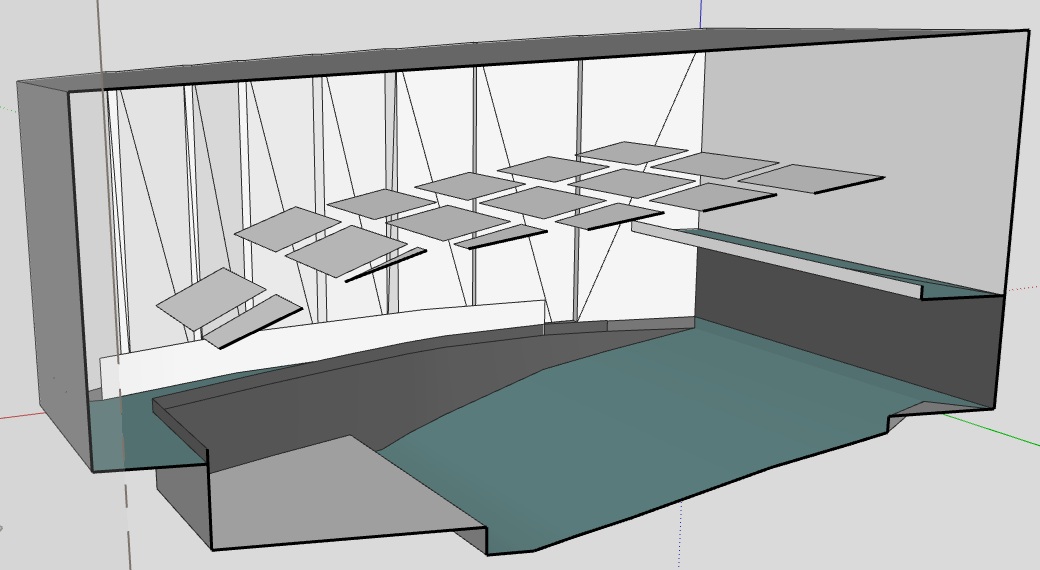
These are some 3D sound system prediction software from popular speaker brands
- Modeler-Bose Professional
- Venue Synthesis-JBL
- Sound vision-L-Acoustic
- Mapp 3D-Meyer
- NS-1 Nexo
- EASE Focus 3
Room Acoustics
Some manufacturer allows the user not only to evaluate sound system characteristics but allows to make deep acoustic analysis related with architectural and room acoustic, those are dedicated to study the acoustic behaviour in complex auditoriums like concert halls, theatres, churches, auditoriums ans similar spaces that must to have specific acoustic conditions regardless the sound systems.
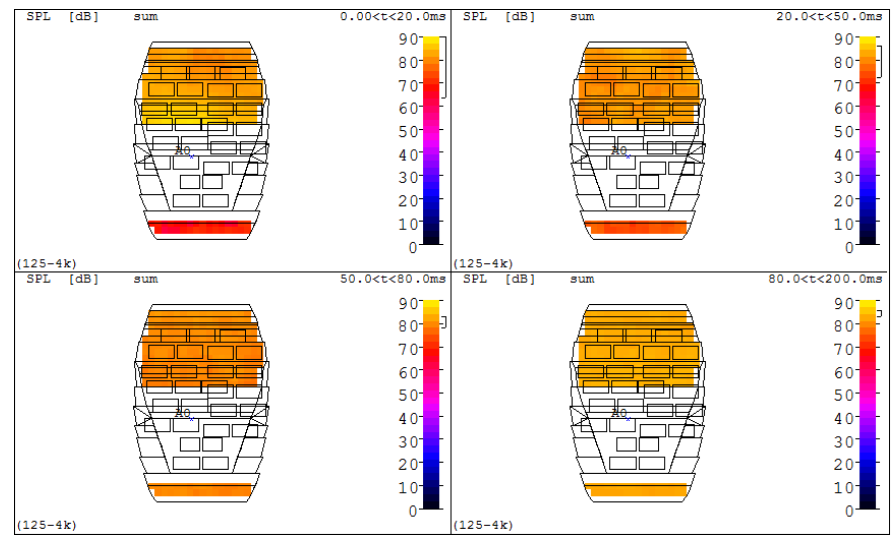
These powerful tools offer different types of licences depending on user needs, these are examples of leader room acoustic software in the industry:
- EASE 5 (Enhanced Acoustic Simulator for Engineers)
- Odeon Room Acoustic Software
- CATT Acoustics
- Treble Acoustic Simulation Suite
Results interpretation
There are many factors that influence the results on the simulation performance of a system, starting from the input, all the information provides to the model (geometry, dimensions, materials, type of reflexion on the surfaces, temperature, humidity, % of occupation, etc.)Then the parameters of the analysis, according to the platform there are more than one way to conduct the calculation.
The regular process on prediction design require many iteration to obtain satisfactory or expect results, during this stage the user makes several changes on the model, design and calculation parameters to try to get the goal, at this point is where experience and knowledge are the great difference, the same result can be interpret different by two designers, the way to express the benefits or limitation of certain design might differs and at the end, the background of the person who is defending the proposal takes more into account than the simulation itself.
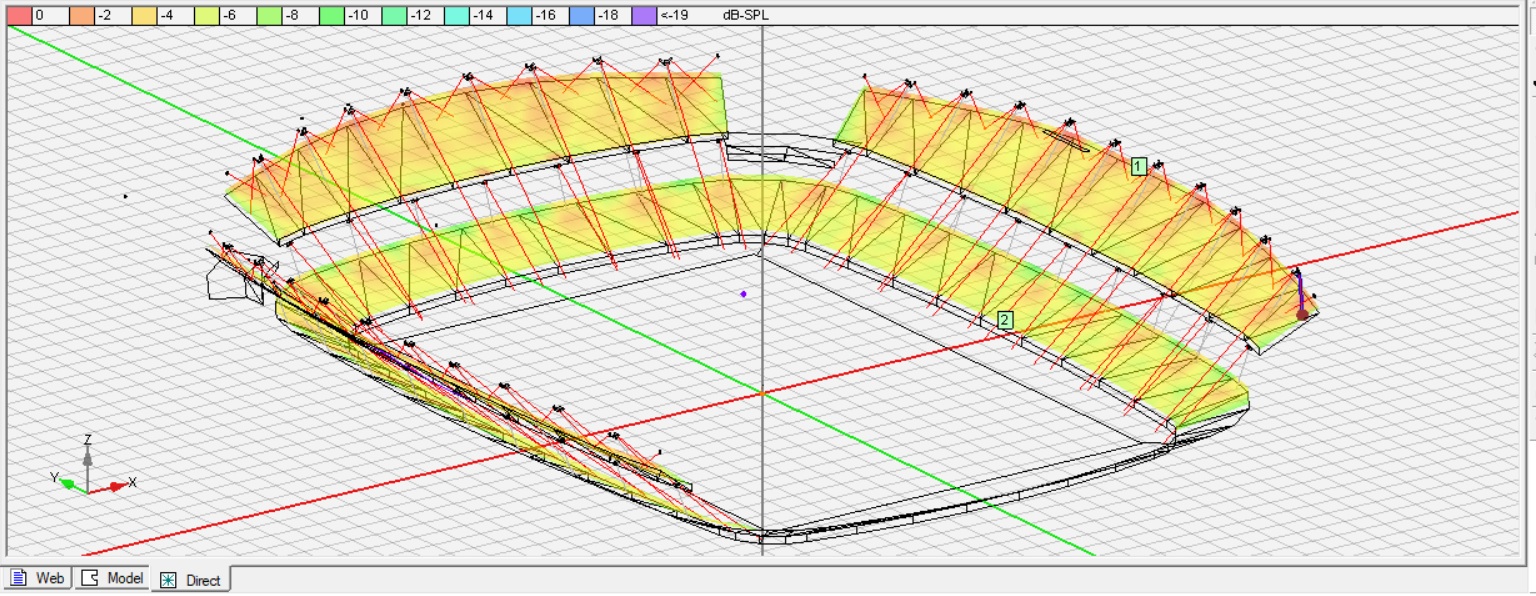
Using prediction tools is great advantage to accelerate design process, verify and confirm performance, it is very important that the user in charge of the design must have deep knowledge and experience in order to have success in real world once the simulation become reality in the field.
Let´s avoid the use of 3D sound system prediction software just to show nice illustration to fill a proposal, the goal is to complement those fancy graphs with an explanation and detail description, the most easy to read the better for those that might take the decision if the proposal is , normally they are not audio specialist but they know how to differentiate quality and confidence of the participants.
¿What has been your experience on the use of these tools? , ¿ are you expert or familiar with any of the software described above.?

I´ve been in this industry since 2002, I graduated from electronics engineering while working as AV designer, after a while I realized that there were many things I couldn´t understand about sound that I was passionated about so I decided to do masters on sound and vibration in Sweden, during all these time had the chance to design and be responsible for relevant projects like Panamerican games athletic stadium, soccer stadiums, arenas, concert halls and many other of all kind
-
Xchange Advocates are recognized AV/IT industry thought leaders and influencers. We invite you to connect with them and follow their activity across the community as they offer valuable insights and expertise while advocating for and building awareness of the AV industry.




Please sign in
If you are a registered user on AVIXA Xchange, please sign in