Step-by-Step Guide to Build an Uber-Like App in the USA
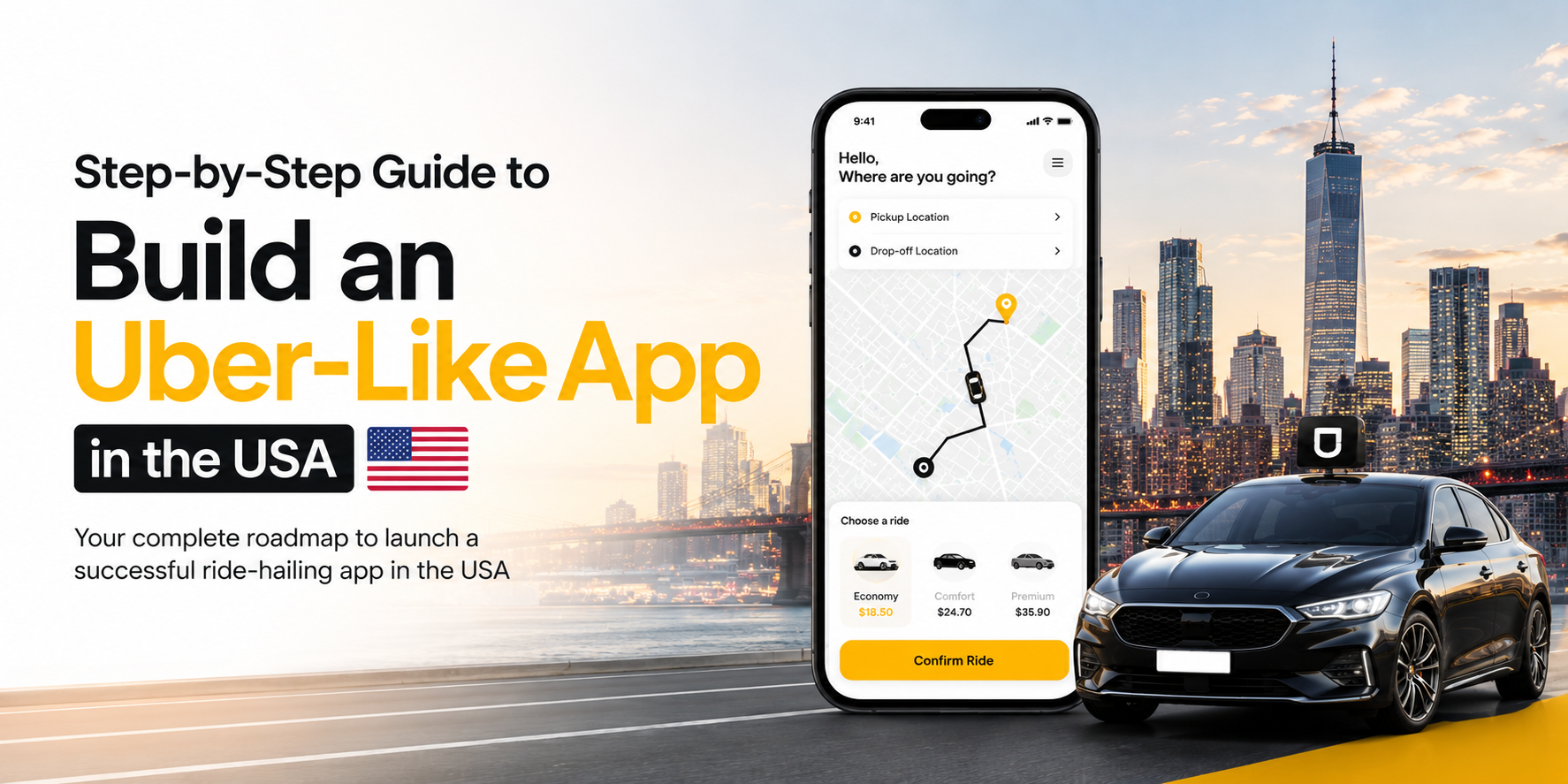


The US ride-hailing market has evolved into one of the world's largest on-demand transportation industries, transforming how people commute in cities and suburbs alike. Millions of Americans now rely on apps for convenient, affordable, and fast transportation, creating significant opportunities for entrepreneurs and startups looking to enter the market. From serving specific cities and airports to targeting niche segments such as students, corporate travelers, or senior citizens, launching an Uber-like app has become a promising business opportunity in 2026.
However, building a successful ride-hailing platform requires more than just an app. Entrepreneurs need a clear strategy, the right development approach, compliance with local regulations, and a scalable business model to compete effectively. This comprehensive guide explains how to build an Uber-like app in the USA, covering market opportunities, essential features, monetization strategies, and the step-by-step process to launch and grow your ride-hailing business successfully.
Why Entrepreneurs Are Investing in Uber-Like Apps
Ride-hailing solved a real problem: getting from point A to point B without owning a car, waiting on a street corner, or dealing with unpredictable cab availability. That convenience created recurring demand, and recurring demand is exactly what investors and entrepreneurs look for.
The numbers highlight why this industry remains attractive. According to Pew Research Center, 36% of U.S. adults have used ride-hailing services such as Uber and Lyft, more than double the adoption rate recorded in 2015. Additionally, 45% of urban residents have used ride-hailing apps, showing strong demand in metropolitan areas where on-demand transportation is now a part of everyday life.
The market opportunity is equally compelling. Grand View Research estimates that the global ride-sharing market was valued at $42.9 billion in 2024 and is projected to reach $96.9 billion by 2030, growing at a CAGR of 13.7%.
Beyond the traditional taxi-replacement model, entrepreneurs are now building apps for corporate shuttles, school and student transportation, senior mobility, and multi-service platforms that combine rides, deliveries, and rentals in a single app. This diversification creates multiple revenue streams and allows startups to target underserved niches with lower competition and high growth potential.
Understanding the Uber Business Model
At its core, Uber operates as a two-sided marketplace that connects passengers who need transportation with drivers who have available vehicles. The platform uses mobile applications and an admin dashboard to manage the entire journey from ride requests and driver matching to payments and customer support.
A typical ride follows these steps:
- A rider enters their destination and requests a ride.
- The system matches the request with a nearby driver.
- The driver accepts the request and navigates to the pickup location.
- The rider tracks the trip in real time.
- Payment is processed automatically through the app after the ride ends.
- Both rider and driver rate each other to maintain service quality.
Key Stakeholders
Riders:
Passengers use the app to book rides, view fare estimates, track drivers in real time, make cashless payments, and share feedback through ratings and reviews.
Drivers:
Drivers register on the platform, submit verification documents, accept or decline ride requests, navigate using GPS, and monitor their earnings and trip history.
Admin:
The admin manages the entire ecosystem by approving drivers, setting commission rates, monitoring analytics, handling customer support, managing promotions, and ensuring smooth platform operations.
Revenue Streams of Ride-Hailing Apps
A successful ride-hailing business generates revenue through multiple channels:
- Commission on Every Ride: The platform charges a percentage of each completed trip.
- Dynamic or Surge Pricing: Higher fares during peak demand increase platform revenue.
- Cancellation Fees: Charges applied when riders or drivers cancel under certain conditions.
- Subscription Plans: Premium memberships for riders or drivers with added benefits.
- In-App Advertising: Brands pay to promote products and services within the app.
- Premium Services: Higher-priced ride categories such as luxury vehicles or airport transfers.
- Scheduled Rides: Additional fees for advance bookings.
- Delivery and Multi-Service Offerings: Revenue from package delivery, rentals, or other on-demand services integrated into the platform.
This flexible and scalable business model is one of the primary reasons entrepreneurs continue to invest in Uber-like apps, as it creates multiple revenue streams while serving a rapidly growing demand for convenient transportation services.
Step-by-Step Process to Build an Uber-Like App in the USA
Building an Uber-like app in the USA requires more than developing a mobile application; it involves identifying a target market, choosing the right business model, ensuring regulatory compliance, and launching a scalable platform. The following step-by-step process will help you turn your ride-hailing idea into a successful and competitive business.
Step 1: Conduct Market Research
Before writing a single line of code or investing in software, it's essential to understand the competitive landscape in your target city or region. Research local transportation habits, pricing patterns, driver availability, peak demand hours, and service gaps that existing providers aren't addressing effectively. According to Statista, the US ride-hailing and taxi market is expected to generate more than $66 billion in revenue in 2026, highlighting the significant opportunity for new entrants that can serve underserved markets or niche audiences.
Identify Your Target Audience
Clearly defining your audience will shape your business model and product features. Ask yourself:
- Are you targeting daily urban commuters?
- Corporate employees who need scheduled transportation?
- Students commuting to and from campus?
- Seniors requiring dependable mobility services?
- Healthcare organizations seeking non-emergency medical transportation (NEMT)?
Understanding your ideal customer helps determine your pricing strategy, app features, and marketing approach.
Study Your Competitors
- Uber Technologies remains the market leader with the largest driver network and strongest brand recognition in the United States.
- Lyft competes closely with Uber in major cities and is often perceived as a more community-focused alternative.
- Curb Mobility connects riders with licensed taxi drivers and appeals to users who prefer traditional taxi services.
- Via Transportation has built a strong presence in shared rides and shuttle services through partnerships with cities and transit agencies.
Studying how these companies price rides, structure driver incentives, handle customer support, and expand into new markets can help you identify opportunities and build a differentiated ride-hailing platform instead of competing solely on price.
Step 2: Choose Your Business Model
Selecting the right business model is one of the most important decisions when building an Uber-like app in the USA. Your target audience, revenue strategy, and platform features will largely depend on the type of transportation service you plan to offer.
Taxi Booking App
A taxi booking app is a digital version of a traditional taxi dispatch system. It enables local taxi companies to accept online bookings, assign rides automatically, and manage drivers more efficiently. This model is ideal for existing taxi fleets looking to modernize their operations and compete with ride-hailing giants.
Ride-Sharing Platform
This is the classic Uber and Lyft model, where independent drivers use their personal vehicles to fulfill on-demand ride requests. It offers scalability, lower operational costs, and flexibility for both riders and drivers, making it one of the most popular business models in the mobility industry.
Corporate Transportation App
Designed for businesses, this model focuses on scheduled rides, business accounts, expense management, and reliable transportation for employees and clients. It often generates recurring revenue through long-term corporate contracts and subscription plans.
Student Transportation App
Student transportation platforms cater to schools, colleges, and universities by offering safe and reliable commuting solutions. Features such as verified student accounts, scheduled routes, real-time tracking, and parent monitoring make this model highly attractive in educational institutions.
Multi-Service Mobility Platform
A multi-service platform combines ride-hailing with additional services such as package delivery, car rentals, bike rentals, or courier services under a single app. This model helps businesses diversify revenue streams and maximize earnings from both users and drivers.
Choosing the right model early will help you define your feature requirements, identify your target audience, and create a scalable strategy for launching and growing your Uber-like app.
Step 3: Define Essential Features for Your Uber-Like App
The success of your Uber-like app largely depends on the features it offers. A seamless experience for riders, drivers, and administrators is essential to attract users, improve retention, and efficiently manage operations.
Passenger App Features
- Registration and Login: Quick sign-up through phone number, email, or social media accounts.
- Ride Booking: Easy pickup and drop-off selection with interactive map integration.
- Fare Estimation: Display estimated fares before users confirm a ride.
- Real-Time Tracking: Live GPS tracking of the driver's location and estimated arrival time.
- Multiple Payment Methods: Support for credit/debit cards, digital wallets, and in-app payments.
- Ratings and Reviews: Two-way feedback system to maintain service quality.
- Ride History: Access to previous trips, invoices, and the ability to rebook past rides.
- Ride Scheduling: Allow users to book rides in advance for better convenience.
- Push Notifications: Real-time updates for ride status, promotions, and payment confirmations.
Driver App Features
- Driver Onboarding: Registration with document upload, vehicle information, and verification.
- Accept or Reject Rides: Enable drivers to review and respond to ride requests quickly.
- Navigation and Route Optimization: Integrated maps with turn-by-turn directions.
- Earnings Dashboard: View daily, weekly, and monthly earnings reports.
- Availability Management: Go online or offline and manage working hours.
- Trip History: Access completed rides and payment records.
- In-App Communication: Call or chat with riders securely without sharing personal information.
Admin Panel Features
- User Management: Manage rider and driver accounts from a centralized dashboard.
- Driver Verification: Review documents, approve registrations, and manage compliance requirements.
- Commission Management: Configure platform commissions and service charges.
- Analytics and Reporting: Monitor rides, revenue, active users, and business performance.
- Promo Codes and Referral Campaigns: Create discounts and referral programs to attract and retain users.
- Content and Pricing Management: Adjust pricing rules, surge pricing, and service areas.
- Support and Dispute Resolution: Handle customer inquiries, complaints, and refund requests.
Building these core features from the start creates a strong foundation for your ride-hailing business while leaving room to add advanced capabilities such as ride bidding, multi-stop trips, subscriptions, and delivery services as your platform grows.
Step 4: Understand Legal Requirements in the USA
Ensure your rental marketplace complies with all applicable business laws, licensing requirements, taxes, and industry regulations in the United States.
Business Registration
Register your company at the state level, choose an appropriate business structure (LLC or corporation), and obtain the necessary tax IDs before launching operations.
Transportation Regulations
Ride-hailing operates under Transportation Network Company (TNC) regulations, which vary by state and sometimes by city. Research the specific licensing requirements in each market you plan to enter.
Driver Background Checks
Most states require criminal background checks and driving record reviews before a driver can be approved on the platform. Partnering with a certified background-check provider is standard practice.
Insurance Requirements
Ride-hailing platforms typically need commercial liability insurance covering different phases of a trip from the app being open to a passenger being in the vehicle — often supplementing the driver's personal auto insurance.
Data Privacy and Security Compliance
With rider and driver data flowing through your platform, compliance with US data privacy expectations (and state-level laws like the California Consumer Privacy Act) is essential, along with secure handling of payment information.
Suggested Read: What Legal Requirements Apply to Ride-Hailing Apps in the United States?
Step 5: Decide Between Custom Development and Ready-Made Software
|
Factor |
Custom Development |
Ready-Made Solution |
|
Development Time |
8-15 Months |
1-2 Weeks |
|
Initial Cost |
High |
Affordable |
|
Maintenance |
Expensive and Ongoing |
Included Support |
|
Scalability |
Depends on Development Team |
Pre-Built and Tested |
|
Risk |
High |
Lower |
|
Time to Market |
Slow |
Fast |
|
Feature Availability |
Built from Scratch |
Comes with Essential Features |
Choosing between custom development and ready-made software can significantly impact your launch timeline, budget, and overall business success. While custom development offers complete flexibility, it also requires substantial investment, lengthy development cycles, and continuous engineering resources for maintenance and upgrades.
For most entrepreneurs and startups, a ready-made, white-label ride-hailing solution is the smarter choice. It allows businesses to launch quickly, validate their idea faster, and enter the market before competitors without spending months building technology from scratch.
Ready-made software typically includes essential features such as rider and driver apps, an admin dashboard, payment integrations, real-time tracking, and scalability features that have already been tested in real-world scenarios. Additionally, it reduces development risks, lowers upfront costs, and provides ongoing technical support, enabling founders to focus on acquiring customers and growing their business rather than managing a large development team.
Unless your business requires highly specialized functionality, a ready-made solution offers the fastest, most cost-effective, and least risky path to launching an Uber-like app in the USA.
Best Software to Build an Uber-Like App in the USA – VivoCabs
VivoCabs is a white-label, self-hosted ride-hailing software that allows entrepreneurs to launch a fully functional Uber-like app quickly and without the cost or risk of building everything from the ground up. Instead of spending over a year assembling an engineering team, you get a proven, ready-to-deploy platform you can customize to your brand and market.
Key Features of VivoCabs
- White-label ride-hailing software
- One-time license fee (no recurring revenue-share model)
- Native Android and iOS apps
- Multi-payment integrations
- Multi-language and multi-currency support
- Admin dashboard and analytics
- Multi-service support, including taxi, rental, and delivery
Benefits of Choosing VivoCabs
- Faster market launch — go live in weeks instead of months
- Lower development costs — a fraction of what a custom build requires
- Fully customizable solution — adapt branding, features, and workflows to your business
- Scalable architecture — grow from one city to multiple regions without rebuilding
- One year of free technical support — dedicated help as you launch and stabilize operations
Why Startups Prefer VivoCabs Over Building from Scratch
Launching a ride-hailing business is risky enough without adding a lengthy, expensive development cycle on top of it. VivoCabs reduces that risk by giving founders a working product they can bring to market fast, test with real users, and refine based on actual demand rather than sinking a year of runway into development before finding out if the idea works.
Step 6: Launch and Market Your Ride-Hailing App in the USA
Once your app is tested and ready, launch it on the App Store and Google Play Store, onboard drivers, and ensure all services are operational before starting your marketing campaigns.
-
Local SEO: Optimize for location-based searches and create city-specific landing pages.
-
Social Media Marketing: Promote your app through Facebook, Instagram, LinkedIn, and TikTok.
-
Referral Programs: Offer rewards and discounts to encourage user referrals.
-
Driver Acquisition Strategies: Attract drivers with bonuses, incentives, and competitive commission structures.
-
Partnerships and Promotions: Collaborate with local businesses, hotels, airports, and events to boost visibility and acquire customers.
Conclusion
Building an Uber-like app in the USA presents a significant opportunity for entrepreneurs as demand for convenient, on-demand transportation continues to grow. However, success requires more than just launching an app; it demands the right business model, essential features, regulatory compliance, and a strong go-to-market strategy.
While custom development offers flexibility, it often comes with higher costs and longer timelines. For startups and businesses looking to enter the market quickly and cost-effectively, a ready-made solution like VivoCabs provides a faster path to launch with proven features, scalability, and full customization capabilities.
By choosing the software and focusing on customer experience, you can build a competitive ride-hailing platform and establish a strong presence in the rapidly growing US mobility market.