How to Build a Profitable Ride-Hailing Business in 2026
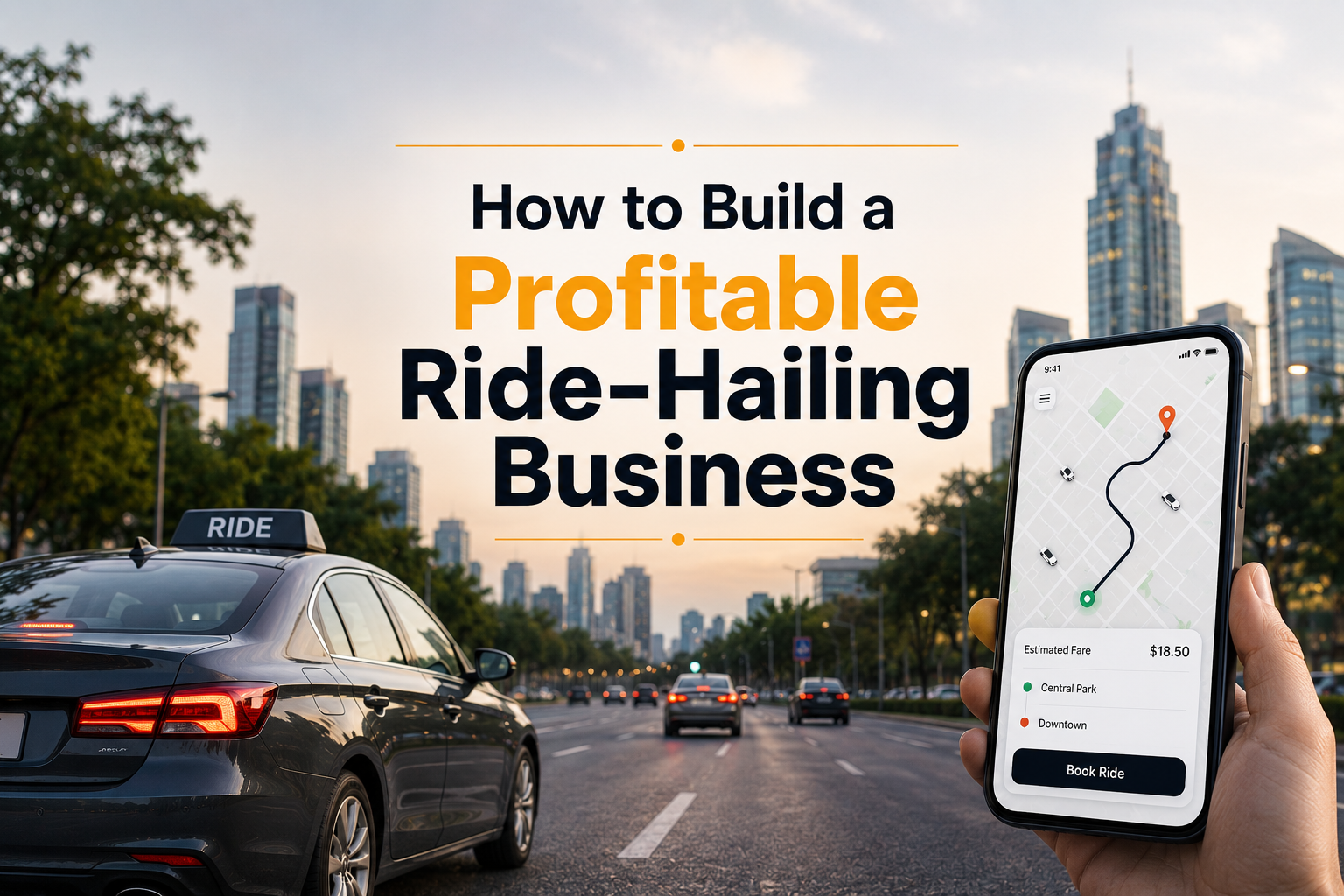


Ride-hailing has transformed urban transportation by replacing traditional taxi-hailing methods with fast, convenient, and technology-driven mobility solutions. What once involved waiting on the roadside is now a seamless digital experience users can book a ride, track their driver, and pay within minutes through a smartphone app.
The growing demand for convenience has made features like instant booking, real-time tracking, digital payments, and transparent pricing essential for modern ride-hailing platforms. Customers today expect more than just transportation; they want safety, reliability, and complete control over their journeys.
This shift has created significant opportunities for entrepreneurs entering the mobility market. According to Statista, the global ride-hailing market is expected to generate over $188 billion in revenue by 2026, driven by rising smartphone adoption, urbanization, and increasing preference for on-demand services.
However, launching a successful ride-hailing business in 2026 is not about simply creating another Uber-like app. New players can compete by targeting underserved markets, offering niche services, and leveraging scalable technology solutions. With the right strategy, business model, and ride-hailing software, entrepreneurs can build profitable mobility platforms without the complexity of starting from scratch.
Understand the Ride-Hailing Business Landscape in 2026
Before developing a ride-hailing business plan, entrepreneurs need to understand where the real opportunities exist. The demand for app-based mobility services continues to grow as consumers increasingly prefer convenient, digital-first transportation options over traditional taxi services.
According to industry forecasts, the global ride-hailing market is expected to surpass $180 billion in revenue by 2026, driven by rising smartphone penetration, improved digital payment adoption, and growing urban mobility needs. Emerging markets, in particular, are creating new opportunities as more cities adopt technology-enabled transportation solutions.
Beyond standard on-demand rides, several segments are gaining momentum:
- Local taxi services in underserved and mid-sized cities
- Corporate transportation solutions for employee and business travel
- Airport transfer services with fixed, transparent pricing
- Electric vehicle (EV) mobility aligned with sustainability goals
- Specialized transportation services for specific customer groups
The biggest opportunity for new entrants is not simply building another Uber-like platform. Successful ride-hailing businesses in 2026 will focus on solving specific transportation challenges, targeting underserved markets, and delivering tailored experiences for both riders and drivers. A clear niche, strong technology foundation, and scalable business model can help startups compete effectively in this evolving mobility landscape.
Identify Your Ride-Hailing Business Model
Choosing the right ride-hailing business model is one of the most important decisions when entering the mobility market. Your model influences everything from initial investment and operational complexity to scalability and long-term profitability.
Fleet-Based Model
In this model, you own and manage the vehicles used for transportation services. It provides greater control over service quality, branding, vehicle standards, and driver management. However, it requires significant upfront investment in vehicle acquisition, maintenance, insurance, and daily operations.
Hybrid Model
A combination of owned vehicles and third-party drivers, the hybrid approach offers a balance between control and scalability. Businesses can maintain service quality with their own fleet while expanding coverage by partnering with independent drivers during high-demand periods.
Niche Ride-Hailing Model
Instead of competing directly with established platforms, many startups are finding success by focusing on specific customer needs, such as:
- Luxury rides for premium customers
- Women-only transportation services
- Student and campus mobility solutions
- Healthcare transportation for seniors and patients
- Airport transfers with fixed pricing
The right business model is more than a strategic choice — it determines your cost structure, operational approach, and growth potential. Selecting a model aligned with your target market can help build a sustainable and profitable ride-hailing business.
Research Your Target Market
A successful ride-hailing business starts with choosing the right market. Even the most advanced app will struggle if it launches in an area with limited demand, strong competition, or insufficient driver availability. Thorough market research helps identify the right opportunities and reduces the risk of costly mistakes.
Before selecting a launch location, evaluate key factors such as:
- Customer demand — Is there a consistent need for convenient transportation services in the target area?
- Competitor landscape — Which ride-hailing providers already operate there, and what gaps can you address?
- Driver availability — Can you attract and retain enough drivers to ensure reliable service?
- Pricing expectations — What fares are customers comfortable paying, and how can you remain competitive?
While expanding across multiple cities may seem attractive, a focused launch strategy often delivers better results. Starting with one city or specific region allows businesses to understand customer behavior, optimize operations, build driver networks, and refine their service model.
A successful ride-hailing venture is not built by being everywhere from day one — it is built by dominating the right market first and scaling strategically based on proven results.
Suggested Read: Top Taxi App Development Companies
Plan the Essential Features for Your Ride-Hailing Platform
Every ride-hailing platform is really three connected products working together: the rider app, the driver app, and the admin dashboard that ties them together.
Rider App Features
- User registration and profile management
- Ride booking
- Fare estimation before confirming a trip
- Live GPS tracking of the assigned driver
- Multiple ride options (economy, premium, shared, etc.)
- Online payments
- Ride scheduling for future trips
- Ratings and reviews
- Safety features, such as SOS buttons and trip sharing
Driver App Features
- Driver onboarding and document verification
- Ride request management
- Navigation support
- Earnings tracking
- Availability management (online/offline status)
- Trip history
Admin Dashboard Features
- User and driver management
- Ride monitoring in real time
- Commission management
- Payment tracking
- Analytics and reporting
- Customer support management
Skimping on any one of these three pieces creates friction somewhere in the system — for the rider, the driver, or the business trying to run it.
Define Revenue Streams for a Profitable Ride-Hailing Business
A successful ride-hailing platform relies on more than just earning a commission from individual trips. Building multiple revenue streams helps increase profitability, improve cash flow, and create a more sustainable business model.
Some of the most common revenue opportunities include:
- Driver Commission — Charging a percentage from every completed ride remains the primary revenue source for most ride-hailing platforms.
- Surge Pricing — Adjusting fares based on real-time demand, traffic conditions, and driver availability helps maximize earnings during peak hours.
- Subscription Plans — Offering premium memberships for riders or drivers can generate recurring revenue while providing additional benefits.
- Corporate Partnerships — Businesses can create steady revenue opportunities by using ride-hailing platforms for employee transportation and travel needs.
- Additional Services — Expanding into areas like delivery, vehicle rentals, corporate mobility, or specialized transportation can open new income channels.
Diversifying revenue streams allows ride-hailing businesses to reduce dependency on individual rides and create stronger financial stability. Instead of competing only on ride volume, successful platforms build an ecosystem of mobility services that delivers value to customers, drivers, and business partners.
Choose the Right Technology Approach for Building Your Ride-Hailing Platform
After defining your business model and required features, the next critical decision is choosing the right technology approach. The development method you select will directly impact your launch timeline, investment requirements, scalability, and long-term flexibility.
Custom Ride-Hailing App Development
Building a ride-hailing platform from scratch provides complete control over features, design, and functionality. However, it requires significant time, higher development costs, and continuous investment in technical resources for maintenance, updates, and scaling.
White-Label Ride-Hailing Software
For many startups and businesses, white-label solutions offer a faster and more cost-effective way to enter the market. Key advantages include:
- Faster time to market compared to custom development
- Ready-made rider, driver, and admin applications
- Lower upfront development investment
- Custom branding to create your own mobility platform
- Scalable infrastructure to support business growth
- Source code ownership options for greater control
- Faster validation of your business idea through real market feedback
For entrepreneurs looking to launch quickly while maintaining a professional, feature-rich platform, white-label ride-hailing software provides the right balance between speed, affordability, and customization.
Why VivoCabs Is Worth Considering
VivoCabs is a white-label ride-hailing software solution designed for entrepreneurs, startups, and transportation businesses looking to launch their own branded mobility platform quickly. Instead of investing months in building technology from scratch, businesses can leverage a ready-made solution with essential ride-hailing capabilities and customization options.
Key VivoCabs USPs include:
- White-label & fully customizable — Launch a ride-hailing platform under your own brand with customized apps, logo, colors, and business settings.
- One-time license model — Avoid recurring software subscription fees with a cost-effective ownership-based approach.
- Ready-made rider, driver & admin apps — Get complete applications required to manage bookings, drivers, payments, and operations.
- Source code ownership — Gain greater control and flexibility to customize the platform according to your business requirements.
- Multi-service support — Enable multiple mobility services, including ride-hailing, taxi booking, rentals, and delivery options.
- Advanced ride management features — Support features like ride bidding, fare management, driver tracking, and automated trip workflows.
- Scalable architecture — Start with a single-city operation and expand to multiple locations as your business grows.
- Faster market launch — Reduce development time and begin testing your business model sooner compared to building from scratch.
- Dedicated technical support — Get assistance for smoother deployment, customization, and ongoing platform management.
For entrepreneurs seeking a faster, more affordable path into the mobility market, VivoCabs offers a balance of ready-made functionality, ownership, and scalability needed to build a competitive ride-hailing business.
Scale Your Ride-Hailing Business for Long-Term Growth
Launching a ride-hailing platform is only the beginning. Long-term success depends on scaling strategically, improving operational efficiency, and continuously adapting to changing customer expectations. Instead of expanding too quickly, businesses should focus on sustainable growth by strengthening their foundation and identifying new opportunities.
Key strategies for scaling include:
- Expand into new cities and regions — Use insights from your initial launch to replicate what works and avoid costly mistakes in new markets.
- Introduce multiple vehicle categories — Offer options such as economy rides, premium vehicles, EVs, or larger vehicles to serve diverse customer segments.
- Diversify into additional services — Extend beyond passenger rides with delivery, rentals, corporate transportation, or specialized mobility solutions.
- Build corporate partnerships — Secure recurring revenue through employee transportation programs and business mobility solutions.
- Leverage advanced technologies — Use AI-powered demand forecasting, smart route optimization, automated pricing, and data analytics to improve decision-making and operational efficiency.
As competition in the mobility sector continues to increase, businesses that combine technology, customer-focused services, and data-driven strategies will be better positioned for sustainable growth. Scaling successfully is not just about serving more users, it is about building a reliable mobility ecosystem that creates value for riders, drivers, and partners.
Conclusion
Building a profitable ride-hailing business in 2026 requires more than launching an app; it requires a clear market strategy, the right business model, reliable technology, and a strong understanding of customer needs. From selecting the right target market and revenue streams to developing a scalable platform, every decision plays a role in long-term success.
While traditional custom development offers complete flexibility, white-label ride-hailing software has emerged as a practical choice for entrepreneurs who want to enter the market faster with lower investment and reduced technical complexity. Solutions like VivoCabs enable businesses to launch branded mobility platforms with essential rider, driver, and admin features while maintaining the flexibility to scale.
As demand for convenient, digital-first transportation continues to grow, opportunities remain open for businesses that focus on underserved markets, specialized services, and superior customer experiences. With the right approach and technology foundation, entrepreneurs can build a competitive ride-hailing platform and create a sustainable mobility business in 2026 and beyond.