Smart Buildings: The Future of Intelligent Infrastructure
What Makes a Building "Smart"?
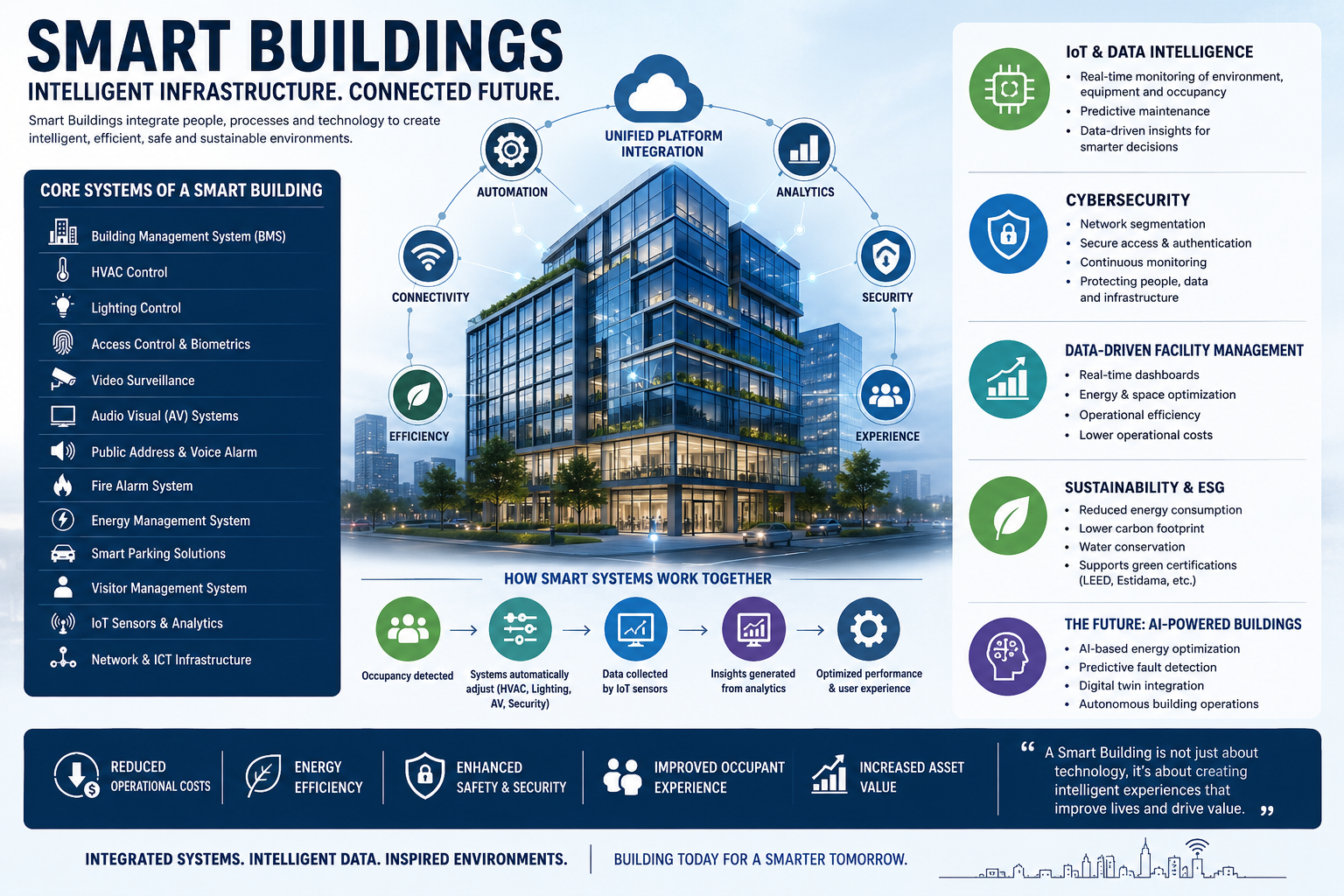
A Smart Building integrates multiple building technologies through a unified digital platform to optimize operational efficiency, occupant comfort, sustainability, and security.
Key systems typically include:
- Building Management System (BMS)
- HVAC Controls
- Lighting Control Systems
- Access Control & Biometrics
- Video Surveillance Systems
- Audio Visual (AV) Systems
- Public Address & Voice Alarm Systems
- Fire Alarm Systems
- Energy Management Systems
- Smart Parking Solutions
- Visitor Management Systems
- IoT Sensors & Analytics Platforms
- Network & ICT Infrastructure
The true value of a Smart Building lies not in individual technologies but in their interoperability.
The Importance of System Integration
Traditionally, building systems operated independently. Modern Smart Buildings require these systems to communicate and share data.
For example:
✔ Occupancy sensors can automatically adjust HVAC and lighting levels.
✔ Access control events can trigger lift destination control and visitor notifications.
✔ Meeting room booking systems can automatically activate AV systems, lighting scenes, and climate controls.
✔ Energy management platforms can optimize power consumption based on real-time occupancy patterns.
The result is improved operational efficiency, reduced energy consumption, and enhanced occupant experience.
The Role of IoT in Smart Buildings
Internet of Things (IoT) technology is transforming facility management.
Smart sensors continuously monitor:
- Temperature
- Humidity
- Air Quality (CO₂)
- Occupancy
- Water Consumption
- Energy Usage
- Equipment Performance
This data enables predictive maintenance strategies, helping facility managers identify potential equipment failures before they occur.
Moving from reactive maintenance to predictive maintenance significantly reduces downtime and operational costs.
Cybersecurity: The Hidden Challenge
As buildings become increasingly connected, cybersecurity becomes a critical design consideration.
Modern Smart Building deployments should include:
- Network Segmentation
- Secure VLAN Architecture
- Zero Trust Security Principles
- Multi-Factor Authentication
- Device Hardening
- Continuous Monitoring
- Secure Remote Access
A smart building must not only be intelligent but also secure.
Data-Driven Facility Management
One of the greatest benefits of Smart Buildings is the ability to make informed decisions using real-time data.
Advanced analytics dashboards provide insights into:
- Energy Efficiency
- Space Utilization
- Occupancy Trends
- Asset Performance
- Maintenance Requirements
- Carbon Footprint
Facility managers can now manage buildings proactively rather than re actively.
Sustainability and ESG Alignment
Smart Buildings play a major role in achieving sustainability objectives.
Benefits include:
🌱 Reduced Energy Consumption
🌱 Lower Carbon Emissions
🌱 Water Conservation
🌱 Improved Indoor Environmental Quality
🌱 Enhanced Building Lifecycle Performance
These capabilities directly support ESG initiatives and green building certifications such as LEED and Estidama.
The Future: AI-Powered Buildings
The next generation of Smart Buildings will leverage Artificial Intelligence to autonomously optimize building performance.
Future capabilities include:
- AI-Based Energy Optimization
- Predictive Fault Detection
- Digital Twin Integration
- Occupant Behavior Analytics
- Automated Space Management
- Autonomous Building Operations
Buildings will increasingly evolve into self-learning environments that continuously adapt to occupant needs.
Final Thoughts
A Smart Building is not simply a collection of advanced technologies. It is an integrated digital ecosystem where ELV, ICT, AV, Security, BMS, and IoT platforms work together to create safer, more efficient, sustainable, and user-centric environments.
As technology continues to advance, successful projects will be defined not by the number of systems deployed, but by how effectively those systems communicate, collaborate, and deliver measurable business value.
The future of construction is not just smart buildings—it is intelligent experiences powered by connected infrastructure.
#SmartBuildings #ELV #AV #BMS #IoT #DigitalTransformation #BuildingAutomation #SmartCities #ProjectManagement #FacilityManagement #ICT #ConstructionTechnology #ArtificialIntelligence #Sustainability #PropTech

As an experienced Audio Visual Project Manager with a dedicated career spanning 17 years in the dynamic world of AV technology. Throughout my journey, I've cultivated a deep passion for orchestrating seamless audiovisual experiences that captivate and inspire audiences.
With nearly two decades of hands-on experience, I've honed my skills in every aspect of AV project management, from initial concept development to final execution. My expertise encompasses a wide range of projects, including corporate events, live concerts, theatrical productions, and immersive installations.
What sets me apart is my commitment to excellence and innovation. Over the years, I've remained at the forefront of industry trends, continually exploring new technologies and techniques to push the boundaries of what's possible in the AV realm. This forward-thinking approach has allowed me to deliver cutting-edge solutions that exceed client expectations and leave a lasting impression.
Collaboration is at the heart of my work ethic. I thrive in environments where diverse teams come together to turn ideas into reality. By fostering open communication and leveraging each team member's unique strengths, I ensure that every project is executed with precision and creativity.
In addition to my technical expertise, I bring a strategic mindset to project management. I understand the importance of meticulous planning, budget management, and timeline adherence. By meticulously overseeing every aspect of the project lifecycle, I ensure smooth execution and successful outcomes, time and time again.
As an Audio Visual Project Manager, I don't just deliver projects; I craft unforgettable experiences that leave a lasting impact. My goal is simple: to create moments that inspire, entertain, and connect people on a profound level. With 17 years of experience under my belt, I'm excited to continue pushing the boundaries of audiovisual excellence and shaping the future of the industry.
-
Xchange Advocates are recognized AV/IT industry thought leaders and influencers. We invite you to connect with them and follow their activity across the community as they offer valuable insights and expertise while advocating for and building awareness of the AV industry.