
Did you get what you asked for, and did you ask for what you really wanted?
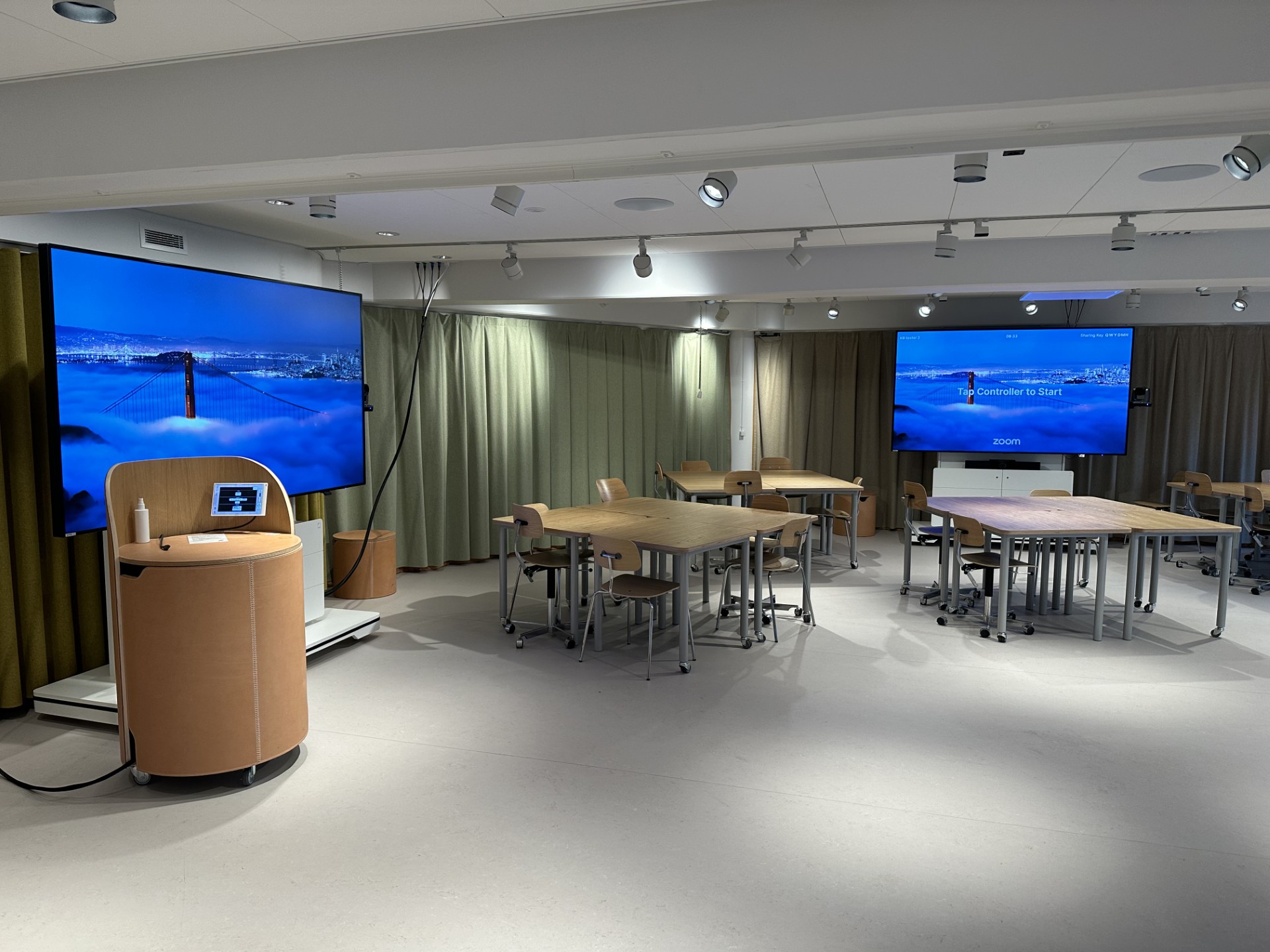



AV solutions are becoming increasingly important and central to corporate communication and collaboration. With the continued focus on the hybrid work model, efforts to make the physical workplace attractive and relevant, and rising demands for digital presence, AV solutions have become a fixed and integrated part of any Digital Workplace strategy. At the same time, the technical possibilities are developing rapidly and the bar for the functionality and quality achievable in integrated AV systems is raised every day. All in all, the picture is that AV solutions are occupying an ever-larger role in terms of importance, budgets and day-to-day operations, and that AV projects are becoming more prominent across organizations — in the business units, in IT and for facility management.
Despite this growing significance, the approach to procurement has not fully kept pace. Too often, wishes and ideas for an AV project are still communicated verbally to suppliers, focused on the immediate needs at hand — in plain terms, what we know we know — and based on the premise that the supplier, with their professional background and experience, will naturally understand and interpret the expectations. It is also often implicit that there is a shared understanding of what quality is, and that a supplier will set the bar for this desired quality, so the finished system meets the intended goal.
Consequences of inadequate requirements
But users are different; there is no “one size fits all,” and the perception of quality can vary just as much depending on ambition, experience and needs, even among professionals. “Good quality” is subjective and varies between stakeholders and suppliers. Then, when the alignment of expectations end up happening at the handover of the new systems, it is too late. The foundation of experience has been too limited, the iteration process too short, not enough specific requirements or clarifying questions were posed and, more importantly, far too little was written down. The most significant part of the contractual basis is often a list of equipment and services offered, and at best, a brief description of the elements included in the solution. And then doubt arises: what exactly did we ask for?
The results can be many, but one consequence is often that needs and expectations first start to crystallize when the delivered systems are put into use. Functionality may be limited or incorrect relative to the intent, the interaction with other systems or platforms may be inadequate, and solutions may not behave intuitively or as expected. Then questions follow: can the system be changed or expanded to meet our real needs, should we have used a different platform that can scale, what is good sound actually, what types of meetings and events are we trying to support, and what does the word “integration” actually mean for us?
Identify and assess your needs
Functionality can be described and quality can be quantified, but a good starting point is to describe use cases for the rooms that need AV support. For meeting rooms, for example, consider the typical meeting dynamics: who needs to present, how do they present, who needs to be seen and heard, where are they located, and is the setting always the same? Seek broad or independent inspiration and advice on the options available on the market and, if possible, get input from other users with experience that can help qualify your requirements and wishes. It will often prove necessary to have several different types of meeting rooms to cover overall needs, not just different sizes.
Use proof of concept (PoC) — a targeted, time-limited test run where an AV design is tried in practice — before larger rollouts, for example of AV solutions in many meeting rooms. For AV projects, where complexity, integration and user adoption often determine success, a PoC is not merely desirable but often decisive to ensure that investments actually work optimally and deliver the intended value. A PoC can help confirm functionality, gather user input, validate integrations and test network configuration requirements so that unexpected technical barriers are discovered early.
Describe your requirements
AV solutions vary in complexity, from systems for a standard meeting room to advanced auditoriums, atria or streaming studios. Even for smaller systems it is necessary to define and describe the general requirements, and the more comprehensive the solutions get, the greater the need to specify the desired protocols, platforms and standards to be used — not only because of the individual solution, but also to ensure interplay and integration between the different solutions and rooms. Describe your acceptance criteria. Set values that are easy to verify at handover and use standards such as ANSI/INFOCOMM 10-2013 to frame your requirements and process.
Remember that suppliers are often competing. If wishes and requirements are not stated explicitly, a unilateral increase in functionality or raised quality from a single supplier can reduce their price competitiveness — a risk few suppliers are willing to take unless they are certain they will have the opportunity to explain the resulting increased value of the solution and that it delivers corresponding perceived value to the customer.
To realize the full value of future AV investments, practice must shift from verbal procurement processes focused on equipment to written, use-case and goal-based requirements, with cross-disciplinary ownership and verifiable acceptance at handover. This reduces risk, ensures better user experience and yields a more predictable financial and operational outcome.
Initially published in Danish at https://encollab.dk/fik-du-det-du-bad-om-og-bad-du-om-det-du-gerne-ville-ha/ April 2026

Building on more than 30 years in the AV business solution design, business development and technology adoption projects, with the change efforts and collaborative benefits arising from them, are the disciplines I enjoy most, seeking to create value through knowhow, innovation and consulting services, rather than product.





Please sign in
If you are a registered user on AVIXA Xchange, please sign in