Designing Human-AI Partnerships in the Conference Room
Related Content

 The Intelligent Workplace™
The Intelligent Workplace™
The Operating Model for the Workplace of the Future
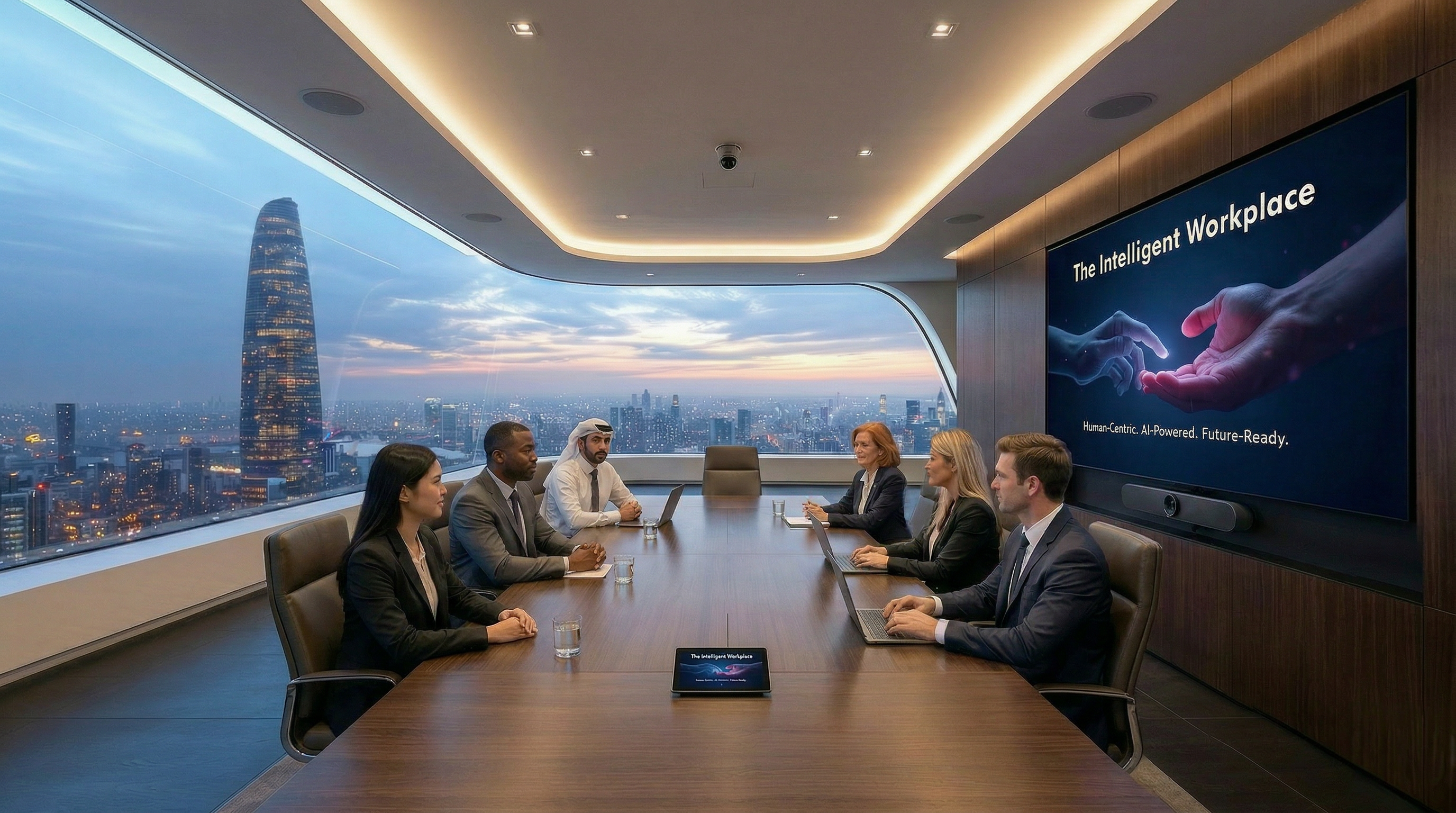
This scenario plays out across enterprise AV deployments everywhere. We're installing AI-enabled conference room technology without designing how humans and AI will actually collaborate during meetings. We focus on what the technology can do - automatic framing, real-time translation, meeting summaries - instead of how people and AI can work together to make meetings more effective.
The core issue isn't technical capability. Modern meeting room AI can track speakers, generate transcripts, and even analyze engagement patterns. The problem is we're approaching these deployments as technology installations rather than partnership design challenges. We train users on features but never define how human meeting leadership should work with AI meeting intelligence.
Consider what happens when this partnership works correctly. In one deployment I observed, meeting leaders learned to use AI-generated real-time insights - who's speaking most, which topics generate engagement, when energy drops - to adjust their facilitation approach mid-meeting. The AI doesn't run the meeting; it gives human facilitators data to make better decisions about pacing, participation, and focus. The result: 40% shorter meetings with better outcomes.
This represents a shift in how we specify and deploy meeting room technology. Instead of asking "What can our AI cameras and microphones detect?" we should ask "How can meeting participants use AI insights to improve collaboration?" The Workforce dimension of intelligent workplace design becomes critical here - we're not just installing detection systems, we're enabling Human-AI partnership in collaborative spaces.
The practical implications for AV integrators are significant. Room design needs to account for how AI feedback will be presented to human facilitators. Display placement, interface design, and control systems must support real-time partnership between human meeting leadership and AI meeting analytics. We're designing environments where humans make contextual decisions informed by AI pattern recognition.
This extends beyond conference rooms into the broader collaboration infrastructure. Video systems that provide AI-generated meeting insights only create value when integrated with workflow systems that help humans act on those insights. Translation features only improve global collaboration when combined with cultural intelligence that humans bring to cross-cultural communication.
The organizations succeeding with AI-enabled meeting technology aren't those with the most sophisticated systems. They're those that deliberately designed how human meeting leadership would work with AI meeting intelligence to create collaborative capability that neither possesses alone.
Read the full analysis at intelligentworkplace.ai
Delivering this is a capability question. The approach is documented in the Human-AI Intelligence Charter.
Explore further: The Intelligent Workplace and Capability Delivery.
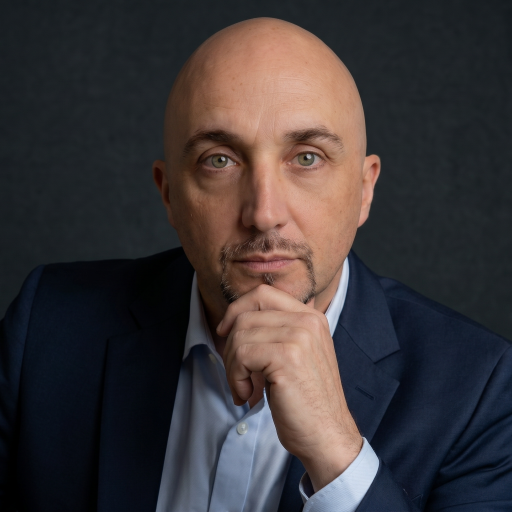
Marc A. Rémond is the founder of Strategic Pathways, a business advisory firm helping technology leaders design the business operating models required to scale.
With 25+ years of sales leadership across AV, UC, and enterprise technology, at Alcatel-Lucent, Polycom, and Barco, among others, he has built go-to-market strategies, channel ecosystems, and AI transformation programmes for global technology companies.
He is the creator of the Intelligent Workplace™, the 4W/4D/4C/4P Frameworks, the Strategic Diagnostic Engine, and the Human-AI Intelligence Charter, and the architect of the Synchronised Growth Architecture.
He is the author of EVOLVE-OR-DIE.AI: Leading in the Era of Human and AI Intelligence, available on Amazon and Apple Books, and the architect of the Intelligent Leader Programme, a twenty-eight module executive curriculum.
He runs two authority brands, an advisory practice, seven content pipelines, and the Intelligent Leader Programme as a single operator.
He writes on market expansion, sales execution, market narrative and workplace transformation at strategicpathways.asia and intelligentworkplace.ai.
Follow him on LinkedIn at linkedin.com/in/marcalexremond.
-
Xchange Advocates are recognized AV/IT industry thought leaders and influencers. We invite you to connect with them and follow their activity across the community as they offer valuable insights and expertise while advocating for and building awareness of the AV industry.