Designing AV That Responds to the Room

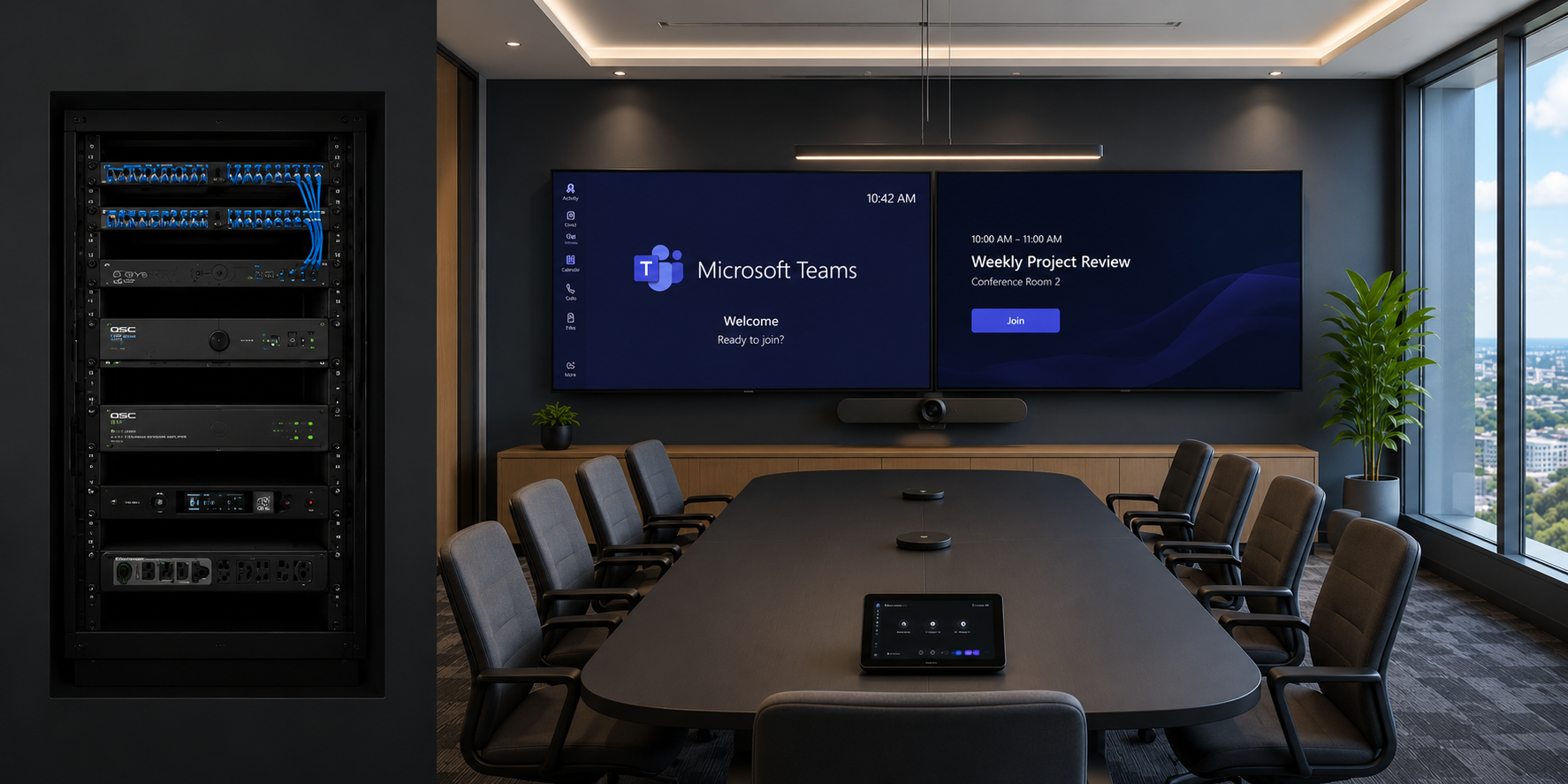
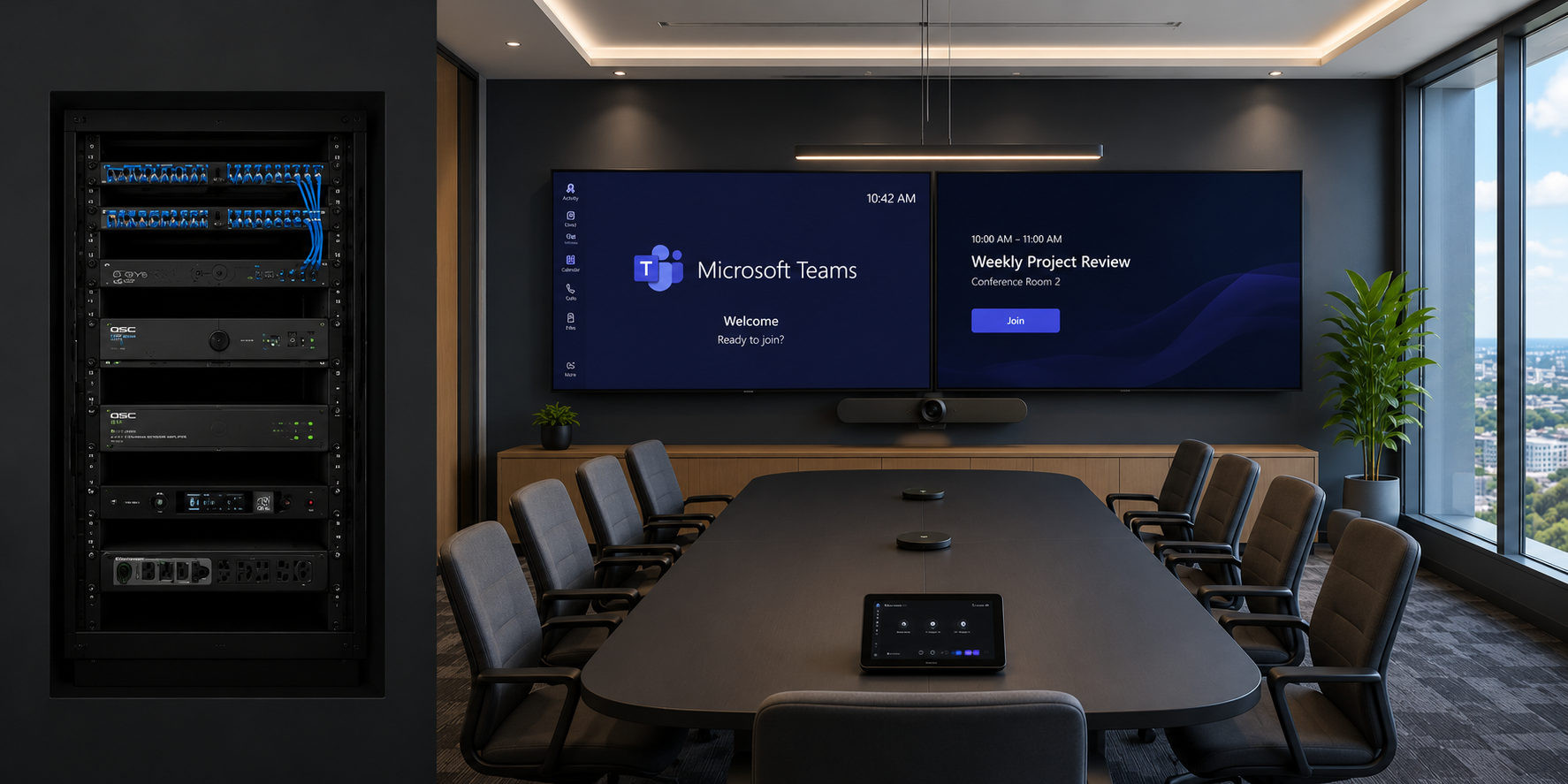

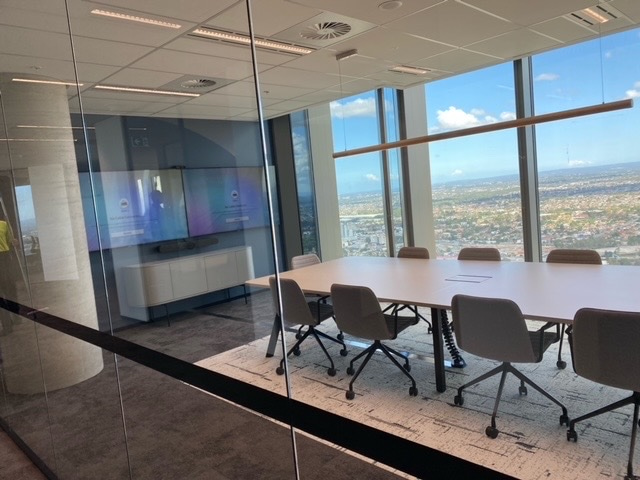
At British American Tobacco Australia’s Parramatta office, Masters Voice Technology delivered four connected workplace spaces as part of a flexible commercial AV integration project. This project included a ten-seat dual-display Microsoft Teams room, a six-seat Teams room and two adjoining training rooms separated by an operable wall.
The fixed meeting rooms use Logitech Rally Bar and Rally Bar Mini systems to provide a consistent Teams experience through client-supplied Logitech Tap controllers. The larger room supports dual displays, while the smaller room uses a compact single-display configuration.
The training rooms required a more flexible design. When the operable wall is closed, both rooms can be used independently. The primary room supports Teams meetings, presentations and presenter-focused camera control, while the secondary room provides local wireless presentation through Barco ClickShare.
When the wall opens, a reed switch sends a signal to the Q-SYS control system through GPIO. Q-SYS then places the rooms into combined mode automatically:
• The audio systems join
• The secondary display mirrors the primary content
• Speaker coverage becomes one coordinated system
• Camera operation changes for the larger space
• Staff gain control of both the meeting camera and ceiling-mounted presenter camera
A Q-SYS Core Nano manages DSP, acoustic echo cancellation, USB integration, audio routing, room-combine logic and the custom user interface. An Audio-Technica beamforming ceiling microphone provides room-wide voice pickup without table-mounted microphones, allowing the furniture layout to remain flexible. Distributed Q-SYS ceiling speakers provide consistent coverage in both separated and combined configurations.
The wall-mounted Q-SYS touch panel gives staff simple control of cameras, displays and room functions, with the interface also available through an iPad. Scheduled display power management and a dedicated PoE AV network support reliable daily operation.
The important outcome is not simply that the rooms contain more technology. It is that the system responds to the physical room configuration, reducing setup time and allowing staff to move between meetings, workshops and larger presentations without manually rebuilding the AV workflow.
This project demonstrates how room detection, DSP, camera control, wireless presentation and a well-designed interface can turn flexible architecture into a genuinely flexible collaboration environment.
Explore more AV integration case studies, or discuss a similar project with Masters Voice Technology.
Read the full case study:
https://www.mastersvoice.com.au/project/how-flexible-av-supports-meetings-and-training-at-british-american-tobacco-australia
As a Director of Masters Voice Technology, a New South Wales–based Audio Visual, Electrical and Communications integrator, I’m proud to help lead a team that brings these services together under one connected delivery model.
For us, it comes down to a simple idea: when technology is designed, installed and supported by one team, projects run more smoothly, systems work better and clients have one accountable partner from concept through to completion.
My approach has been shaped by hands-on experience across the electrical, communications and audio-visual industries. That background has given me a practical understanding of how projects come together on site, and why good technology needs to be reliable, safe and easy for people to use.
As a family man with two children under 10, I also understand how important safe and dependable environments are — especially in schools, workplaces and community spaces. That’s why I place a strong focus on client relationships, compliance, managed support and delivering practical technology solutions that continue to perform well beyond handover.