
Why Your Web Development Company Gives “Main Character Energy” Until the Contract Is Signed
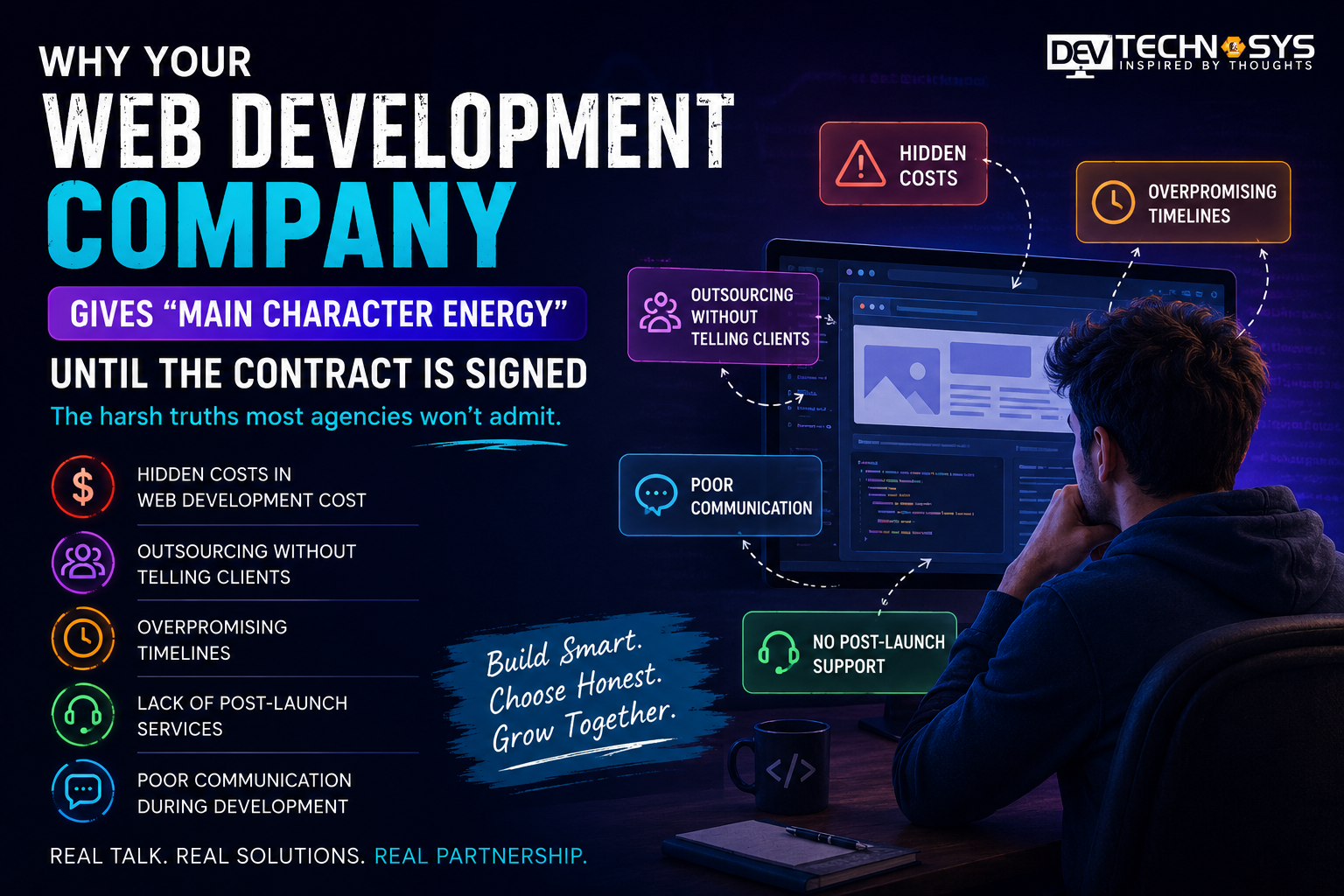
I've spent years watching businesses invest heavily in digital transformation, and one observation keeps repeating itself: many companies choose a web Development Company based on promises rather than proof.
The reality is that the web development industry has a trust problem. Flashy presentations, aggressive timelines, and attractive pricing often hide deeper issues that clients only discover after a project begins. In my experience, the biggest challenge isn't finding someone who can build a website—it's finding a partner who communicates honestly, manages expectations realistically, and remains accountable after launch. Here are the industry habits I believe clients should question before signing any contract.
The "Starting Price" Trap Nobody Talks About
Let's talk about one of the biggest frustrations in the industry: hidden expenses.
Many businesses compare proposals primarily based on web Development Cost, assuming the quoted figure represents the full investment. Unfortunately, that's not always the case. Additional charges for integrations, testing, revisions, maintenance, or performance optimization often appear later.
I've seen projects that started with an attractive budget only to exceed expectations by 30–50% before completion. A trustworthy partner should provide transparency around costs from day one and clearly explain what is included—and what isn't—before development begins.
The Outsourcing Mystery Behind the Curtain
Here's a hard truth: not every agency building your website is actually building your website.
Some firms secure projects internally and then outsource major portions of the work without informing clients. Outsourcing itself isn't the problem. Lack of transparency is.
When clients don't know who's handling development, communication gaps increase, accountability decreases, and quality control becomes difficult. Among the many web Development Companies operating today, the most reliable ones openly discuss their development structure and project ownership model rather than hiding it behind account managers and sales presentations.
The Timeline That Sounds Too Good to Be True
If a complex platform is promised in a surprisingly short timeframe, I immediately become skeptical.
One of the industry's most common mistakes is overpromising delivery schedules simply to win projects. Clients naturally prefer faster launches, but unrealistic deadlines often result in rushed development, technical debt, and avoidable quality issues.
Successful custom web Development requires planning, testing, revisions, and collaboration. Cutting corners may accelerate launch dates, but it usually creates bigger problems later. In my experience, realistic timelines build stronger partnerships than unrealistic promises ever will.
The Post-Launch Disappearing Act
Many agencies celebrate launch day as if the project is finished.
The truth is that launch is only the beginning. Websites require updates, monitoring, performance improvements, security patches, and ongoing technical support. Yet countless businesses discover that their development partner becomes difficult to reach once the final invoice is paid.
This is where quality web Development Services stand apart. Long-term support should be part of the conversation from the start, not an afterthought introduced after deployment. Sustainable digital success depends on continuous improvement, not one-time delivery.
Communication Shouldn't Feel Like Decoding a Group Chat
One of the fastest ways to derail a project is poor communication.
I've seen clients wait days for updates, receive vague progress reports, or struggle to understand technical decisions. This creates uncertainty and damages trust.
Strong web Development Solutions aren't just about coding expertise—they're about collaboration. Clients deserve regular updates, clear explanations, and visibility into project progress. In my observation, companies that prioritize communication consistently deliver better outcomes because issues are addressed before they become major obstacles.
Interestingly, firms such as Dev Technosys have gained attention in the market by emphasizing transparency throughout the development lifecycle rather than treating communication as a secondary task. That approach is becoming increasingly important as projects grow more complex.
Doing Things Differently Isn't a Trend—It's a Requirement
The web industry is evolving quickly, and clients are becoming more informed. They're asking better questions, demanding greater transparency, and expecting accountability.
That's a positive shift.
I've noticed that organizations like Dev Technosys and other forward-thinking teams are adapting by focusing on realistic planning, open communication, and long-term client relationships. These practices shouldn't be considered exceptional anymore—they should be industry standards.
Conclusion
Choosing a development partner shouldn't feel like a gamble.
My advice is simple: look beyond sales presentations, pricing sheets, and ambitious promises. Ask difficult questions about project ownership, support models, communication processes, and delivery expectations. The answers will tell you far more than any portfolio ever could.
The best results come from informed decisions. When businesses understand the industry's common pitfalls, they can confidently choose partners that prioritize transparency, accountability, and genuine collaboration. In the end, that's what separates a good project from a costly lesson.

SEO Executive at Dev Technosys, helping businesses boost online visibility while promoting innovative Mobile App Development Services and customized Mobile App Development Solutions. Working with a trusted Mobile App Development Company, she contributes to delivering scalable Mobile App Development projects that drive business growth.



Please sign in
If you are a registered user on AVIXA Xchange, please sign in