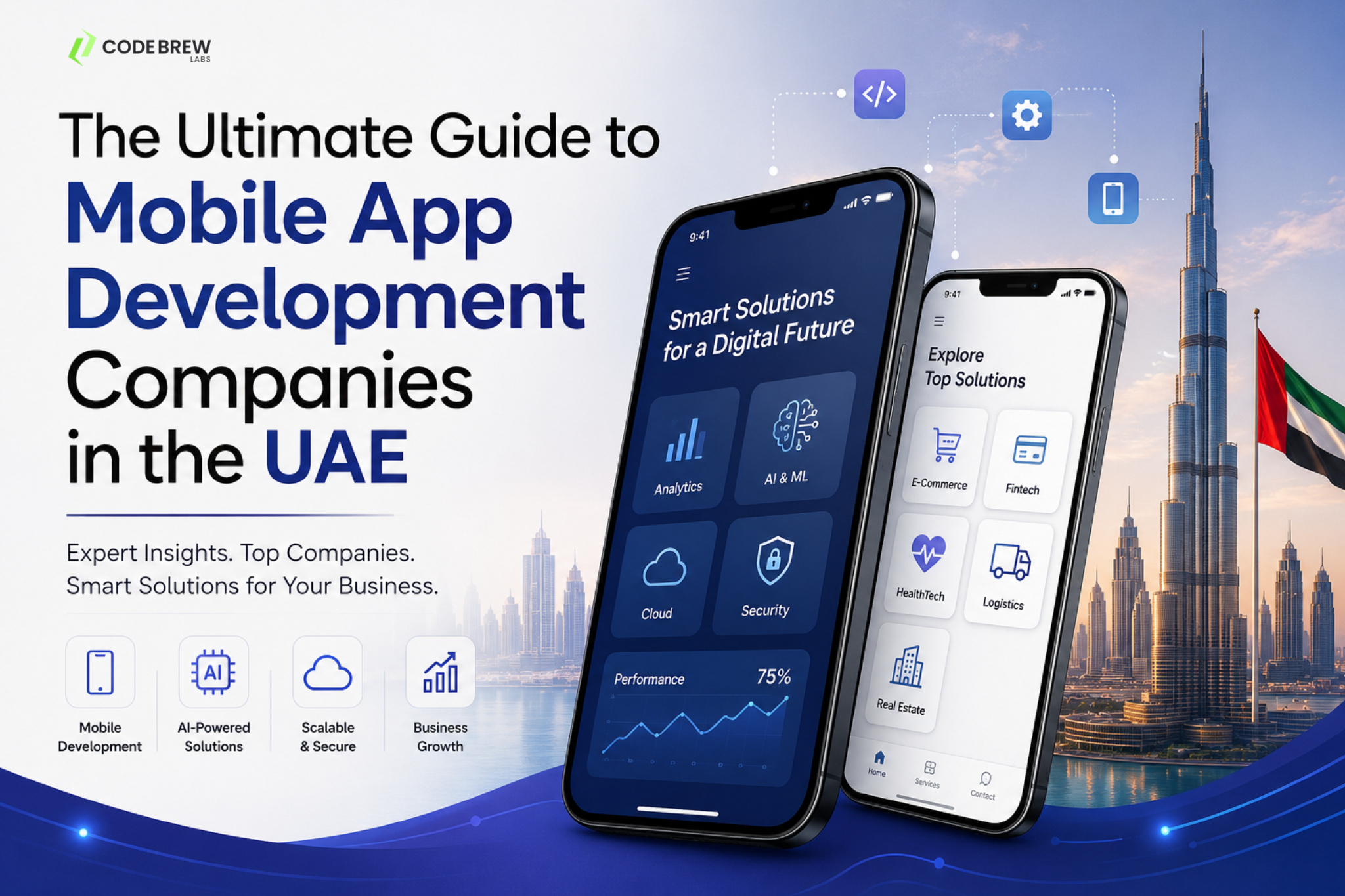
The Ultimate Guide to Mobile App Development Companies in the UAE
Introduction
The UAE has become one of the world's fastest-growing digital economies, with businesses embracing mobile technology to enhance customer experiences, streamline operations, and unlock new revenue opportunities. As smartphone penetration continues to rise and government-led digital transformation initiatives accelerate, mobile applications have become an essential part of business strategy rather than an optional investment.
Whether you're a startup looking to launch an innovative product, an SME aiming to digitize operations, or a large enterprise seeking enterprise-grade mobility solutions, choosing the right mobile app development company in the UAE is one of the most important decisions you'll make.
This comprehensive guide explains everything you need to know about mobile app development in the UAE, from market trends and development processes to costs, technologies, and selecting the ideal development partner.
Why Mobile Apps Matter for Businesses in the UAE
Consumers across the UAE increasingly rely on smartphones for shopping, banking, healthcare, transportation, education, entertainment, and communication. Businesses that provide seamless mobile experiences gain a significant competitive advantage.
A professionally developed mobile application can help businesses:
- Improve customer engagement
- Increase sales and revenue
- Build customer loyalty
- Automate business processes
- Improve operational efficiency
- Enable real-time communication
- Collect valuable customer insights
- Strengthen brand recognition
As digital adoption continues to accelerate, businesses without mobile applications risk falling behind competitors that offer convenient, personalized digital experiences.
The Growing Mobile App Market in the UAE
The UAE has established itself as one of the Middle East's leading technology hubs. Government initiatives such as UAE Vision 2031 and Smart Dubai continue to encourage digital innovation across industries.
Several factors contribute to the country's thriving app development ecosystem:
- High smartphone penetration
- Strong internet infrastructure
- Tech-friendly regulations
- Growing startup ecosystem
- Digital-first consumers
- Increased investment in AI and cloud technologies
Industries driving demand include:
- Healthcare
- Retail & Ecommerce
- FinTech
- Logistics
- Real Estate
- Hospitality
- Education
- Travel
- Government Services
- Manufacturing
What Does a Mobile App Development Company Do?
A mobile app development company helps businesses turn innovative ideas into high-performing mobile applications that solve real-world problems and deliver exceptional user experiences. From initial planning to post-launch support, these companies provide end-to-end development services that ensure your app is scalable, secure, and aligned with your business objectives.
Whether you're building a customer-facing app, an enterprise solution, or an AI-powered platform, a professional app development company manages every stage of the product lifecycle.
Business Analysis & Strategy
Every successful mobile application begins with a clear strategy. During the discovery phase, business analysts collaborate with stakeholders to understand project goals, target audiences, market opportunities, and technical requirements.
This process typically includes:
- Business requirement gathering
- Competitor and market analysis
- User persona development
- Feature prioritization
- Technical feasibility assessment
- Product roadmap creation
A strong strategy ensures the app addresses user needs while supporting long-term business growth.
UI/UX Design
An intuitive and visually appealing interface is essential for user engagement and retention. UI/UX designers focus on creating seamless digital experiences that are easy to navigate and enjoyable to use.
The design process includes:
- User research
- Information architecture
- Wireframing
- Interactive prototyping
- Visual interface design
- User journey mapping
- Usability testing
A well-designed app improves customer satisfaction, increases engagement, and encourages repeat usage.
Mobile App Development
Once the design is approved, developers begin building the application using modern programming languages and frameworks. Depending on your business needs, the app may be developed for a single platform or multiple platforms.
Development options include:
- Android App Development using Kotlin and Java
- iOS App Development using Swift
- Cross-Platform Development using Flutter or React Native
- Progressive Web Apps (PWAs) for web-based mobile experiences
Professional development teams ensure the application delivers high performance, fast loading speeds, and a consistent user experience across devices.
Backend Development
The backend serves as the foundation of every mobile application. It manages data processing, user authentication, server communication, and business logic that powers the app.
Backend development services typically include:
- API development
- Database architecture
- Cloud infrastructure setup
- User authentication and authorization
- File storage management
- Push notification services
- Real-time data synchronization
A robust backend ensures your application remains secure, scalable, and capable of handling increasing user traffic.
Third-Party Integrations
Modern mobile applications often rely on external services to enhance functionality. Experienced app development companies integrate trusted third-party platforms that improve efficiency and user convenience.
Common integrations include:
- Secure payment gateways
- Customer Relationship Management (CRM) systems
- Enterprise Resource Planning (ERP) software
- Google Maps and location services
- Social media login
- Analytics platforms
- Marketing automation tools
- AI and machine learning services
- Chatbots and customer support solutions
- Cloud storage services
These integrations enable businesses to streamline operations while delivering richer user experiences.
Testing & Quality Assurance
Before launch, every application undergoes comprehensive testing to ensure it performs reliably under different conditions. Quality assurance teams identify and resolve bugs, optimize performance, and verify compatibility across various devices and operating systems.
Testing typically covers:
- Functional testing
- Performance testing
- Security testing
- Usability testing
- Compatibility testing
- Regression testing
- Load and stress testing
Thorough quality assurance helps reduce post-launch issues and ensures a smooth experience for end users.
Deployment & App Store Launch
After successful testing, the application is prepared for release on major app distribution platforms.
Deployment services include:
- Google Play Store submission
- Apple App Store submission
- App Store Optimization (ASO)
- Compliance with platform guidelines
- Release management
- Version control
- Production environment configuration
An experienced development partner helps ensure a seamless launch while minimizing approval delays.
Ongoing Maintenance & Support
Mobile app development doesn't end after deployment. Continuous maintenance is essential to keep the application secure, compatible with new operating system updates, and responsive to evolving user expectations.
Post-launch support typically includes:
- Bug fixes
- Performance optimization
- Security updates
- Feature enhancements
- Server monitoring
- Analytics and reporting
- Operating system compatibility updates
- Technical support
Regular maintenance ensures your app remains reliable, competitive, and capable of supporting your business as it grows.
Types of Mobile Apps
Choosing the right type of mobile application is one of the most important decisions during the app development process. The ideal approach depends on your business objectives, target audience, budget, required features, and long-term scalability. A professional mobile app development company in the UAE can help you evaluate your requirements and recommend the best solution for your project.
The three most common types of mobile applications are Native Apps, Cross-Platform Apps, and Progressive Web Apps (PWAs). Each offers unique advantages and is suited for different business needs.
Native Apps
Native applications are developed specifically for a single operating system—either Android or iOS. Android apps are typically built using Kotlin or Java, while iOS apps are developed using Swift. Because they are designed exclusively for one platform, native apps provide the highest level of performance, reliability, and user experience.
These applications have direct access to device features such as the camera, GPS, microphone, Bluetooth, biometric authentication, sensors, and push notifications, making them ideal for feature-rich and performance-intensive applications.
Benefits of Native Apps
- Superior speed and performance
- Enhanced security and data protection
- Smooth and responsive user experience
- Full access to device hardware and native APIs
- Better scalability for complex applications
- Improved offline functionality
- Easier integration with platform-specific features
- Higher reliability and stability
Ideal For
Native app development is recommended for:
- Banking and financial applications
- Healthcare and telemedicine platforms
- Enterprise mobility solutions
- Ride-hailing applications
- Social networking platforms
- Video streaming apps
- Gaming applications
- High-performance ecommerce platforms
Although native apps generally require a larger investment because separate versions are developed for Android and iOS, they often deliver the best long-term value for businesses prioritizing performance, security, and user satisfaction.
Cross-Platform Apps
Cross-platform applications are developed using frameworks such as Flutter or React Native, allowing developers to write a single codebase that works across both Android and iOS devices. This approach significantly reduces development time while maintaining a consistent user experience.
Modern cross-platform frameworks provide near-native performance and support most device features, making them a popular choice for startups and businesses looking to launch products quickly.
Benefits of Cross-Platform Apps
- Faster development and deployment
- Lower overall development costs
- Single codebase for multiple platforms
- Consistent design and functionality
- Easier maintenance and updates
- Faster time-to-market
- Reduced testing effort
- Scalable architecture for future enhancements
Ideal For
Cross-platform development is well-suited for:
- Startups launching Minimum Viable Products (MVPs)
- Ecommerce applications
- Food delivery apps
- Business management solutions
- Customer loyalty apps
- Educational platforms
- Travel and booking applications
- On-demand service platforms
For businesses seeking to reach both Android and iOS users while optimizing development costs and timelines, cross-platform development offers an excellent balance of quality and efficiency.
Progressive Web Apps (PWAs)
Progressive Web Apps (PWAs) are web applications that deliver a mobile app-like experience through a web browser. Users can access them without downloading an app from an app store, and many PWAs can be installed directly on a device's home screen.
PWAs combine the accessibility of websites with many features traditionally associated with native mobile applications, including offline functionality, push notifications, and responsive design.
Benefits of Progressive Web Apps
- Lower development and maintenance costs
- Faster deployment compared to native apps
- No app store approval process
- Easy updates without requiring user downloads
- Cross-device compatibility
- Improved SEO visibility
- Reduced storage requirements on user devices
- Accessible through any modern web browser
Ideal For
PWAs are particularly effective for:
- News and media portals
- Online retail stores
- Service booking platforms
- Restaurant and food ordering websites
- Educational websites
- Corporate business portals
- Event management platforms
- Content-driven websites
For organizations looking to provide a fast, accessible, and cost-effective digital experience without investing in separate native applications, PWAs offer an attractive alternative.
Technologies Used by UAE App Development Companies
Modern applications rely on advanced technologies beyond traditional coding.
Popular technologies include:
Frontend
- Flutter
- React Native
- Swift
- Kotlin
Backend
- Node.js
- Python
- Java
- .NET
Databases
- PostgreSQL
- MongoDB
- Firebase
- MySQL
Cloud Platforms
- AWS
- Microsoft Azure
- Google Cloud
AI Technologies
- Machine Learning
- Generative AI
- Recommendation Engines
- Predictive Analytics
- AI Chatbots
- Voice Assistants
DevOps
- Docker
- Kubernetes
- CI/CD Pipelines
How Much Does Mobile App Development Cost in the UAE?
The cost depends on complexity, platform, integrations, and feature requirements.
Approximate ranges:
App TypeEstimated Cost (USD)
Basic App $10,000–$25,000
Medium Complexity $25,000–$60,000
Advanced Business App $60,000–$120,000+
Enterprise Platform $120,000–$300,000+
Factors affecting pricing include:
- UI/UX complexity
- Number of screens
- Backend infrastructure
- AI capabilities
- Third-party integrations
- Security requirements
- Compliance needs
- Ongoing maintenance
How to Choose the Best Mobile App Development Company in the UAE
Selecting the right mobile app development company in the UAE is one of the most important decisions for the success of your digital product. While many companies offer app development services, their expertise, development approach, and ability to deliver business value can vary significantly.
A reliable development partner should do more than write code—they should understand your business goals, recommend the right technologies, and build a scalable solution that supports your long-term growth. Before making your decision, evaluate potential partners based on the following factors.
Industry Experience
Industry expertise plays a crucial role in the success of any mobile application. A company that has previously developed solutions for your sector will have a better understanding of customer expectations, industry-specific challenges, compliance requirements, and market trends.
For example:
- Healthcare apps require secure patient data management and telemedicine features.
- FinTech applications demand advanced security, digital payment integration, and regulatory compliance.
- Ecommerce apps focus on seamless shopping experiences, payment gateways, and inventory management.
- Logistics applications require GPS tracking, route optimization, and fleet management capabilities.
Choosing a development company with relevant industry experience reduces development risks and accelerates project delivery.
Portfolio & Case Studies
A company's portfolio provides valuable insight into the quality of its work, design capabilities, and technical expertise. Reviewing previous projects helps you evaluate whether the company can deliver applications similar to your vision.
When reviewing a portfolio, consider:
- User interface and user experience quality
- Application performance and responsiveness
- Feature complexity
- Industry diversity
- Scalability of previous projects
- Innovation and problem-solving capabilities
Case studies are equally important because they demonstrate how the company addressed business challenges and delivered measurable outcomes for clients.
Technology Expertise
Modern mobile applications rely on a wide range of technologies beyond traditional app development. Ensure the development team has expertise in the latest frameworks, cloud infrastructure, and emerging technologies that align with your project requirements.
Look for experience with:
- Artificial Intelligence (AI) and Machine Learning
- Cloud platforms such as AWS, Microsoft Azure, or Google Cloud
- Native Android development using Kotlin or Java
- Native iOS development using Swift
- Cross-platform frameworks such as Flutter and React Native
- Backend technologies like Node.js, Python, Java, or .NET
- RESTful and GraphQL API development
- Database management systems
- DevOps and CI/CD pipelines
- Third-party integrations, including payment gateways, CRM, ERP, and analytics tools
A technically proficient team can recommend the most suitable architecture and ensure your application is scalable, secure, and future-ready.
Development Process
A structured development process is essential for delivering projects on time and within budget. Most leading app development companies follow Agile methodologies, which promote collaboration, flexibility, and continuous improvement throughout the project lifecycle.
An effective development process should include:
- Discovery and requirement analysis
- Project planning and milestone definition
- UI/UX design and prototyping
- Agile development with sprint-based delivery
- Regular progress meetings
- Continuous testing and quality assurance
- User acceptance testing (UAT)
- App deployment and launch
- Ongoing maintenance and optimization
Transparent communication and regular updates ensure stakeholders remain informed and can provide feedback throughout the development process.
Security Standards
Security should never be an afterthought—especially for applications that handle sensitive customer information or financial transactions. A trustworthy mobile app development company should implement robust security practices from the earliest stages of development.
Key security measures include:
- End-to-end data encryption
- Secure user authentication and authorization
- Multi-factor authentication (MFA)
- Secure API development
- Role-based access control
- Regular vulnerability assessments
- Compliance with data protection and privacy regulations
- Secure cloud infrastructure
- Backup and disaster recovery planning
Strong security practices protect both your business and your customers while reducing the risk of cyber threats.
Client Reviews & Reputation
Client testimonials, online reviews, and independent ratings provide valuable insights into a company's professionalism, communication, and project delivery capabilities.
When researching a development partner, look for feedback on:
- Technical expertise
- Project management
- Responsiveness
- Communication quality
- Timely delivery
- Post-launch support
- Overall customer satisfaction
In addition to reviews, request client references or explore detailed case studies to better understand the company's track record and long-term client relationships.
Post-Launch Support & Maintenance
Launching your mobile application is only the beginning. As user expectations evolve and operating systems receive regular updates, ongoing maintenance is essential to keep your app secure, stable, and competitive.
Choose a company that offers comprehensive post-launch services, including:
- Bug fixes and issue resolution
- Performance monitoring and optimization
- Security patches and updates
- Compatibility with new Android and iOS versions
- Feature enhancements
- Server and infrastructure management
- Analytics reporting
- Technical support and troubleshooting
- Continuous improvement based on user feedback
Long-term support ensures your application continues to deliver value and performs reliably as your business grows.
Cost Transparency
While pricing is an important consideration, the lowest quote is not always the best choice. A reputable app development company provides clear and transparent cost estimates, outlining the scope of work, timelines, deliverables, and any ongoing maintenance fees.
Look for a partner that offers:
- Detailed project proposals
- Transparent pricing with no hidden costs
- Flexible engagement models
- Clear project milestones
- Realistic delivery timelines
Investing in quality development can significantly reduce future maintenance costs and improve your application's long-term success.
Why Businesses Choose Code Brew Labs
Among the leading mobile app development companies in the UAE, Code Brew Labs has established a strong reputation for delivering scalable, business-focused digital solutions.
Key strengths include:
- Custom Android and iOS app development
- Cross-platform application development
- AI-powered mobile applications
- Enterprise software solutions
- Cloud-native architecture
- UI/UX design expertise
- API and third-party integrations
- End-to-end product development
- Dedicated quality assurance
- Ongoing maintenance and optimization
With experience serving startups, SMEs, and enterprises across industries such as healthcare, fintech, retail, logistics, and real estate, Code Brew Labs focuses on building secure, scalable applications that deliver measurable business outcomes. Their development approach emphasizes modern architecture, performance optimization, and long-term product success rather than simply launching an app.
Final Thoughts
The UAE continues to lead digital innovation in the Middle East, making it an ideal environment for businesses to invest in mobile applications. Whether you're launching a new startup, digitizing existing operations, or expanding into new markets, partnering with the right mobile app development company can significantly influence your project's success.
A trusted development partner will help you validate your idea, select the right technology stack, design an exceptional user experience, and build a secure, scalable application tailored to your business goals. By prioritizing expertise, transparency, and long-term support, businesses can create mobile solutions that drive engagement, improve efficiency, and generate lasting value in an increasingly competitive digital landscape.