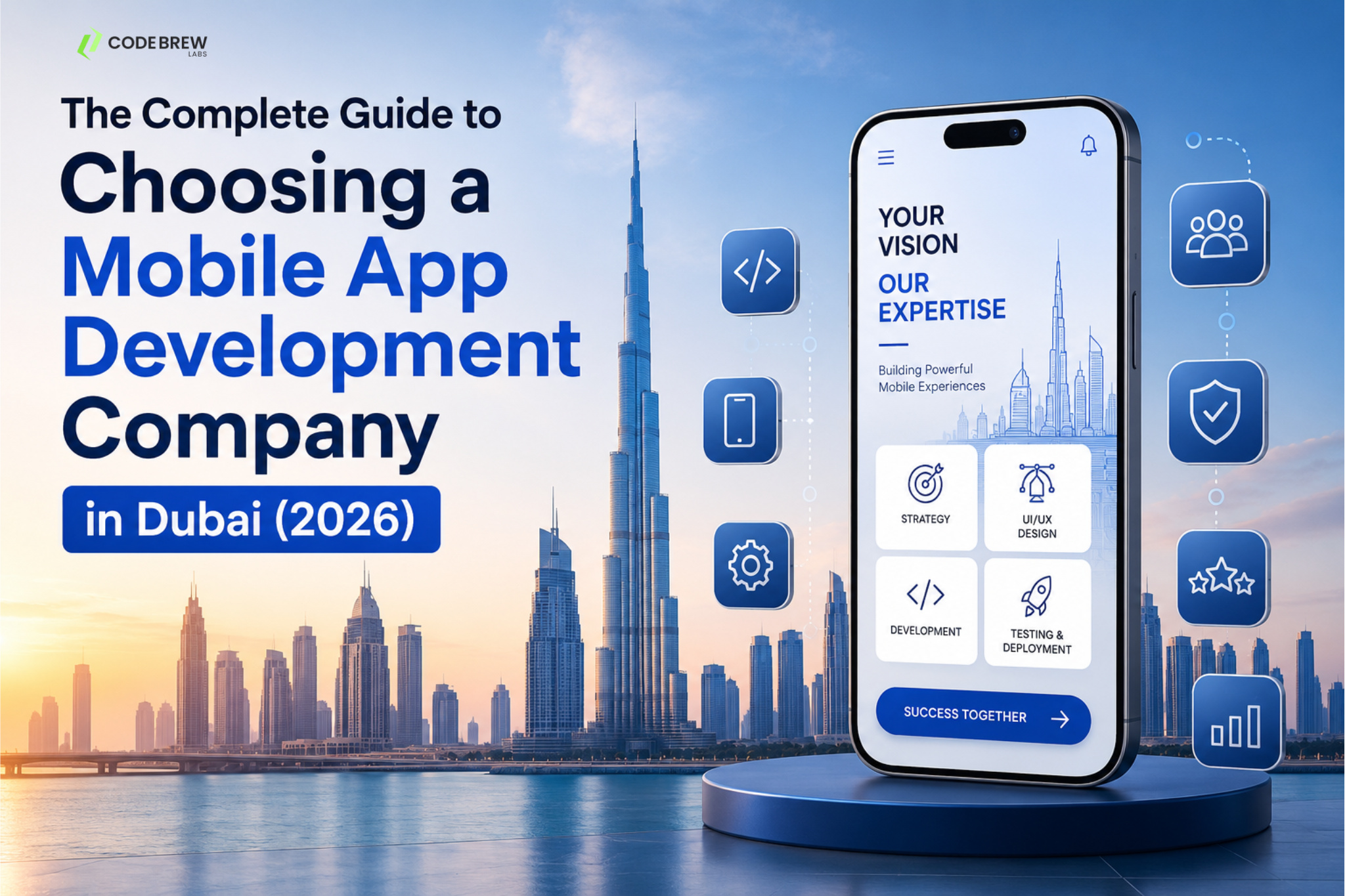
The Complete Guide to Choosing a Mobile App Development Company in Dubai (2026)
Introduction
Dubai has rapidly become one of the world's leading hubs for technology and innovation. With government initiatives like the UAE Digital Economy Strategy, Smart Dubai, and increasing investments in artificial intelligence, blockchain, fintech, healthcare, logistics, and e-commerce, businesses are embracing mobile applications to stay competitive.
Whether you're a startup, SME, or enterprise, selecting the right mobile app development company in Dubai can significantly impact the success or failure of your digital product. A skilled development partner not only builds an application but also helps shape your product strategy, user experience, scalability, security, and long-term growth.
However, with hundreds of app development companies operating across Dubai and the UAE, selecting the right partner can be overwhelming.
This comprehensive guide explains everything you need to know before hiring a mobile app development company in Dubai in 2026.
Why Dubai is a Leading Hub for Mobile App Development
Dubai has established itself as one of the world's fastest-growing technology and innovation hubs, making it a preferred destination for mobile app development. Backed by visionary government initiatives and a business-friendly environment, the city attracts startups, SMEs, and global enterprises looking to build cutting-edge digital solutions. With a strong focus on digital transformation, artificial intelligence, and smart city technologies, Dubai offers the ideal ecosystem for businesses seeking to launch scalable and future-ready mobile applications.
Several factors have contributed to Dubai's rapid rise as a global technology center:
Government Support for Innovation
The UAE government continues to invest heavily in digital transformation through initiatives such as the UAE Digital Economy Strategy, Dubai Economic Agenda (D33), and Smart Dubai. These programs encourage businesses to adopt emerging technologies, creating significant opportunities for mobile app development across industries.
Thriving Startup Ecosystem
Dubai is home to a vibrant startup ecosystem supported by incubators, accelerators, venture capital firms, and free zones. Entrepreneurs from around the world choose Dubai to launch innovative digital products, increasing the demand for experienced mobile app development companies.
AI-First National Strategy
Artificial intelligence is a key pillar of the UAE's future vision. Businesses are increasingly integrating AI-powered features such as chatbots, predictive analytics, recommendation engines, and automation into their mobile applications to enhance customer experiences and streamline operations.
High Smartphone Penetration
The UAE has one of the highest smartphone penetration rates globally. Consumers rely on mobile applications for shopping, banking, healthcare, transportation, food delivery, and entertainment, making mobile-first experiences essential for business success.
Digital Payment Adoption
The widespread adoption of digital wallets, contactless payments, and online banking has accelerated the development of secure and feature-rich mobile applications. Businesses are prioritizing seamless payment integrations to meet evolving customer expectations.
Expanding eCommerce Industry
Dubai's rapidly growing e-commerce market has encouraged retailers and service providers to invest in mobile commerce solutions. Businesses are developing customized shopping apps that offer personalized experiences, secure payments, and efficient order management.
Why Choosing the Right Mobile App Development Company Matters
Developing a successful mobile application involves far more than writing code. It requires a combination of strategic planning, innovative design, robust engineering, and continuous optimization. Choosing the right mobile app development company ensures that your project is built with scalability, security, and long-term business growth in mind.
A professional development partner contributes value throughout the entire product lifecycle by offering:
- Business Strategy: Aligning the application with your business goals and identifying growth opportunities.
- Market Validation: Conducting competitor research, validating ideas, and ensuring product-market fit before development begins.
- UI/UX Design: Creating intuitive, visually appealing interfaces that enhance user engagement and satisfaction.
- Product Architecture: Designing scalable and maintainable software architecture that supports future expansion.
- Backend Development: Building secure and high-performance server infrastructure, databases, and APIs.
- Security Implementation: Protecting sensitive user data through encryption, secure authentication, and compliance with industry standards.
- API Integrations: Connecting the application with payment gateways, CRM systems, cloud services, maps, analytics, and third-party platforms.
- AI Capabilities: Incorporating artificial intelligence features such as chatbots, personalized recommendations, predictive analytics, and automation.
Maximizing Return on Investment
A trusted mobile app development company minimizes risks while maximizing your return on investment. By combining technical expertise with strategic business insights, the right partner delivers a secure, scalable, and high-performing application that supports long-term growth. Instead of simply building an app, they help create a digital product that drives customer engagement, improves operational efficiency, and generates measurable business value.
Step 1: Clearly Define Your Business Goals
Before you start reaching out to mobile app development companies in Dubai, it's important to have a clear understanding of what you want your application to achieve. A well-defined vision not only helps you communicate your requirements effectively but also enables development agencies to provide accurate cost estimates, realistic timelines, and the right technical approach.
Start by identifying the core purpose of your mobile app. Is it designed to increase sales, improve customer engagement, streamline internal operations, or launch a completely new digital product? Understanding your business objectives will guide every decision throughout the development process.
Ask yourself the following questions before initiating discussions with potential development partners:
- What business problem will the app solve?
- Who is the target audience?
- Should the app be developed for Android, iOS, or both platforms?
- Which features are essential for the initial launch?
- What is the estimated budget for development and maintenance?
- What is your desired project timeline?
Having clear answers to these questions helps development companies recommend the most suitable technologies, development methodology, and feature roadmap. It also minimizes misunderstandings and reduces the likelihood of costly revisions during the project.
Step 2: Choose the Right Type of Mobile App
Not every business requires the same type of mobile application. Selecting the appropriate development approach depends on your business goals, target audience, budget, and performance requirements. A professional app development company will help you choose the most suitable option based on your specific needs.
Native Apps
Native applications are built specifically for a single operating system using platform-specific technologies such as Swift for iOS and Kotlin for Android.
Key Benefits of Native Apps:
- Outstanding performance and speed
- Enhanced security and reliability
- Seamless integration with device hardware
- Superior user experience and responsiveness
- Better offline functionality
Best Suited For:
- Banking and financial applications
- Healthcare and telemedicine platforms
- Gaming applications
- Enterprise mobility solutions
- High-performance consumer apps
Although native development requires separate codebases for Android and iOS, it delivers the highest level of performance and user satisfaction.
Cross-Platform Apps
Cross-platform applications are developed using frameworks such as Flutter and React Native, allowing developers to write a single codebase that works across multiple platforms.
Advantages Include:
- Faster development cycles
- Lower development costs
- Shared codebase for Android and iOS
- Easier updates and maintenance
- Faster time-to-market
This approach is particularly beneficial for startups, SMEs, and businesses looking to validate their ideas without significantly increasing development costs.
Progressive Web Apps (PWAs)
Progressive Web Apps combine the accessibility of websites with many features of native mobile applications. Users can access PWAs directly through a web browser without downloading them from an app store.
Ideal For:
- eCommerce businesses
- Service providers
- News and media portals
- Educational platforms
- Content-driven websites
PWAs offer faster deployment, lower maintenance costs, and excellent accessibility while providing users with an app-like experience.
Step 3: Evaluate Industry Experience
Industry experience plays a critical role in the success of your mobile application. A development company that understands your industry is better equipped to address its unique challenges, comply with regulations, and deliver features that meet user expectations.
Rather than hiring a generalist, choose a company with proven experience in your business domain.
Healthcare
Healthcare applications require strict security, compliance, and patient privacy standards.
Look for experience in:
- Telemedicine platforms
- Appointment scheduling
- Electronic Health Records (EHR)
- Patient portals
- Remote patient monitoring
FinTech
Financial applications demand robust security and seamless payment processing.
Relevant expertise includes:
- Digital wallets
- Mobile banking
- Investment platforms
- Payment gateway integration
- Fraud detection systems
Retail & eCommerce
Retail businesses benefit from feature-rich shopping experiences.
Essential capabilities include:
- Shopping applications
- Loyalty and rewards programs
- Inventory management
- Personalized recommendations
- Secure checkout systems
Logistics
Logistics applications improve operational efficiency and real-time visibility.
Experience should include:
- Fleet management
- Delivery tracking
- Route optimization
- Warehouse management
- Driver applications
Education
Educational platforms require interactive and scalable learning environments.
Key features include:
- E-learning platforms
- Online assessments
- Student information systems
- Virtual classrooms
- Progress tracking
A company with relevant industry expertise can anticipate challenges, recommend best practices, and significantly reduce project risks.
Step 4: Review Their Portfolio
One of the most reliable ways to evaluate a mobile app development company is by reviewing its portfolio. Past projects provide valuable insight into the company's design capabilities, technical expertise, and ability to deliver successful digital products.
A strong portfolio demonstrates:
- High-quality UI/UX design
- Technical proficiency
- Consistent branding and user experience
- Industry versatility
- Innovative feature implementation
- Scalable application architecture
When reviewing previous projects, pay attention to:
- Overall visual appeal
- Ease of navigation
- User interface consistency
- Application performance
- Loading speed
- User reviews and App Store ratings
Whenever possible, download the company's published applications and explore them firsthand. Testing real applications gives you a much clearer understanding of the quality they can deliver.
Step 5: Understand Their Development Process
Professional app development companies follow a structured development methodology that ensures projects remain organized, transparent, and efficient.
A typical mobile app development process includes the following stages:
Discovery Phase
This initial phase lays the foundation for the project.
Activities include:
- Business requirement analysis
- Market and competitor research
- Technical planning
- Project roadmap creation
UI/UX Design
Designers create intuitive user experiences before development begins.
Deliverables include:
- Wireframes
- User journey mapping
- Interactive prototypes
- Visual interface design
Development
This phase involves building the application.
Core activities include:
- Frontend development
- Backend development
- Database setup
- API integration
- Cloud infrastructure configuration
Quality Assurance & Testing
Comprehensive testing ensures a stable and secure application.
Testing typically covers:
- Functional testing
- Performance testing
- Security testing
- Device compatibility
- Bug fixing
Deployment
After successful testing, the application is launched on:
- Google Play Store
- Apple App Store
The company should also assist with store optimization and submission guidelines.
Post-Launch Support
The development process doesn't end after launch.
Reliable companies continue to provide:
- Regular updates
- Performance monitoring
- Bug fixes
- Security patches
- Feature enhancements
Many leading agencies adopt Agile development methodologies, allowing businesses to review progress regularly, provide feedback, and adapt to changing requirements throughout the project lifecycle.
Step 6: Assess Technical Expertise
Modern mobile applications rely on a wide range of technologies. Before hiring a development company, evaluate whether they possess expertise in the latest programming languages, frameworks, cloud platforms, and development tools.
Mobile Development Technologies
Look for proficiency in:
- Flutter
- React Native
- Kotlin
- Swift
Backend Development
A robust backend ensures reliability and scalability.
Common technologies include:
- Node.js
- Python
- Java
- .NET
Database Management
Efficient data storage is essential for application performance.
Popular database technologies include:
- PostgreSQL
- MySQL
- MongoDB
- Firebase
Cloud Platforms
Cloud infrastructure supports scalability and availability.
Leading platforms include:
- Amazon Web Services (AWS)
- Google Cloud Platform
- Microsoft Azure
API Integrations
Modern applications often integrate multiple third-party services.
Examples include:
- Payment gateways
- Google Maps
- SMS services
- Email platforms
- CRM systems
- Analytics platforms
A technically skilled team can build secure, scalable, and future-ready applications capable of supporting long-term business growth.
Step 7: Ask About AI Integration
Artificial Intelligence has become a competitive advantage for modern mobile applications. Businesses increasingly expect intelligent features that automate tasks, personalize experiences, and improve decision-making.
Ask prospective development companies whether they have experience implementing AI capabilities such as:
- AI-powered chatbots
- Personalized recommendation engines
- Predictive analytics
- Voice assistants
- Image and facial recognition
- Intelligent document processing
- Customer behavior analysis
- Generative AI integration using Large Language Models (LLMs)
Integrating AI into your application can significantly improve customer engagement, automate repetitive processes, and deliver more personalized user experiences while increasing operational efficiency.
Step 8: Prioritize Security
Security should never be treated as an afterthought. Mobile applications often process sensitive user information, payment details, and confidential business data, making cybersecurity a top priority.
A reliable app development company should implement industry best practices, including:
- End-to-end data encryption
- Secure user authentication
- Biometric login support
- Multi-factor authentication (MFA)
- Secure data storage
- Encrypted API communication
- Compliance with GDPR and UAE data protection regulations
- Regular vulnerability assessments and security audits
Businesses operating in highly regulated industries such as healthcare, fintech, insurance, and government should ensure their development partner has experience meeting strict compliance requirements.
Step 9: Check Client Reviews
Client reviews provide valuable insights into a company's professionalism, reliability, and overall service quality. Before making your final decision, research feedback from previous clients across trusted review platforms.
Recommended sources include:
- Google Reviews
- Clutch
- GoodFirms
- DesignRush
- LinkedIn recommendations
While reading reviews, focus on recurring themes related to:
- Communication and responsiveness
- Project management
- Technical expertise
- Timely delivery
- Quality of deliverables
- Post-launch support
Consistently positive reviews and high client satisfaction ratings are strong indicators that the company can successfully manage your project.
Step 10: Evaluate Communication
Effective communication is one of the most important factors in a successful mobile app development project. Even highly skilled developers can struggle to deliver expected results if communication is inconsistent or unclear.
Your development partner should provide:
- A dedicated project manager as your primary point of contact
- Regular weekly or bi-weekly project updates
- Sprint planning and review meetings
- Transparent progress reporting
- Fast response times for questions and concerns
- Collaboration tools such as Jira, Trello, Slack, or Microsoft Teams
Open communication ensures everyone remains aligned on project goals, timelines, and deliverables. It also enables faster decision-making, reduces misunderstandings, and contributes to a smoother and more successful development process.
Why Businesses Choose Code Brew Labs
Among the leading mobile app development companies in Dubai, Code Brew Labs has earned a strong reputation for delivering scalable, innovative, and business-focused digital solutions.
Key strengths include:
- Custom Android and iOS app development
- Flutter and React Native expertise
- AI-powered mobile applications
- Enterprise-grade architecture
- UI/UX design excellence
- Cloud-native development
- API integrations
- Dedicated project management
- Ongoing maintenance and support
Code Brew Labs focuses on building applications that are secure, scalable, and aligned with measurable business outcomes, helping organizations accelerate digital transformation and achieve long-term growth.
Future Trends in Mobile App Development (2026)
The mobile app development landscape is evolving faster than ever, driven by rapid advancements in artificial intelligence, cloud computing, immersive technologies, and connected devices. As businesses compete to deliver more intelligent and personalized digital experiences, partnering with a forward-thinking mobile app development company has become essential.
When choosing a development partner in Dubai, it's important to ensure they have the expertise to implement emerging technologies that will keep your application competitive in the years ahead. Companies that embrace innovation today will be better positioned to meet changing customer expectations, improve operational efficiency, and achieve long-term business growth.
Below are some of the most influential mobile app development trends shaping the industry in 2026.
AI-Powered User Experiences
Artificial Intelligence is transforming the way users interact with mobile applications. Modern apps are becoming smarter by leveraging AI to automate processes, analyze user behavior, and deliver real-time recommendations.
AI-powered features include:
- Intelligent chatbots and virtual assistants
- Personalized product recommendations
- Predictive search functionality
- Automated customer support
- Smart content generation
- Behavioral analytics
By integrating AI into mobile applications, businesses can improve customer satisfaction, increase engagement, and streamline business operations.
Hyper-Personalization
Today's users expect applications to deliver experiences tailored specifically to their preferences and behaviors. Hyper-personalization uses artificial intelligence, machine learning, and real-time data to customize content, recommendations, and user journeys.
Examples include:
- Personalized shopping experiences
- Customized dashboards
- Dynamic content recommendations
- Location-based services
- Personalized notifications
- Adaptive user interfaces
Businesses that provide highly personalized experiences often see improved customer retention, higher conversion rates, and stronger brand loyalty.
Super Apps
The popularity of super apps continues to grow across global markets. Rather than offering a single service, super apps combine multiple functionalities within one platform, allowing users to access everything from payments and shopping to transportation and communication without switching between applications.
Common features include:
- Digital payments
- Food delivery
- Ride-hailing
- E-commerce
- Messaging
- Appointment booking
- Financial services
For businesses, super apps provide greater user engagement, increased cross-selling opportunities, and a unified customer experience.
Voice-Enabled Interfaces
Voice technology is becoming an integral part of modern mobile applications. As voice assistants and natural language processing continue to improve, users increasingly prefer hands-free interactions for everyday tasks.
Popular voice-enabled features include:
- Voice search
- Voice commands
- Smart assistants
- Speech-to-text functionality
- Multilingual voice support
Voice-enabled interfaces improve accessibility, enhance convenience, and create more intuitive user experiences across various industries.
Augmented Reality (AR) and Virtual Reality (VR)
AR and VR technologies are transforming industries by creating immersive digital experiences that bridge the gap between physical and virtual environments.
Applications include:
- Virtual shopping experiences
- Real estate property tours
- Healthcare training simulations
- Interactive education
- Gaming and entertainment
- Product visualization
As AR and VR technologies become more accessible, businesses can offer engaging experiences that improve customer interaction and decision-making.
IoT-Connected Applications
The Internet of Things (IoT) enables mobile applications to communicate with connected devices, creating seamless digital ecosystems for both consumers and enterprises.
Common IoT applications include:
- Smart home automation
- Wearable fitness devices
- Connected healthcare equipment
- Industrial monitoring systems
- Fleet and asset tracking
- Smart city infrastructure
IoT-powered applications help businesses collect real-time data, automate processes, and improve operational efficiency.
Blockchain-Enabled Security
With growing concerns about cybersecurity and data privacy, blockchain technology is emerging as a reliable solution for securing mobile applications. Its decentralized architecture enhances transparency, protects sensitive information, and reduces the risk of fraud.
Blockchain can be used for:
- Secure digital payments
- Identity verification
- Smart contracts
- Data integrity
- Supply chain transparency
- Digital asset management
Industries such as finance, healthcare, logistics, and government are increasingly adopting blockchain-based mobile solutions.
Low-Code and No-Code Development
Low-code and no-code platforms are accelerating application development by enabling developers to build solutions with minimal manual coding. While these platforms do not replace traditional development for complex applications, they significantly reduce development time for internal tools, workflows, and MVPs.
Key benefits include:
- Faster development cycles
- Lower development costs
- Rapid prototyping
- Easier maintenance
- Improved business agility
Many organizations use low-code platforms alongside custom development to speed up digital transformation initiatives.
Cloud-Native Architecture
Cloud-native application development has become the foundation for building scalable, reliable, and high-performing mobile applications. By leveraging cloud infrastructure, businesses can easily handle increasing user traffic while maintaining excellent performance and security.
Cloud-native benefits include:
- Automatic scalability
- High availability
- Faster deployments
- Improved disaster recovery
- Enhanced security
- Lower infrastructure costs
Leading cloud platforms such as AWS, Microsoft Azure, and Google Cloud continue to power the next generation of enterprise mobile applications.
Edge Computing
As applications demand faster response times and real-time processing, edge computing is becoming increasingly important. Instead of sending all data to centralized cloud servers, edge computing processes information closer to the user's device, reducing latency and improving performance.
Edge computing is particularly valuable for:
- Autonomous vehicles
- Smart manufacturing
- Healthcare monitoring
- Industrial IoT
- Augmented Reality applications
- Real-time analytics
By minimizing delays and optimizing data processing, edge computing delivers faster, more responsive mobile experiences.
Final Thoughts
Choosing the right mobile app development company in Dubai is one of the most important decisions for your digital transformation journey. A trusted development partner brings more than technical expertise—they provide strategic guidance, innovative thinking, and long-term support to help your application succeed in an increasingly competitive market.
Before making your decision, take the time to define your business goals, review portfolios, assess technical capabilities, evaluate communication practices, and ensure the company can deliver scalable, secure, and future-ready solutions.
As Dubai continues to lead digital innovation in 2026, investing in the right app development partner will help your business create exceptional customer experiences, streamline operations, and unlock new growth opportunities. Whether you're launching a startup, expanding an enterprise platform, or modernizing existing services, the right mobile app development company can turn your vision into a high-performing application that drives measurable business success for years to come.