Strategic Path: Your Clients Are Deploying AI but Nobody Has Defined How Humans and AI Work Together.
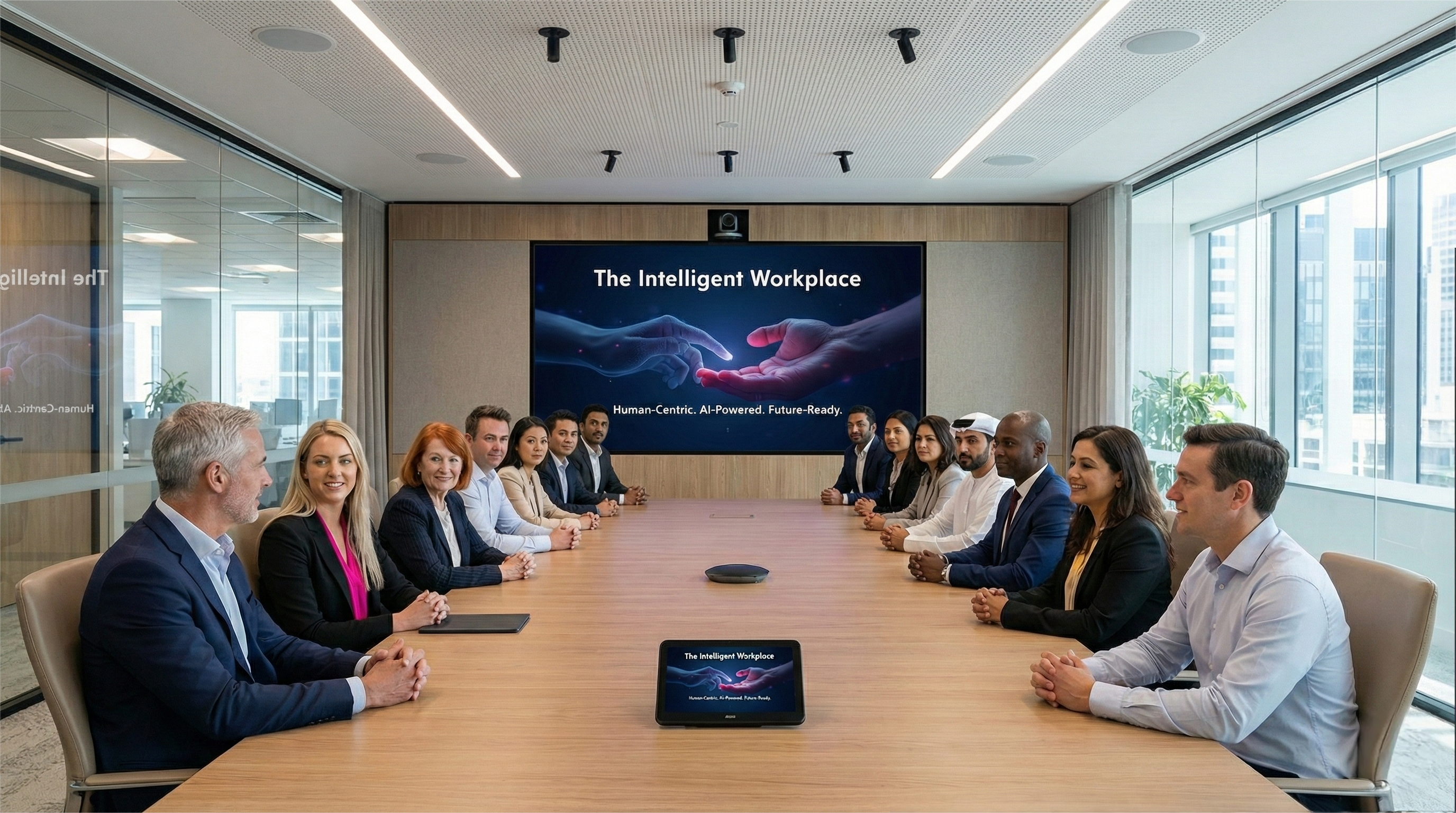

The enterprise clients you are working with in 2026 have budgets for AI. They have approved platforms, appointed AI leads, and commissioned workplace transformation projects. What most of them have not done is define how humans and AI are supposed to work together inside the environments you are building for them.
That gap is becoming an integrator problem.
When a deployment underperforms, the question that comes back to the room is rarely about the platform selection or the infrastructure design. It is about why the system is not being used the way it was intended, why adoption is lower than projected, why the workflows that looked clean in the design phase are breaking down in practice. The technology performed. The collaboration model was never defined.
This is the governance vacuum sitting at the centre of most AI-enabled workplace projects right now. And it is worth understanding precisely, because it changes what integrators need to bring to a client engagement beyond the technical specification.
There are three layers that determine whether an AI-enabled workplace actually functions as an intelligent environment or simply as an expensive one.
The first is enablement. AI does not slot into a workforce and begin producing value because the infrastructure is sound. It requires a deliberate shift in how people work, structured capability development, and change management that most workplace deployments do not account for in the project scope. When this layer is missing, users work around the technology rather than with it. The system sits underutilised. The client blames the integration.
The second is collaboration. This is where humans and AI need to be explicitly designed to work together, not simply placed in proximity to each other. In a meeting room environment, that means defining which decisions the AI-assisted system informs, which outputs require human review, and which workflows can operate with greater autonomy. A conferencing platform with AI transcription, real-time translation, and automated action item capture is a powerful tool. Without a defined collaboration protocol, it produces data that nobody acts on and decisions that are still made the same way they were before the room was upgraded.
The third is governance. AI systems in enterprise environments need boundaries: what data they access, how outputs are used, who is accountable for AI-assisted decisions, and how the organisation maintains oversight as the systems develop. For integrators, this is increasingly a scoping conversation rather than a post-deployment consideration. Clients who have not thought through governance before deployment will encounter the consequences of that gap inside the environments you have built for them.
These three layers, enablement, collaboration, and governance, form the operating model that determines whether an AI-enabled workplace is genuinely intelligent or simply automated. The distinction matters for integrators because it defines the scope of what a successful deployment actually requires.
The practical implication is this. The technical specification for an AI-enabled workplace is no longer sufficient on its own. Clients who arrive with a platform decision and a room count but without a collaboration model are arriving with half the project defined. The integrators who recognise that gap and bring a framework for addressing it will be in a different conversation than those who deliver the infrastructure and hand the governance question back to the client.
The workplace transformation projects that will be held up as genuine successes in three years will not be the ones with the most sophisticated technology. They will be the ones where the human layer was designed with the same rigour as the technical layer.
That is the conversation worth having with your clients now, before the deployment, not after the adoption numbers come in.
Subcribe to my newsletters on LinkedIn for more insights: https://www.linkedin.com/newsletters/human-ai-intelligence-charter-7347273014054481920/
Delivering this is a capability question. The approach is documented in the Human-AI Intelligence Charter and the Intelligent Workplace.

Marc A. Rémond is the founder of Strategic Pathways, a business advisory firm helping technology leaders design the business operating models required to scale.
With 25+ years of sales leadership across AV, UC, and enterprise technology, at Alcatel-Lucent, Polycom, and Barco, among others, he has built go-to-market strategies, channel ecosystems, and AI transformation programmes for global technology companies.
He is the creator of the Intelligent Workplace™, the 4W/4D/4C/4P Frameworks, the Strategic Diagnostic Engine, and the Human-AI Intelligence Charter, and the architect of the Synchronised Growth Architecture.
He is the author of EVOLVE-OR-DIE.AI: Leading in the Era of Human and AI Intelligence, available on Amazon and Apple Books, and the architect of the Intelligent Leader Programme, a twenty-eight module executive curriculum.
He runs two authority brands, an advisory practice, seven content pipelines, and the Intelligent Leader Programme as a single operator.
He writes on market expansion, sales execution, market narrative and workplace transformation at strategicpathways.asia and intelligentworkplace.ai.
Follow him on LinkedIn at linkedin.com/in/marcalexremond.
-
Xchange Advocates are recognized AV/IT industry thought leaders and influencers. We invite you to connect with them and follow their activity across the community as they offer valuable insights and expertise while advocating for and building awareness of the AV industry.