5 Tips for Designing Consistent Video Walls
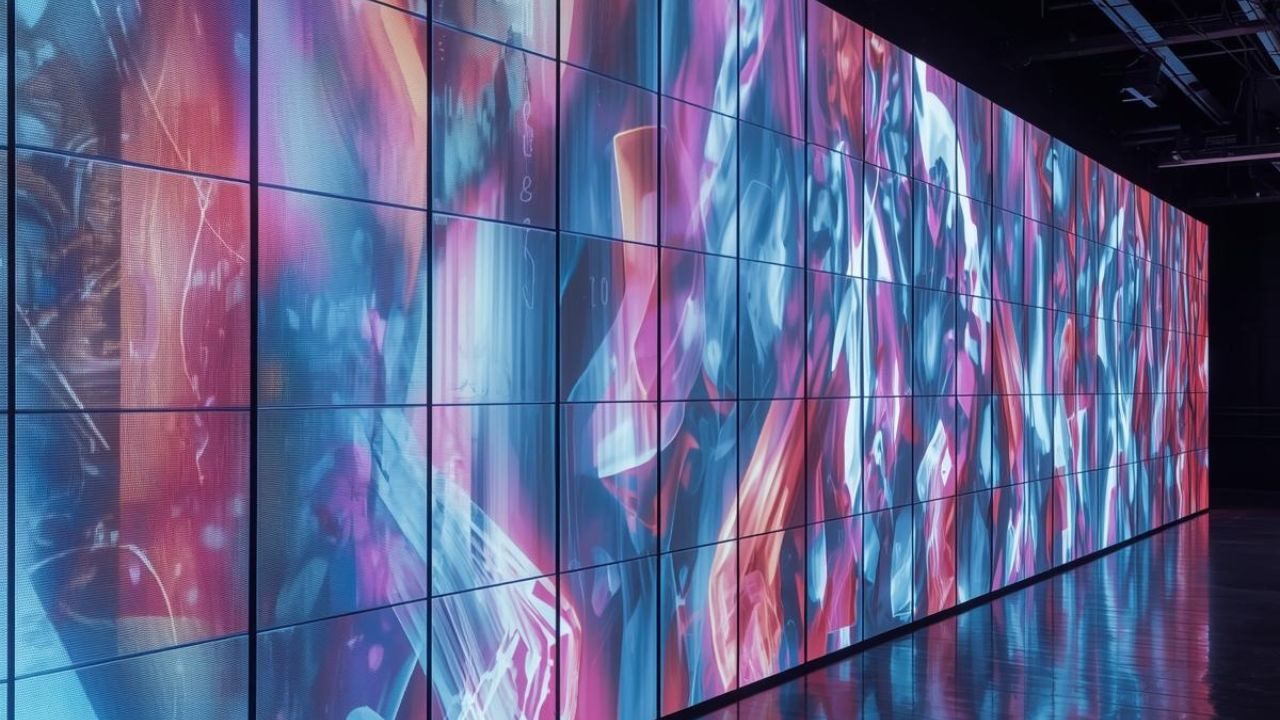


Video walls have become a key resource for communicating information, creating visual impact, and supporting decision-making across a wide range of environments, including control rooms, corporate spaces, retail, broadcast, and live events.
However, as these systems grow in size and complexity, so do the technical challenges: multiple sources, varying resolutions, different formats, and increasingly high expectations in terms of quality and visual consistency.
Designing a consistent video wall, where the image appears uniform, stable, and reliable, does not depend solely on display quality. It requires a holistic system approach and well-informed decisions from the design stage. Here are five key principles to achieve this in multi-format environments.
1. Think of the Wall as a Complete System, Not as Isolated Displays
One of the most common mistakes is treating a video wall as a collection of individual screens. In reality, a video wall must be understood as a unified visual system, where sources, processing, signal distribution, control, and operation are deeply interconnected.
From the outset, it is essential to define:
- What types of content will be displayed
- How many sources will coexist
- How information will be distributed across the wall
- Who will operate the system and how
This system-level approach helps prevent future incompatibilities and simplifies scalability.
Rafael Herrera, Regional Sales Manager for Latin America at Datapath Ltd., explains: “Conducting a needs analysis with an AV ecosystem mindset is key to viewing the solution as a whole from the very beginning. While displays—whether video walls or LED panels—are the visual interface for users, they depend on content being delivered with the expected quality, speed, and composition to meet each application’s objectives. This becomes even more critical in environments such as airport control rooms, NOCs, and SOCs, where a high density of video sources must be distributed across multiple display groups and operator stations, ensuring resolution, quality, and transmission speed.” 2. Properly manage resolutions and scaling
2. Properly Manage Resolutions and Scaling
In multi-format environments, it is common to work with signals of different resolutions, aspect ratios, and refresh rates. If scaling is not handled properly, the result can be inconsistent images, distortions, cropping, or quality loss.
A best practice is to define reference resolutions and establish clear criteria for how different sources will adapt to the wall’s visual canvas. The goal is for content to appear natural and consistent, regardless of its origin.
Additionally, anticipating future needs, such as new sources or evolving content types, helps create a more flexible and scalable system.
3. Maintain Visual Consistency Across the Entire Wall
Visual consistency goes beyond simply fitting the image across screens. Factors such as brightness, color, contrast, and synchronization between displays directly impact the user experience.
A well-designed wall should be perceived as a single continuous surface, not as separate panels. To achieve this, it is essential to:
- Define calibration standards from the start
- Ensure signal synchronization
- Avoid visible differences between sections
This is especially critical in environments where information must be interpreted quickly and accurately, such as monitoring centers or control rooms.
Herrera adds: “While all projects aim for the best possible visual quality, this becomes critical in environments such as public safety monitoring centers and complex industrial or mining operations. Video sources—whether cameras or SCADA applications—must deliver clarity and visual quality at any scale, along with latency as close to zero as possible. In these environments, a good image is not enough. It is essential to provide the highest quality and the ability to route any source to any surface, in any position and size, according to user needs.”
4. Design with Daily Operation in Mind
A video wall may be technically flawless, but if it is difficult or unintuitive to operate, it will end up underutilized. That’s why design must consider not only day one, but everyday use.
Key questions include:
- Who will operate the system?
- What is their level of technical expertise?
- How quickly do they need to modify content?
A well-designed system simplifies source management, content reconfiguration, and response to unexpected situations, without constant reliance on external support.
5. Plan for growth and evolving content
Video walls rarely remain static. Over time, new content is added, more sources are integrated, or the visual space is expanded. Designing with scalability in mind is essential to protect the investment.
This includes:
- Planning additional capacity from the beginning
- Avoiding rigid configurations that are difficult to modify
- Treating the wall as an evolving platform
When the system is built to adapt, changes become opportunities to enhance the visual experience rather than obstacles.
As an example, Herrera explains: “Implementations such as those at the new Tulum International Airport in Quintana Roo, Mexico, or at BHP’s headquarters in Santiago, Chile, were designed so that expanding the number of sources, adding operators, or incorporating more displays requires only the addition of hardware endpoints. In most cases, this can be done without complex provisioning processes and without modifying the software licenses already acquired by the client. In other words, it simply involves adding AVoIP transmitters or receivers where needed, along with graphics or capture cards to the existing hardware, without major interventions or impacting the original investment.”
Consistency as the Foundation of Visual Experience
In multi-format environments, achieving consistent video walls is a functional requirement. Visual coherence, flexibility, and ease of operation are key to ensuring the system fulfills its purpose over time.
Beyond the specific technology, the real differentiator lies in how systems are designed, integrated, and operated, aligning technical decisions with the real needs of the space and its users.
“Incorporating an ecosystem approach into the design, along with reliable, scalable technologies supported globally, is key to the success of professional AV projects—especially in mission-critical environments—and ensures long-term opportunities for cross-selling solutions and services,” concludes Herrera.
Interested in learning more? Datapath will be present at InfoComm América Latina 2026, and their team will be there to share more insights and technologies. Learn more about InfoComm América Latina 2026 here and register now!

A University of Central Florida double-alum with a Master’s in Digital Media, I'm a content creator who loves bringing people together over shared interests. As AVIXA's Coordinator of Digital Content, I produce articles on a myriad of technology topics. I've also worked on virtual reality projects, transforming Romanian folk tales into VR narratives.