What Features should an ebay Clone Marketplace have to compete in US Market in 2026

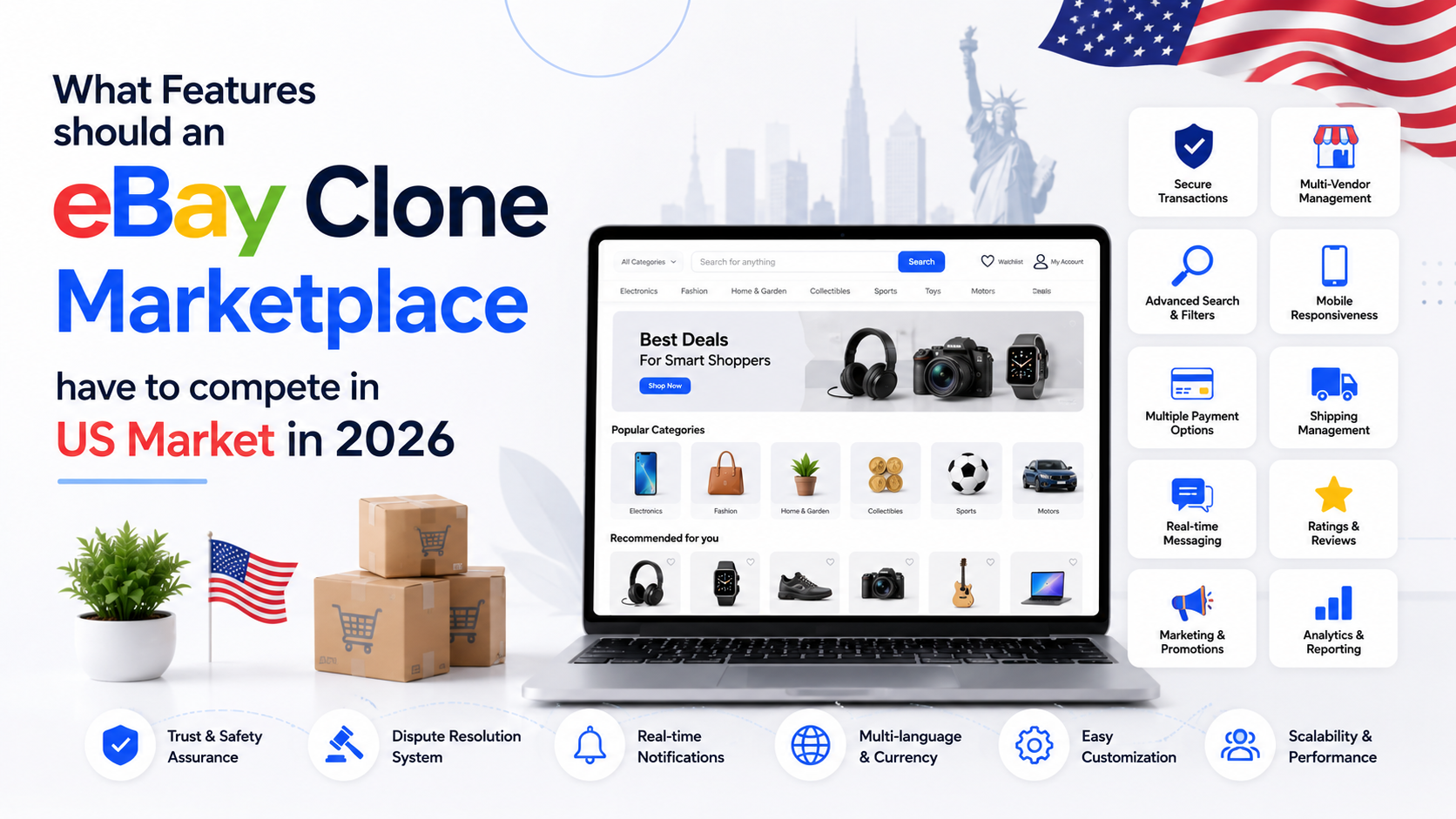
Think about the last time you bought something online. Chances are you didn't visit just one seller, you explored multiple stores, compared prices, checked reviews, and found the best deal, all within a single marketplace. That's exactly what has made platforms like eBay thrive for decades. But in 2026, simply replicating eBay's marketplace model isn't enough. Today's buyers expect personalized recommendations, lightning-fast search, secure payments, mobile-first experiences, and hassle-free returns. Sellers, on the other hand, need powerful tools to manage products, inventory, orders, and customer interactions effortlessly.
The opportunity couldn't be bigger. The U.S. eCommerce market continues to grow, with online marketplaces accounting for a significant share of digital retail sales. As consumers increasingly prefer one-stop shopping destinations, entrepreneurs and businesses are looking to launch feature-rich multi-vendor marketplaces that cater to specific industries or niche audiences. This has fueled the demand for eBay clone marketplace software ready-made solutions that provide the core functionality of an online marketplace while allowing businesses to customize the platform to match their unique vision.
In this guide, we'll explore the 15 must-have features every eBay clone marketplace should include to compete in the US market in 2026. You'll also discover advanced features that can differentiate your platform, common mistakes to avoid, emerging marketplace trends, and practical tips for choosing the right marketplace software to build a future-ready business.
What Is an eBay Clone Marketplace?
An eBay clone marketplace is a ready-made multi-vendor eCommerce solution designed to help entrepreneurs launch an online marketplace with features similar to eBay. It allows multiple independent sellers to register, create storefronts, list products, manage inventory, process orders, and interact with buyers all from a single platform. Unlike building a marketplace from scratch, an eBay clone provides the essential marketplace functionality out of the box while allowing businesses to customize the design, features, and workflows to fit their specific requirements.
How Does an eBay Clone Marketplace Work?
An eBay clone marketplace connects three key stakeholders:
- Buyers can browse products, compare prices, communicate with sellers, make secure payments, and track their orders.
- Sellers can register on the platform, create their own stores, upload products, manage inventory, fulfill orders, and monitor sales performance.
- Marketplace administrators oversee vendor approvals, product listings, commissions, payments, promotions, customer support, and overall platform operations from a centralized dashboard.
This centralized ecosystem simplifies marketplace management while creating a seamless buying and selling experience.
Who Should Consider an eBay Clone Marketplace?
An eBay clone solution is suitable for businesses that want to launch a scalable online marketplace without investing years in custom development. It's particularly beneficial for:
- Entrepreneurs launching a new online marketplace
- Startups validating a marketplace business idea
- Retailers expanding into a multi-vendor model
- Enterprises building industry-specific marketplaces
- Businesses targeting niche markets such as electronics, fashion, collectibles, automotive parts, handmade goods, or refurbished products
eBay Clone vs. Copying eBay
One common misconception is that an eBay clone is an exact replica of eBay. In reality, a modern eBay clone is a customizable marketplace framework, not a copy. It provides the core marketplace infrastructure while giving businesses the flexibility to add unique features, integrate third-party tools, support different business models, and create a distinct brand identity.
Why the US Is Ideal Market for an eBay Clone Marketplace
The U.S. remains one of the world's largest and most competitive eCommerce markets, making it an attractive destination for launching a multi-vendor marketplace. As online shopping continues to evolve, consumers are looking for platforms that offer greater product variety, competitive pricing, faster delivery, and a seamless shopping experience. This creates significant opportunities for businesses that can deliver a marketplace tailored to specific customer needs.
Access a Rapidly Growing eCommerce Market
Millions of Americans shop online every day, and online marketplaces continue to capture a large share of digital retail sales. With consumers becoming increasingly comfortable purchasing everything from electronics and fashion to collectibles and refurbished goods online, launching a marketplace today offers long-term growth potential.
Cater to Niche Marketplace Opportunities
General marketplaces are crowded, but niche marketplaces continue to thrive. Whether it's vintage collectibles, automotive parts, sports equipment, handmade products, or luxury goods, businesses can attract highly targeted audiences by focusing on a specific category and delivering a curated shopping experience.
Launch Faster with a Proven Marketplace Model
Developing a marketplace from scratch can take months or even years. An eBay clone provides the essential marketplace infrastructure, allowing businesses to launch more quickly while still customizing the platform to reflect their brand, workflows, and business goals.
Generate Revenue Through Multiple Streams
A multi-vendor marketplace creates several monetization opportunities beyond product sales. Depending on your business model, you can earn revenue through:
- Vendor commissions
- Seller subscription plans
- Featured product listings
- Advertising placements
- Premium storefront packages
- Transaction and service fees
Diversifying revenue sources helps build a more sustainable and scalable business.
Meet Modern Buyer Expectations
Today's shoppers expect more than just product listings. They want intuitive navigation, AI-powered recommendations, secure payment options, fast search, mobile-friendly experiences, and transparent order tracking. A modern eBay clone equipped with these capabilities can improve customer satisfaction and encourage repeat purchases.
Build a Marketplace That Scales with Your Business
As your marketplace grows, you'll need the ability to onboard more vendors, manage larger product catalogs, handle increasing order volumes, and expand into new regions. Choosing a scalable eBay clone solution ensures your platform can support business growth without requiring a complete rebuild.
Why Marketplace Features Matter More Than Ever in Big 2026
Launching an eBay clone marketplace is only the first step. The real challenge is attracting buyers, retaining sellers, and delivering an experience that keeps both coming back. In 2026, users have higher expectations than ever before. They compare every marketplace not just with eBay, but with platforms like Amazon, Etsy, Walmart Marketplace, and Temu. If your marketplace lacks convenience, speed, or trust, users can switch to another platform in just a few clicks.
That's why choosing the right features is no longer optional; it's a key factor in your marketplace's long-term success.
Customer Expectations Are Higher Than Ever
Modern shoppers expect a seamless buying journey from product discovery to checkout. Features like personalized recommendations, smart search, one-click checkout, multiple payment options, and real-time order tracking have become standard expectations rather than premium additions.
Sellers Need More Than Just a Storefront
A successful marketplace must also deliver value to sellers. Vendors expect intuitive dashboards, inventory management, order processing, sales analytics, marketing tools, and secure payment processing that help them manage and grow their businesses efficiently. When sellers succeed, your marketplace becomes more attractive to new vendors.
Mobile Commerce Continues to Grow
A significant share of online purchases now happens on smartphones. Buyers expect responsive websites and dedicated mobile apps that make browsing, purchasing, and managing orders simple. Mobile-friendly marketplaces also benefit from higher engagement and better conversion rates.
Trust and Security Influence Buying Decisions
Customers only purchase from platforms they trust. Features such as secure payment gateways, two-factor authentication, verified seller profiles, customer reviews, refund management, and fraud prevention tools help build confidence and encourage repeat purchases.
AI Is Transforming the Shopping Experience
Artificial intelligence is changing how marketplaces operate. AI-powered product recommendations, intelligent search, personalized offers, chatbots, and predictive analytics help customers find relevant products faster while increasing conversions and average order values.
Scalability Is Essential for Long-Term Growth
Your marketplace may start with a handful of sellers, but it should be able to support thousands as your business expands. A scalable platform with flexible architecture, API integrations, and efficient vendor management ensures you can grow without compromising performance or user experience.
Features Create a Competitive Advantage
The most successful marketplaces don't compete on price alone, they compete on experience. Features that simplify shopping, improve seller operations, and streamline marketplace management can differentiate your platform in a crowded market. Investing in the right functionality from the beginning reduces operational challenges, enhances customer satisfaction, and positions your marketplace for sustainable growth.
Top 15 Must-Have Features of an eBay Clone Marketplace
The success of an eBay clone marketplace depends on the value it delivers to both buyers and sellers. While buyers expect a seamless shopping experience, sellers need powerful tools to manage their stores efficiently. Below are the 15 essential features every eBay clone marketplace should include to compete in the US market in 2026.
1. Multi-Vendor Management
Enable multiple sellers to register, create storefronts, list products, and manage their businesses independently from a centralized marketplace.
2. Dedicated Seller Dashboard
Provide vendors with a powerful dashboard to manage products, inventory, orders, earnings, and performance metrics efficiently.
3. Smart Product Catalog Management
Allow sellers to organize products using categories, attributes, variations, and bulk upload tools for easier catalog management.
4. Advanced Search and Smart Filters
Help buyers quickly discover products through intelligent search, category filters, price ranges, ratings, brands, and availability filters.
5. AI-Powered Product Recommendations
Deliver personalized product suggestions based on browsing behavior and purchase history to improve customer engagement and boost conversions.
6. Multiple Payment Gateways
Support popular payment options such as PayPal, Stripe, credit/debit cards, digital wallets, and Buy Now, Pay Later (BNPL) services.
7. Secure Checkout Process
Provide encrypted transactions, secure payment processing, and fraud prevention measures to build customer trust and reduce cart abandonment.
8. Order and Shipment Tracking
Offer real-time order updates and shipment tracking to improve transparency and enhance the post-purchase experience.
9. Product Reviews and Seller Ratings
Allow verified buyers to review products and rate sellers, helping build credibility and assist future customers in making informed decisions.
10. Inventory Management
Enable real-time stock updates, low-stock alerts, and inventory synchronization to prevent overselling and simplify seller operations.
11. Mobile Apps for Buyers and Sellers
Deliver dedicated Android and iOS apps that provide a seamless shopping and selling experience across mobile devices.
12. Shipping and Logistics Integration
Integrate with leading shipping carriers to automate shipping calculations, label generation, delivery tracking, and fulfillment processes.
13. SEO-Friendly Marketplace Architecture
Optimize the marketplace with SEO-friendly URLs, customizable metadata, schema markup, XML sitemaps, and fast-loading pages to improve search visibility.
14. Robust Admin Control Panel
Give marketplace owners centralized control over vendors, commissions, products, orders, users, reports, and marketplace settings.
15. Scalability and Third-Party Integrations
Choose a platform that supports business growth with scalable architecture and seamless integrations for payment gateways, CRM, ERP, marketing automation, analytics, and other essential business tools.
How These Features Enhance the Buyer and Seller Experience
A successful eBay clone marketplace isn't just about offering a long list of features it's about creating value for everyone using the platform. Buyers want a fast, secure, and personalized shopping experience, while sellers need efficient tools to manage and grow their businesses. The right combination of features ensures both groups remain engaged, helping your marketplace attract more users and achieve sustainable growth.
How Buyers Benefit
Faster Product Discovery
Features like advanced search, smart filters, AI-powered recommendations, and visual search help customers find relevant products quickly. Instead of scrolling through hundreds of listings, buyers can easily narrow down their options and make informed purchasing decisions.
Secure and Convenient Shopping
Secure payment gateways, encrypted checkout, multiple payment methods, and fraud prevention measures give customers confidence when making purchases. A trustworthy shopping environment encourages repeat business.
Personalized Shopping Experience
AI-driven recommendations, wishlists, recently viewed products, and personalized offers make shopping more relevant to each user. Personalized experiences increase customer satisfaction and improve conversion rates.
Better Order Transparency
Real-time order tracking, automated notifications, and easy access to order history keep buyers informed throughout the purchasing journey. This reduces uncertainty and improves the overall customer experience.
Increased Trust and Confidence
Verified seller profiles, authentic customer reviews, transparent ratings, and clear return policies help buyers make purchasing decisions with greater confidence, reducing hesitation and improving loyalty.
How Sellers Benefit
Simplified Store Management
A dedicated seller dashboard allows vendors to manage products, inventory, pricing, orders, and customer interactions from a centralized interface, saving time and reducing operational complexity.
Better Inventory Control
Real-time inventory management helps sellers monitor stock levels, avoid overselling, and replenish products before they run out, ensuring a smoother shopping experience for customers.
Increased Sales Opportunities
Marketing tools such as discount campaigns, featured listings, coupons, and personalized promotions help sellers attract more customers and boost sales without relying solely on external advertising.
Actionable Business Insights
Comprehensive analytics and reporting provide sellers with valuable data on customer behavior, top-performing products, sales trends, and revenue. These insights enable smarter business decisions and continuous improvement.
Efficient Order and Payment Management
Integrated shipping solutions, automated order processing, secure payment systems, and streamlined payout management reduce administrative work, allowing sellers to focus on growing their business.
A Win-Win Marketplace Ecosystem
When buyers enjoy a seamless shopping experience and sellers have the tools they need to succeed, the marketplace naturally becomes more valuable for everyone. Satisfied customers are more likely to return, while successful sellers are motivated to expand their product offerings and invest further in the platform.
In other words, every feature you implement should serve a clear purpose: improving usability, building trust, increasing efficiency, or driving growth. A marketplace that delivers value to both buyers and sellers is far more likely to stand out in the competitive US eCommerce landscape and achieve long-term success.
Emerging Trends Shaping eBay-Like Marketplaces in 2026
The eCommerce industry is evolving rapidly, and online marketplaces must keep pace with changing consumer expectations and technological advancements. Features that were once considered optional are quickly becoming standard. By embracing these emerging trends, businesses can future-proof their eBay clone marketplace and stay competitive in the US market.
Social Commerce Integration
Social media is becoming an important sales channel. Integrating your marketplace with platforms like Instagram, Facebook, and TikTok allows users to discover, share, and purchase products more easily. Features such as social login, product sharing, and influencer collaborations can also help expand your marketplace's reach.
AI-Driven Customer Support
AI-powered chatbots and virtual assistants are helping marketplaces deliver instant customer support around the clock. From answering product questions to assisting with order tracking and returns, these tools reduce response times and improve customer satisfaction.
Sustainable and Eco-Friendly Shopping
Consumers are becoming more conscious of environmental impact. Features such as eco-friendly product labels, sustainable shipping options, refurbished product categories, and transparent seller practices can appeal to environmentally conscious shoppers and strengthen your marketplace's brand reputation.
Omnichannel Commerce
Today's customers interact with brands across multiple channels, including websites, mobile apps, social media, and physical stores. An omnichannel approach ensures a consistent shopping experience, allowing users to browse, purchase, and manage orders seamlessly across different platforms.
Advanced Data Analytics
Marketplace owners and sellers are relying more on analytics to understand customer behavior, identify sales trends, and optimize marketing strategies. Real-time dashboards and predictive insights help businesses make informed decisions that drive growth and improve operational efficiency.
Flexible Payment Experiences
Modern buyers expect greater payment flexibility. Along with traditional payment methods, marketplaces are increasingly offering digital wallets, Buy Now, Pay Later (BNPL) options, and one-click checkout to simplify the purchasing process and reduce cart abandonment.
Why Yo!Kart Is a Strong Choice for Building an eBay-Like Marketplace
Choosing the right marketplace software can significantly influence how quickly you launch, how easily you scale, and how effectively you compete in the market. If you're looking for a solution that combines ready-made marketplace functionality with the flexibility to customize, Yo!Kart is a strong option for building an eBay-like marketplace.
Purpose-Built for Multi-Vendor Marketplaces
Unlike generic eCommerce platforms that require multiple plugins and extensions, Yo!Kart is built specifically for multi-vendor marketplaces. It provides dedicated features for vendor onboarding, store management, commission handling, order management, and marketplace administration.
Highly Customizable and White-Label
Every marketplace has unique business goals. Yo!Kart offers extensive customization options, allowing businesses to modify the platform's design, workflows, and features while maintaining complete brand identity through white label capabilities.
Faster Time to Market
Developing a marketplace from scratch can be time consuming. With Yo!Kart's ready-made architecture, businesses can significantly reduce development time and launch their marketplace much faster without compromising on quality or functionality.
Scalable Architecture
As your marketplace grows, the platform should be able to accommodate more vendors, products, customers, and transactions. Yo!Kart is designed with scalability in mind, making it suitable for startups, growing businesses, and enterprise level marketplaces.
Conclusion
Building a successful eBay clone marketplace in 2026 requires more than replicating an existing platform. Buyers expect fast, secure, and personalized shopping experiences, while sellers need powerful tools to manage their businesses efficiently. By incorporating the right mix of core and advanced features from multi vendor management and secure payments to AI powered recommendations and seamless mobile experiences you can create a marketplace that stands out in the competitive US eCommerce landscape.
If you're looking to launch an eBay-like marketplace without building everything from scratch, Yo!Kart offers a comprehensive foundation with built-in multi-vendor functionality, extensive customization options, and the scalability needed to support long-term growth. With the right technology and a customer-centric approach, you can build a marketplace that's well-positioned to compete and succeed in the evolving eCommerce industry.
Frequently Asked Questions (FAQs)
Can I customize an eBay clone marketplace?
Yes. Most modern eBay clone solutions offer extensive customization options, allowing you to modify the marketplace's design, branding, user workflows, and functionality. This flexibility helps businesses create a unique platform tailored to their target audience and operational needs.
Who can benefit from an eBay clone marketplace?
An eBay clone marketplace is suitable for startups, entrepreneurs, retailers, wholesalers, and enterprises looking to launch a multi-vendor platform. It can be used for various industries, including fashion, electronics, automotive parts, collectibles, handmade products, furniture, books, and other niche marketplaces.
How do eBay clone marketplaces generate revenue?
Marketplace owners can monetize their platform through multiple revenue streams, including vendor commissions, subscription plans, featured product listings, advertising space, premium seller memberships, and transaction fees. Using multiple revenue models can help build a sustainable and profitable marketplace.
Why is scalability important for an eBay clone marketplace?
As your marketplace grows, you'll need to support more vendors, products, customers, and transactions. A scalable marketplace solution ensures consistent performance, simplifies future expansion, and reduces the need for costly platform migrations.