What Are the Benefits of Integrating AI into Existing Software?
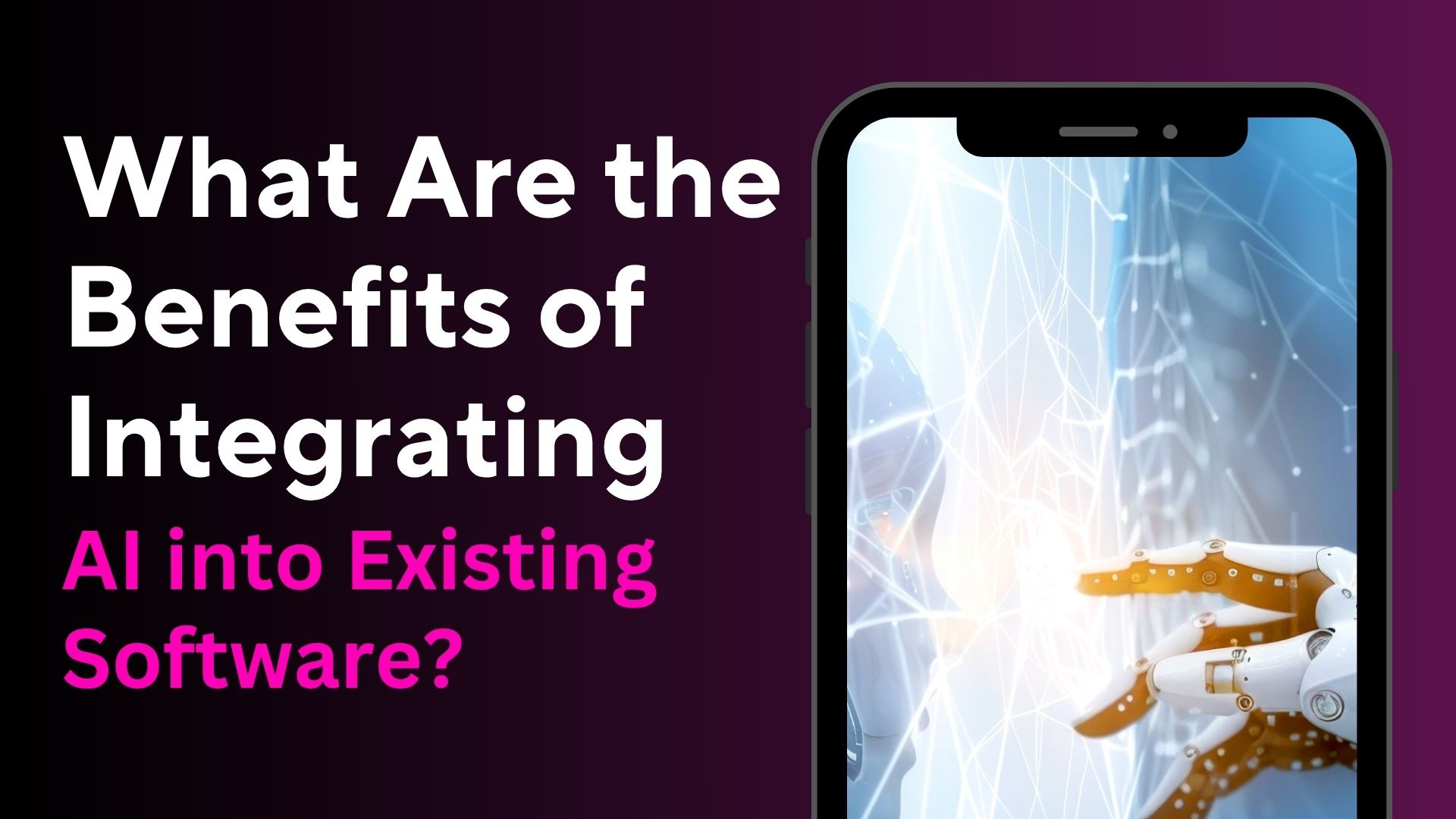
Artificial Intelligence (AI) has become a strategic advantage for businesses looking to improve efficiency, reduce operational costs, and deliver exceptional customer experiences. Instead of replacing existing software systems, many organizations are choosing to enhance them with AI capabilities.
Integrating AI into your current applications enables businesses to automate repetitive tasks, analyze large volumes of data, personalize user experiences, and make smarter business decisions—all without rebuilding software from scratch.
In this guide, we'll explore the major benefits of integrating AI into existing software and why partnering with an experienced ai integration company can accelerate your digital transformation.
Quick Answer
Integrating AI into existing software helps businesses:
- Automate repetitive workflows
- Improve operational efficiency
- Deliver personalized customer experiences
- Make data-driven decisions
- Reduce costs
- Increase productivity
- Enhance security
- Scale business operations efficiently
Organizations often leverage enterprise AI integration services to implement these capabilities with minimal disruption to existing systems.
Why Integrate AI into Existing Software?
Many businesses already have reliable ERP, CRM, HRMS, accounting, or custom software platforms. Replacing these systems can be expensive and risky.
AI integration allows organizations to enhance existing software by adding intelligent features such as:
- Predictive analytics
- Intelligent search
- Recommendation engines
- AI chatbots
- Document processing
- Image recognition
- Speech recognition
- Process automation
This approach maximizes the value of current technology investments while introducing advanced capabilities.
Top Benefits of Integrating AI into Existing Software
1. Automates Repetitive Tasks
One of the biggest advantages of AI is automation.
AI can perform repetitive tasks that typically consume employee time, including:
- Data entry
- Invoice processing
- Email categorization
- Report generation
- Appointment scheduling
- Document verification
Automation allows employees to focus on higher-value activities that require creativity and critical thinking.
2. Improves Decision-Making
Businesses generate enormous amounts of data every day.
AI systems can analyze this information in real time and provide actionable insights, helping decision-makers:
- Identify trends
- Forecast demand
- Predict customer behavior
- Detect operational inefficiencies
- Reduce business risks
Instead of relying solely on historical reports, AI enables proactive decision-making.
3. Enhances Customer Experience
Customers expect personalized experiences across websites, mobile apps, and customer support channels.
AI enables businesses to provide:
- Personalized recommendations
- Intelligent chatbots
- Faster support responses
- Customized marketing campaigns
- Smart search functionality
These capabilities improve customer satisfaction and increase engagement.
4. Increases Operational Efficiency
AI streamlines business operations by identifying inefficiencies and optimizing workflows.
Examples include:
- Automated inventory management
- Supply chain optimization
- Workforce scheduling
- Intelligent resource allocation
- Workflow optimization
Organizations often see measurable productivity improvements after AI implementation.
5. Reduces Operational Costs
Although AI implementation requires an initial investment, it often leads to significant long-term savings.
Cost reductions come from:
- Less manual labor
- Fewer processing errors
- Faster operations
- Improved resource utilization
- Lower customer support costs
This results in a stronger return on investment over time.
6. Provides Predictive Analytics
Predictive AI helps organizations anticipate future events before they occur.
Businesses can predict:
- Customer churn
- Equipment failures
- Sales trends
- Inventory requirements
- Fraud risks
These insights enable proactive planning rather than reactive problem-solving.
7. Strengthens Security
Cybersecurity threats continue to evolve.
AI-powered security systems can:
- Detect unusual user behavior
- Identify fraudulent transactions
- Monitor network activity
- Recognize malware patterns
- Alert security teams in real time
AI improves threat detection speed while reducing false positives.
8. Improves Data Accuracy
Manual data processing often results in inconsistencies and errors.
AI helps ensure:
- Better data validation
- Duplicate detection
- Automatic corrections
- Standardized information
Higher-quality data leads to more reliable business insights.
9. Enables Smarter Business Applications
AI transforms traditional software into intelligent systems.
Examples include:
- CRM platforms with sales forecasting
- ERP systems with demand prediction
- HR software with candidate matching
- Finance software with fraud detection
- Healthcare systems with diagnostic support
This increases the overall value of existing software investments.
10. Supports Business Scalability
As businesses grow, operational complexity increases.
AI helps organizations scale by:
- Automating larger workloads
- Handling more customer interactions
- Processing increasing volumes of data
- Supporting global operations
Businesses can expand without proportionally increasing operational costs.
Common AI Features Added to Existing Software
Popular AI integrations include:
- AI-powered chatbots
- Predictive analytics dashboards
- Recommendation engines
- Natural language processing
- Computer vision
- Voice assistants
- OCR document processing
- Intelligent workflow automation
- AI search
- Sentiment analysis
These features can often be integrated without replacing existing software infrastructure.
Why Choose Enterprise AI Integration Services?
Implementing AI successfully requires technical expertise, strategic planning, and seamless system integration.
Professional enterprise AI integration services help businesses:
- Assess AI readiness
- Identify high-impact use cases
- Select suitable AI models
- Integrate AI with existing systems
- Ensure data security and compliance
- Optimize AI performance
- Provide ongoing maintenance and support
Working with specialists minimizes implementation risks and accelerates project timelines.
Why Partner with an AI Integration Company?
Choosing the right ai integration company can significantly influence the success of your AI initiatives.
An experienced partner can:
- Develop custom AI solutions
- Integrate AI with legacy software
- Build scalable AI architectures
- Ensure regulatory compliance
- Improve deployment speed
- Deliver continuous optimization
Instead of managing complex integrations internally, businesses benefit from proven expertise and best practices.
Industries Benefiting from AI Integration
AI integration delivers value across multiple industries, including:
- Healthcare
- Finance
- Retail
- Manufacturing
- Logistics
- Education
- Real Estate
- Insurance
- Telecommunications
- E-commerce
Each industry uses AI to automate processes, improve decision-making, and enhance customer experiences.
Frequently Asked Questions (FAQs)
What is AI integration?
AI integration is the process of adding artificial intelligence capabilities to existing software applications, enabling them to automate tasks, analyze data, and make intelligent decisions.
Is it necessary to replace existing software before implementing AI?
No. In most cases, AI can be integrated into existing systems without replacing the entire software infrastructure.
What are enterprise AI integration services?
Enterprise AI integration services help organizations implement AI solutions into existing business applications while ensuring security, scalability, and compatibility with current systems.
How long does AI integration take?
The timeline depends on project complexity, data availability, software architecture, and business requirements. Small integrations may take a few weeks, while enterprise-scale projects can take several months.
Which businesses should invest in AI integration?
Any organization looking to improve efficiency, automate workflows, enhance customer experiences, or make better data-driven decisions can benefit from AI integration.
Conclusion
Integrating AI into existing software is one of the most cost-effective ways to modernize business operations without replacing proven systems. From automating repetitive tasks and improving decision-making to enhancing customer experiences and strengthening security, AI delivers measurable business value across industries.
Partnering with a trusted ai integration company ensures a smooth implementation process, while comprehensive enterprise AI integration services help organizations unlock the full potential of artificial intelligence. As AI technologies continue to evolve, businesses that integrate AI into their existing software today will be better positioned to innovate, compete, and scale in the future.

A results-driven Senior Business Development Manager with extensive experience in technology consulting, strategic partnerships, and client relationship management. Specializing in digital transformation, mobile app development, custom AI integration solutions, and custom software development, he helps startups, SMEs, and enterprises identify growth opportunities and bring innovative ideas to market.
With a strong understanding of emerging technologies and business strategy, he excels at aligning client objectives with scalable digital solutions. His expertise includes lead generation, stakeholder engagement, solution consulting, contract negotiations, and revenue growth. Passionate about delivering value-driven outcomes, he focuses on building long-term partnerships and helping businesses achieve sustainable success through technology.