
Turning information into simple actions

Turning information into simple actions
In many environments, people need quick answers. Is this space available? Has my request been received? Does someone need to take action?
Digital systems may contain this information, but it is not always visible at the place where people need it. A simple signal or interaction can help make the next step immediately clear.
Clear information at a glance
Not every interaction requires a detailed screen or another notification. Sometimes, people only need a clear indication of what is happening or what they should do next.
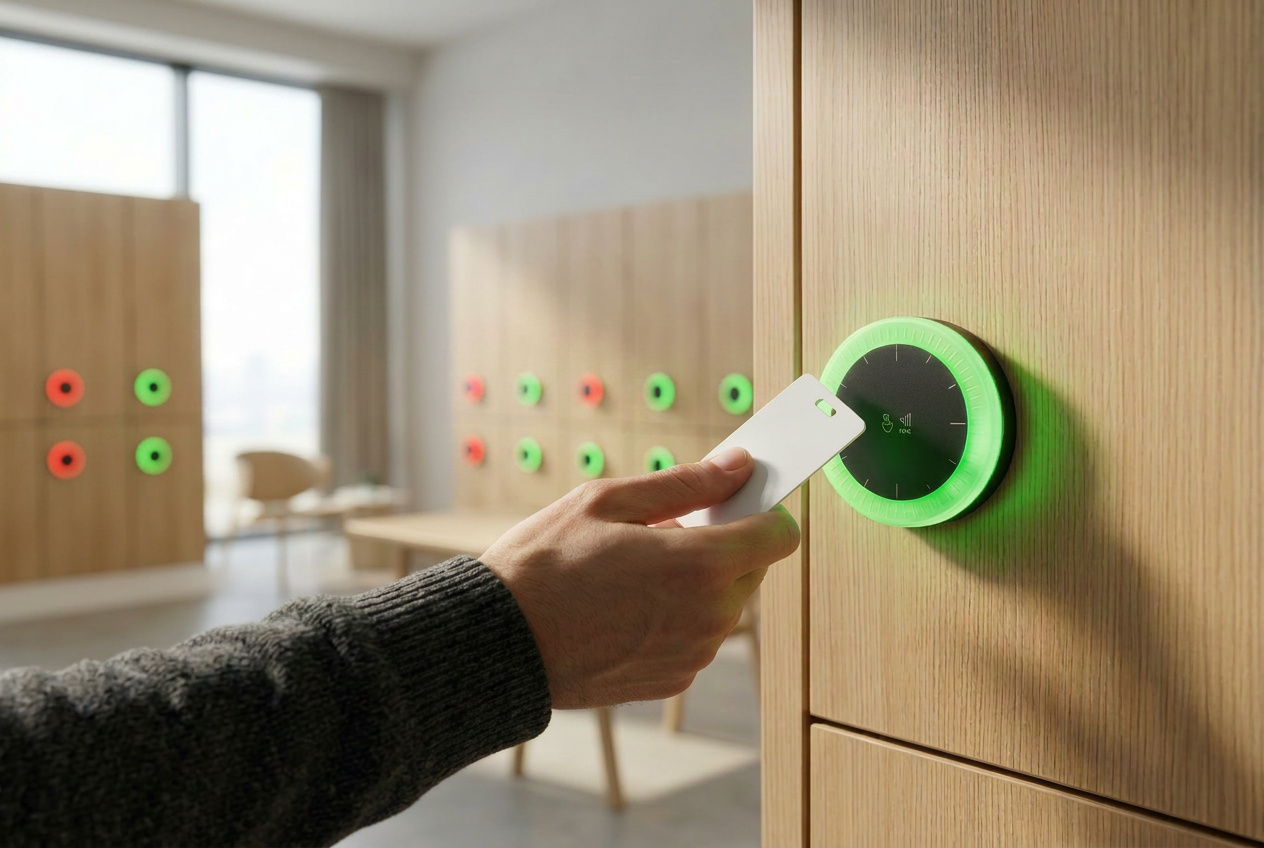
A visual signal can show that a location or resource is available, occupied or waiting for attention. A button can be used to request help or confirm that an action has been completed, while NFC can support identification, check-ins and other interactions.
These simple actions can help customers, visitors and employees move through everyday processes more easily.
Supporting different environments
The meaning of a signal depends on where and how it is used.
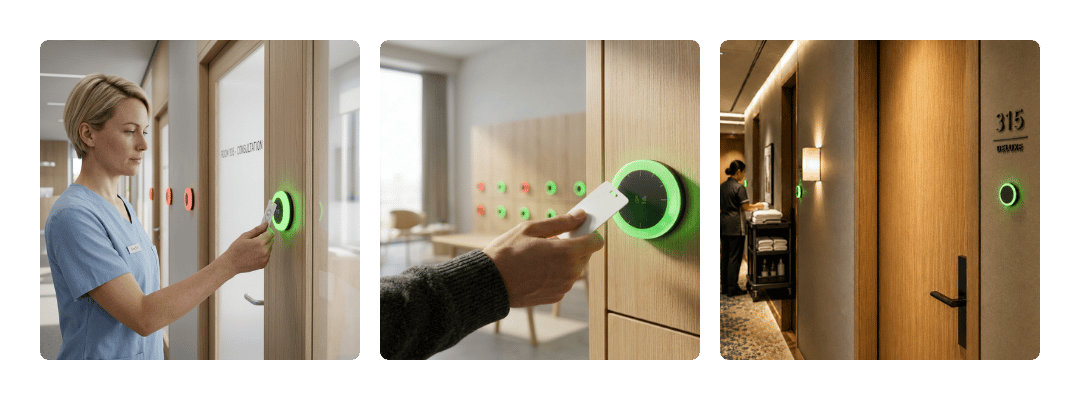
In retail, it could allow customers to request assistance or show the status of a fitting room, collection point or service desk.
In hospitality, it could support guest requests, housekeeping updates or access to shared facilities. Staff can quickly see where attention is needed, while guests receive confirmation that their request has been registered.
In healthcare, it could make non-urgent requests, room statuses and the availability of shared resources more visible. A patient could request assistance using a button, while a visual signal confirms that the request has been received. The same principle could also be used to show whether a bed, room or piece of equipment is available or in use.
The goal is not to add more technology, but to make existing processes easier for the people using them.
One device, different functions
The PuKK Workspace can act as a compact physical interaction point within many different processes. Its RGB LED ring communicates status, while its interaction button and NFC reader allow people to respond, identify themselves or initiate an action.
Because it is software agnostic and connects through a REST API, its function is not fixed. It can be integrated with different applications and adapted to the workflow it needs to support.
In one environment, it may indicate availability. In another, it may be used to request assistance, complete a check-in or confirm that a task has been carried out.
This makes it possible to use one device in many different ways, while keeping the experience simple for the user: see a status, press a button or tap to interact.
Simple interactions, clearer processes
Technology is most useful when people immediately understand what to do. By making digital information visible where an interaction takes place, organisations can reduce uncertainty and create more intuitive experiences.
Learn more about the PuKK Workspace on the ProDVX website.



Please sign in
If you are a registered user on AVIXA Xchange, please sign in