Top 10 Electronic Notary Software Development Companies in 2026
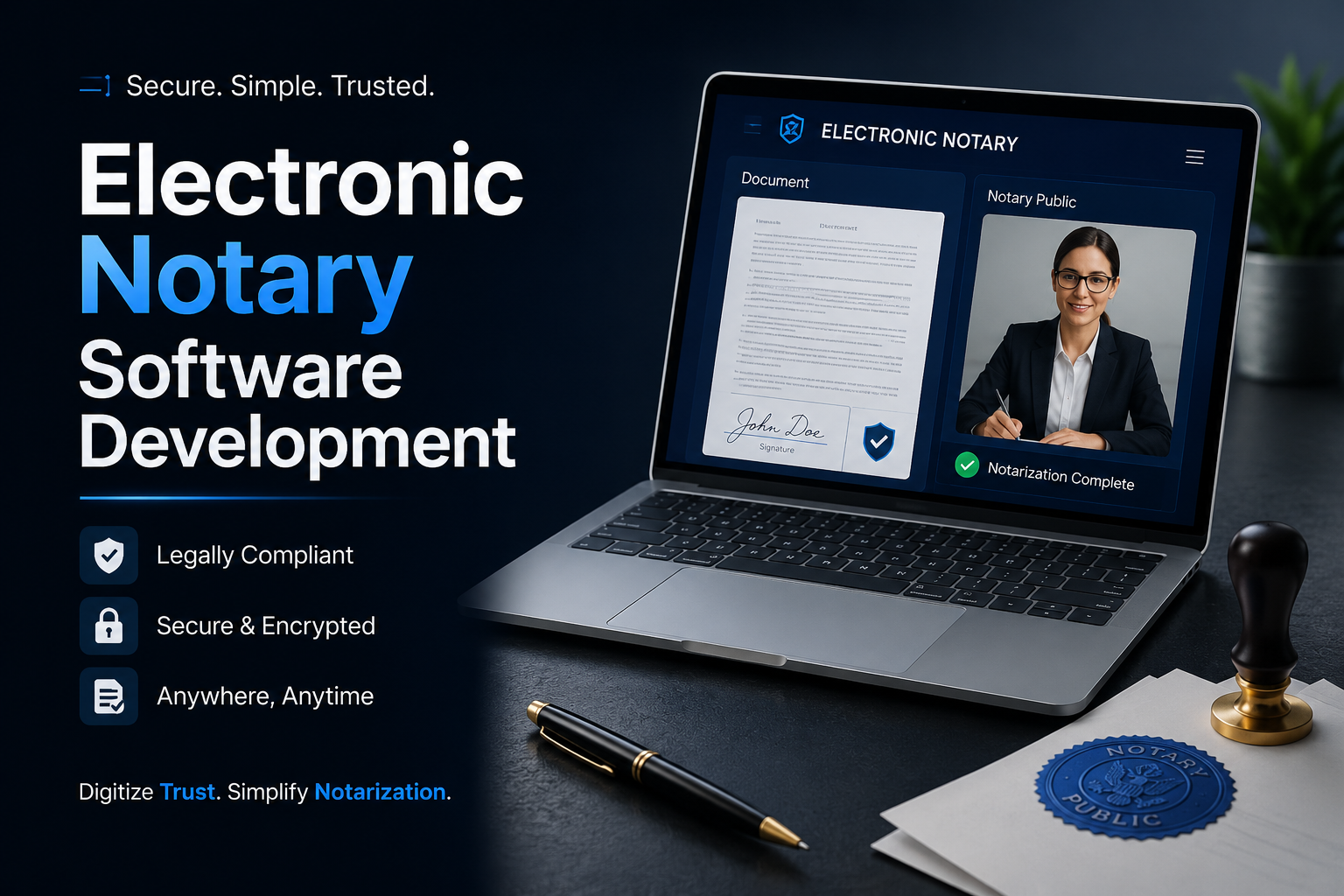
Businesses are rapidly replacing paper-based notarization with secure digital workflows to reduce turnaround times, strengthen compliance, and improve customer experiences. From real estate transactions and banking to legal services and healthcare documentation, electronic notarization has become a critical part of digital transformation. Choosing the right electronic notary software development company is essential for building a secure, scalable, and regulation-ready platform.
This list highlights the top companies offering electronic notary software development, remote notary software development, remote online notary software development, and white label notary software solutions. The rankings consider technical expertise, enterprise capabilities, security, innovation, and experience in delivering custom digital platforms.
Electronic Notary Software Is Becoming a Digital Business Standard
The adoption of electronic notarization continues to grow as organizations prioritize secure remote services and paperless operations. According to the National Notary Association, Remote Online Notarization (RON) has expanded significantly across the U.S., while digital identity verification and electronic signatures have become standard components of modern legal workflows. At the same time, MarketsandMarkets projects continued growth in the digital signature industry as enterprises accelerate digital transformation.
Several industries are driving this demand:
- Banking and financial services
- Real estate and mortgage companies
- Insurance providers
- Legal firms
- Healthcare organizations
- Government agencies
- Enterprise HR departments
Organizations are no longer looking for standalone applications—they want integrated platforms that combine identity verification, document management, encrypted storage, audit trails, and video notarization into a single ecosystem.
Why More Businesses Are Investing in Electronic Notary Platforms
The shift toward digital notarization isn't simply about convenience. It addresses several operational challenges while opening new business opportunities.
Companies investing in remote online notary software development can automate document workflows, reduce administrative costs, eliminate geographical barriers, and accelerate approvals. Digital platforms also improve compliance by maintaining secure audit logs and encrypted document histories.
For entrepreneurs, the market offers multiple monetization opportunities, including subscription-based SaaS products, enterprise licensing, transaction-based pricing, and white-label solutions for law firms, financial institutions, and government organizations. As more jurisdictions recognize electronic notarization, scalable software platforms are becoming long-term digital assets rather than niche applications.
Common Challenges Businesses Face Before Going Digital
Manual paperwork slows operations
Traditional notarization often delays contracts, loan approvals, and legal agreements.
Business impact
- Longer customer wait times
- Increased operational costs
- Lower productivity
Solution approach
A centralized electronic notarization platform enables faster document verification and remote approvals.
Identity fraud risks continue to rise
Paper-based verification offers limited protection against impersonation and forged documents.
Business impact
Fraud can result in financial losses, compliance violations, and damaged customer trust.
Solution approach
AI-powered identity verification, biometric authentication, and secure video verification strengthen security throughout the notarization process.
Compliance becomes difficult to manage
Organizations operating across multiple jurisdictions often struggle with changing regulations.
A custom-built platform can automate compliance checks, maintain digital audit trails, and simplify record management while reducing legal risks.
Limited accessibility affects customer experience
Customers increasingly expect remote services instead of office visits.
Offering remote notary software development capabilities allows organizations to complete notarization securely from virtually any location while improving convenience.
How We Ranked These Electronic Notary Software Development Companies
Rather than focusing only on company size or popularity, this ranking evaluates providers based on factors that matter to businesses planning long-term investments.
Our selection considered:
- Experience in enterprise software development
- Expertise in LegalTech and document management
- Remote online notarization capabilities
- Security-first development practices
- White-label software availability
- Cloud-native architecture
- AI and automation integration
- Scalability for enterprise deployments
- Post-launch maintenance and technical support
- Client reputation and technology expertise
Top 10 Electronic Notary Software Development Companies in 2026
1. Suffescom Solutions
Suffescom Solutions has established itself as a leading electronic notary software development company by delivering secure and scalable digital notarization platforms tailored to enterprise requirements. The company develops custom solutions featuring encrypted document management, AI-powered identity verification, remote video notarization, digital signatures, workflow automation, and cloud-based architecture. Its expertise extends to LegalTech, enterprise software, AI, blockchain, and SaaS development, enabling organizations to launch future-ready notarization platforms with confidence. Whether businesses require white label notary software or fully customized enterprise solutions, Suffescom focuses on compliance, security, performance, and long-term scalability while supporting organizations across finance, healthcare, government, legal, and real estate sectors.
Achievements:
- Recognized as a Top Mobile App Development Company by Clutch with a 4.9/5 rating and 117+ verified client reviews.
- As a top-rated company recognized by G2 since 2023 with positive client feedback for blockchain, AI, and app development services.
- Recognized by GoodFirms as the “Best Company to Work With” and featured in the Leaders Matrix for blockchain and app development services.
- Recognized by Clutch in December 2025 as top app service provider.
- Best Design Award (By Design Rush 2025).
2. LeewayHertz
LeewayHertz specializes in enterprise software powered by AI, blockchain, and advanced automation, making it a reliable technology partner for organizations building secure electronic notarization platforms. The company develops customized document verification systems, digital identity solutions, encrypted workflow applications, and cloud-native enterprise software designed for regulated industries. Its engineering team also integrates APIs for eSignatures, identity verification, payment processing, and document storage, helping businesses modernize complex legal workflows. With extensive experience delivering secure enterprise applications, LeewayHertz is well positioned to support organizations investing in electronic notary software development that requires scalability, compliance, and seamless third-party integrations.
3. Hyperlocal Cloud
Hyperlocal Cloud delivers enterprise-grade software solutions with a strong emphasis on customized digital platforms for modern businesses. Its development capabilities include secure document workflows, cloud infrastructure, identity verification, user authentication, workflow automation, and scalable SaaS products that align well with remote online notary software development. The company helps organizations simplify document approvals while maintaining security, compliance, and operational efficiency. Businesses looking to launch branded white label notary software can benefit from flexible customization, API integrations, role-based access controls, and cloud deployment strategies that support future growth without compromising platform performance.
4. Itransition
Itransition brings decades of enterprise software experience across LegalTech, document management, digital transformation, and cloud application development. Its engineering teams build highly secure platforms that support digital documentation, workflow automation, identity verification, and enterprise integrations. Organizations seeking advanced remote notary software development can leverage Itransition's expertise in scalable architecture, cybersecurity, cloud migration, and compliance-focused software engineering. The company also provides modernization services for legacy systems, allowing enterprises to transition from traditional paper-based notarization to efficient digital ecosystems without disrupting existing business operations.
5. RisingMax Inc
RisingMax Inc develops enterprise software solutions that combine cloud technologies, AI, blockchain, and automation to address evolving business needs. The company supports organizations building secure electronic notarization platforms through customized software development, document management systems, encrypted storage, identity verification, and digital workflow automation. Its experience across fintech, legal services, healthcare, and enterprise SaaS enables clients to launch scalable notarization solutions tailored to industry-specific compliance requirements. Businesses seeking remote online notary software development or feature-rich white label notary software can leverage RisingMax's expertise to accelerate digital transformation while maintaining security, flexibility, and long-term platform scalability.
6. ELEKS
ELEKS is recognized for delivering enterprise-grade software solutions with a strong focus on digital transformation, cybersecurity, and cloud engineering. Its expertise in secure document management, workflow automation, API integration, and identity verification makes it a capable partner for electronic notary software development. The company works with organizations that require highly reliable platforms capable of handling sensitive legal and financial documentation. By emphasizing scalable architecture and secure development practices, ELEKS helps businesses modernize notarization workflows while supporting future expansion and evolving compliance requirements.
7. SoftServe
SoftServe combines cloud computing, AI, data engineering, and enterprise software expertise to deliver modern digital solutions for regulated industries. Businesses planning remote notary software development can benefit from its experience in building secure platforms that integrate document verification, electronic signatures, cloud storage, and intelligent workflow automation. The company also supports modernization initiatives for enterprises moving away from paper-based processes. Its consultative development approach helps organizations improve operational efficiency while creating secure and user-friendly digital notarization experiences.
8. Belitsoft
Belitsoft develops custom software for enterprises seeking secure, scalable, and compliance-ready business applications. Its capabilities include cloud application development, document management, workflow automation, system integration, and enterprise mobility solutions. These strengths make the company a suitable choice for organizations investing in remote online notary software development. Belitsoft also focuses on creating flexible architectures that support third-party integrations, encrypted document handling, and long-term product scalability, helping businesses adapt to changing regulatory and operational requirements.
9. BairesDev
With distributed engineering teams and extensive enterprise software expertise, BairesDev delivers customized digital platforms for businesses across finance, healthcare, legal services, and technology. The company builds secure applications with modern cloud infrastructure, identity verification capabilities, API connectivity, and workflow automation. Organizations looking for electronic notary software development can leverage its experience in developing scalable enterprise solutions that prioritize security, performance, and seamless user experiences. Its flexible engagement models also make it suitable for businesses with evolving product roadmaps.
10. Vention
Vention provides custom software engineering services for startups, mid-sized businesses, and enterprises developing secure digital products. The company has experience delivering cloud-native applications, enterprise platforms, document management systems, and workflow automation solutions that support digital business operations. For organizations planning white label notary software or custom electronic notarization platforms, Vention offers scalable development backed by experienced engineering teams. Its focus on modern technologies and long-term software maintenance enables businesses to launch secure solutions while remaining prepared for future feature enhancements.
Features That Define a Reliable Electronic Notary Platform
Not every solution offers the same level of security or flexibility. When evaluating an electronic notary software development company, prioritize platforms that include:
- Remote online notarization (RON)
- Electronic signature integration
- AI-powered identity verification
- Secure video conferencing
- Document encryption
- Digital audit trails
- Multi-factor authentication
- Role-based user management
- Cloud document storage
- Payment gateway integration
- Appointment scheduling
- API support for third-party services
- White-label branding options
- Compliance reporting dashboard
From Idea to Launch: The Development Journey
Developing a successful electronic notary platform involves more than coding. It requires careful planning, compliance, and continuous testing.
Discovery and Planning
Define business goals, user roles, target industries, and regulatory requirements.
UI/UX Design
Create an intuitive experience for notaries, customers, and administrators.
Core Development
Build document workflows, video notarization, identity verification, and security modules.
Integration and Testing
Connect eSignature providers, payment systems, cloud storage, and identity verification APIs while performing security and performance testing.
Deployment and Support
Launch the platform, monitor performance, release updates, and ensure ongoing compliance.
Understanding Electronic Notary Software Development Cost
The development cost depends on platform complexity, compliance requirements, integrations, and deployment model.
A basic MVP with essential notarization features generally starts around $25,000–$40,000.
A mid-level platform with identity verification, video conferencing, cloud storage, and workflow automation typically ranges between $40,000–$80,000.
Large enterprise platforms supporting multiple jurisdictions, AI verification, advanced security, analytics, and extensive integrations can exceed $100,000.
Businesses should evaluate long-term maintenance, infrastructure, compliance updates, and feature expansion instead of focusing solely on initial development costs.
White Label or Custom Development—Which Fits Your Business?
A white label notary software solution is suitable for businesses looking to enter the market quickly with lower upfront investment. It provides faster deployment and essential features while allowing branding customization.
Custom development, on the other hand, is ideal for enterprises that require unique workflows, advanced integrations, higher scalability, and full ownership of the platform. Although it requires greater investment, it offers significantly more flexibility and long-term value for organizations with complex operational needs.
Industries Driving Demand for Electronic Notary Solutions
Digital notarization is no longer limited to legal firms. Today, demand comes from multiple sectors:
- Banking and financial services
- Real estate and mortgage companies
- Insurance providers
- Healthcare organizations
- Government departments
- Legal service providers
- Human resource management
- Enterprise contract management
- Education institutions
- Corporate compliance teams
Each industry benefits from faster approvals, improved document security, and reduced administrative overhead.
What Will Shape the Future of Digital Notarization?
The next generation of electronic notarization platforms will be driven by intelligent automation rather than simple document digitization. AI-assisted fraud detection, biometric authentication, blockchain-backed audit records, digital identity wallets, voice verification, and automated compliance monitoring are rapidly becoming standard capabilities. Businesses that invest in scalable platforms today will be better prepared to adopt these innovations as regulations and customer expectations continue to evolve.
Final Thoughts
Electronic notarization is transforming how organizations manage legally binding documents. Whether you're a startup launching a SaaS product or an enterprise modernizing document workflows, partnering with an experienced electronic notary software development company is critical for building a secure, compliant, and scalable solution. Focus on long-term value, security, integration capabilities, and regulatory expertise to ensure your investment supports future business growth.
Frequently Asked Questions
What does an electronic notary software development company do?
It develops secure platforms that support digital notarization, identity verification, document management, electronic signatures, video conferencing, and compliance workflows for businesses and government organizations.
How much does electronic notary software development cost?
Depending on features and complexity, development typically ranges from $25,000 to over $100,000.
What is the difference between electronic notarization and remote online notarization?
Electronic notarization involves digitally signed documents where participants may still be physically present. Remote Online Notarization (RON) enables the entire notarization process to take place online through secure video communication.
Can white label notary software be customized?
Yes. Most providers allow businesses to customize branding, workflows, integrations, user roles, and selected platform features while reducing development time.
Which industries benefit the most from electronic notarization?
Banking, legal services, insurance, healthcare, government, real estate, education, and enterprise document management are among the biggest adopters.
How long does it take to build an electronic notary platform?
A basic platform may take 3–5 months, while enterprise-grade solutions with advanced integrations can require 6–12 months or longer.
What security features should an electronic notary platform include?
Essential features include encryption, multi-factor authentication, identity verification, secure audit logs, role-based access control, and protected cloud storage.
Is remote online notary software suitable for startups?
Yes. Many startups begin with an MVP or white label notary software and later expand with custom features as their customer base grows.