Payment Gateway and High-Risk Merchant Processing for Binary Options Platforms
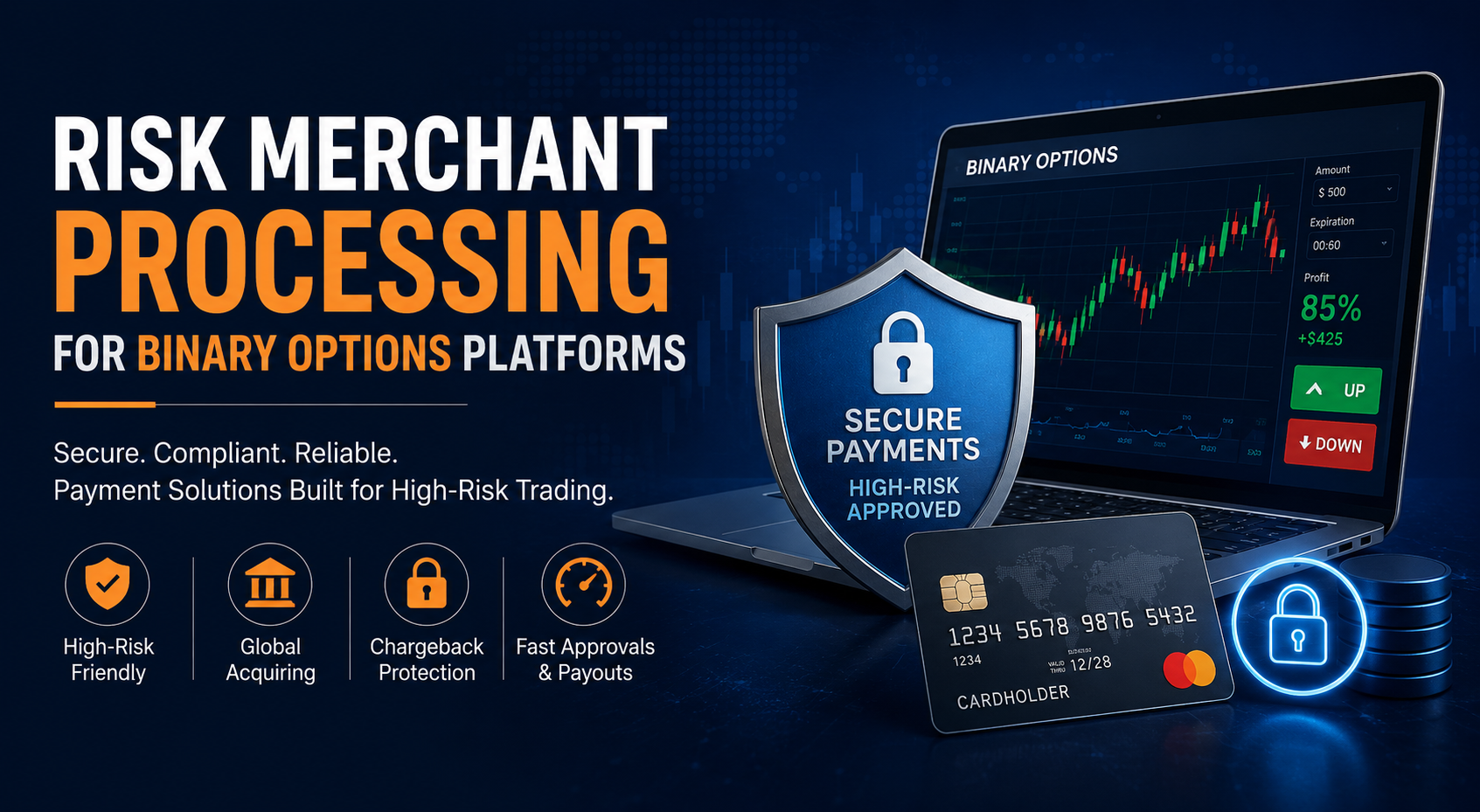
Binary options is classified as a high-risk merchant category by nearly every mainstream payment service provider (PSP), the companies that process card and bank transactions on a platform's behalf. High-risk classification means higher processing fees, rolling reserves (a percentage of revenue held back for a set period to cover potential chargebacks), and a real chance of account freezes or closures during routine risk reviews, even for platforms that are fully licensed and operating legitimately. The fix is not finding a way around the classification. It's building the payment layer from day one around processors and rails that explicitly underwrite this category, rather than starting with a standard merchant account and hoping it doesn't get flagged.
Why binary options gets classified high-risk
Three factors drive this, and understanding them changes how you should structure your payment strategy:
Chargeback exposure. Binary options has historically carried elevated chargeback rates, because a losing trader disputing a "gambling-adjacent" charge with their bank is a common pattern. PSPs price and structure their risk controls around this history, regardless of how well any individual platform manages its own trader relationships.
Regulatory volatility. A processor underwriting a binary options merchant is underwriting exposure to a category that regulators in major markets have actively restricted or banned. That regulatory instability gets priced in as processor risk, even for operators licensed in permitted jurisdictions.
Reputational association. Card networks and acquiring banks have historically distanced themselves from the category following high-profile fraud cases involving unlicensed binary options operators. This means even a well-run, licensed platform inherits some of that reputational caution by default.
What actually gets approved
Specialized high-risk acquiring. A category of payment processors and acquiring banks exists specifically to underwrite high-risk verticals, including forex, binary options, and gaming. These relationships typically require full disclosure of the business model upfront (never apply as a generic "financial services" merchant and hope it doesn't surface later), proof of licensing, and a demonstrated risk management framework. Approval takes longer and costs more in fees, but the account is far less likely to be frozen mid-operation, because the processor already knows what it's underwriting.
Crypto payment rails. Cryptocurrency deposit and withdrawal support isn't just a feature checkbox, it's a structural hedge against payment processor risk. A platform that can operate with crypto as a primary or parallel rail has meaningfully less exposure to a single PSP relationship being frozen. This should be built as core infrastructure, not a later add-on.
Multi-MID strategy. Larger operators often spread transaction volume across multiple merchant IDs (MIDs) and processors rather than concentrating everything in one relationship. If one processor's risk review flags the account, the platform isn't fully down while it's resolved.
Take a position
Don't build the payment layer around a standard PSP integration with a plan to "migrate to high-risk processing if it becomes a problem." By the time it becomes a problem, funds are typically frozen for 90 to 180 days pending investigation, which is functionally the same as losing that revenue and stalling trader withdrawals during the freeze. Build for high-risk-specialized processing and crypto rails from the discovery phase, the same phase where the jurisdiction and license get locked in, covered in our regulation guide by country. This is one of the clearest cases where the cheaper, faster-to-integrate option at build time creates the most expensive failure mode after launch, which we cover in more detail in why binary options platforms get shut down or frozen.
What to require from a development partner
Any binary options trading platform development engagement should include, as a standard deliverable, not an optional add-on: KYC/AML identity verification integration, automated crypto wallet generation and multi-currency conversion, and a payment architecture designed for multi-MID redundancy rather than a single processor dependency. If a development partner's proposal doesn't address payment processor risk specifically, that's worth asking about before signing.
FAQs
Why do payment processors reject or freeze binary options platforms?
Most mainstream PSPs classify binary options as high-risk due to chargeback history, regulatory volatility, and reputational association with the category and will freeze or close accounts that weren't disclosed and underwritten as high-risk from the start.
What's a rolling reserve, and why does it matter here?
A rolling reserve is a percentage of processed revenue that a high-risk processor holds back for a set period, typically to cover potential chargebacks. It's standard for this category and should be modeled into cash flow planning from launch, not treated as a surprise.
Is crypto payment support a workaround for payment processor risk or a real solution?
It's a genuine structural hedge, not a workaround. A platform with functioning crypto rails has an operating channel that doesn't depend on any single PSP relationship staying intact.
Should a platform use one payment processor or several?
Spreading volume across multiple merchant IDs and processors reduces the risk that a single account freeze takes the entire platform's payment capability offline at once. This is standard practice for operators who've been through a freeze before.