One panel to control it all: how modern control panels work

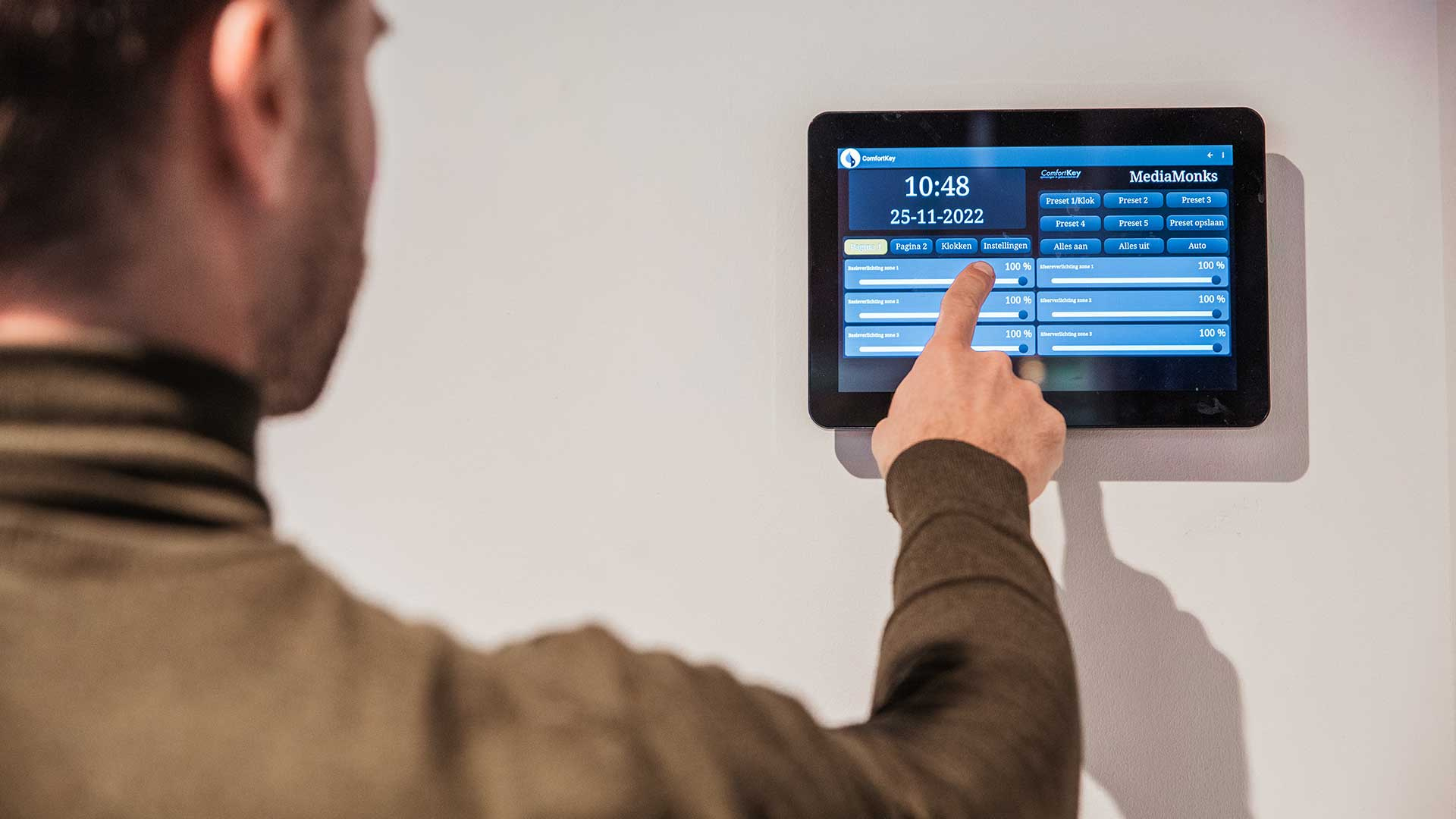
One panel to control it all: how modern control panels work
Lighting, HVAC, audio, blinds and room systems can all contribute to a more comfortable and efficient building. However, these technologies are often supplied by different manufacturers and managed through separate switches, remotes and applications.
A modern control panel can bring access to these systems together through one central interface. But how can a single screen communicate with different technologies, and what determines which functions are available?
What is a modern control panel?
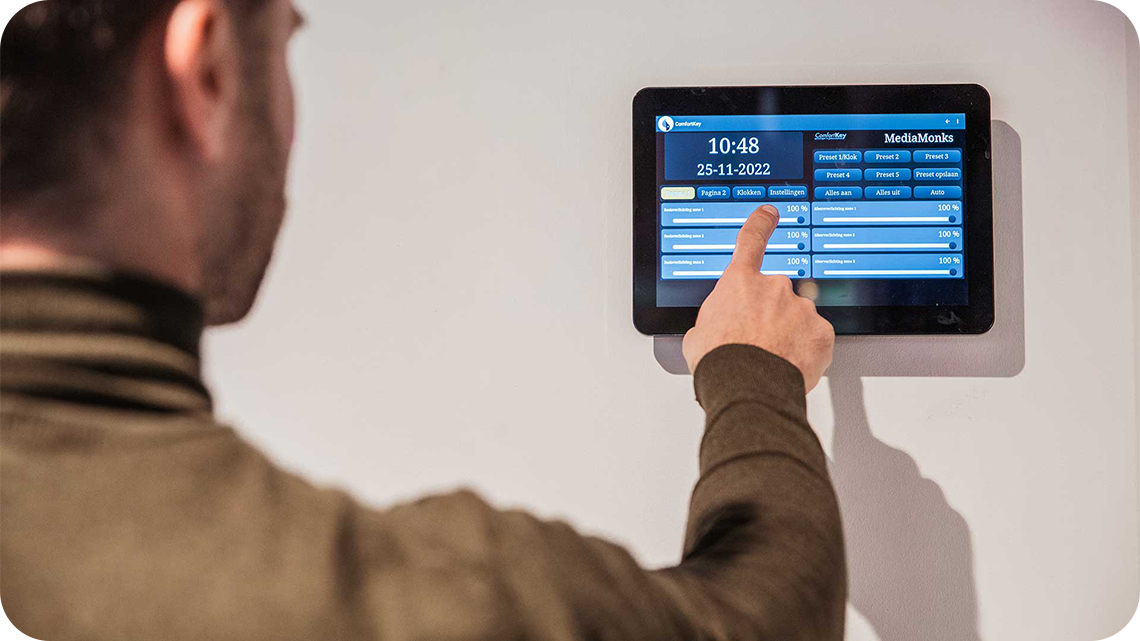
A control panel is a fixed Panel PC, usually wall-mounted, that provides an always-available interface for the building’s control software.
Depending on the software and integrations used, it may provide access to:
-
HVAC settings and climate schedules
-
Lighting, dimming and scene presets
-
Audio volume and zone controls
-
Blinds and shading
-
Room booking, access and occupancy information
-
Industrial processes, machine statuses and alerts
Unlike a consumer tablet, a professional Panel PC is designed for continuous 24/7 operation in commercial environments where reliability is essential.
Hardware, software and integration
The control panel does not replace or directly control the building’s underlying technical systems. Instead, it provides the reliable hardware platform, operating system, connectivity and continuous availability needed to run the control application.
The software determines which systems and functions can be accessed through the panel. Some applications focus on one specific system, such as lighting or audio, while others can bring HVAC, lighting, room systems and more together within a single interface.
A system integrator or software partner selects and configures the appropriate software, connects it to the building’s existing technologies and determines which functions are made available to users.
A successful control panel solution therefore brings together:
- Reliable, always-on hardware
- Software that supports the required systems and integrations
-
The expertise needed to configure the solution for the specific project
One interface for different environments
The final application depends on the environment.
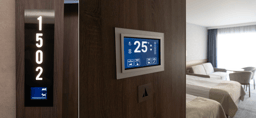
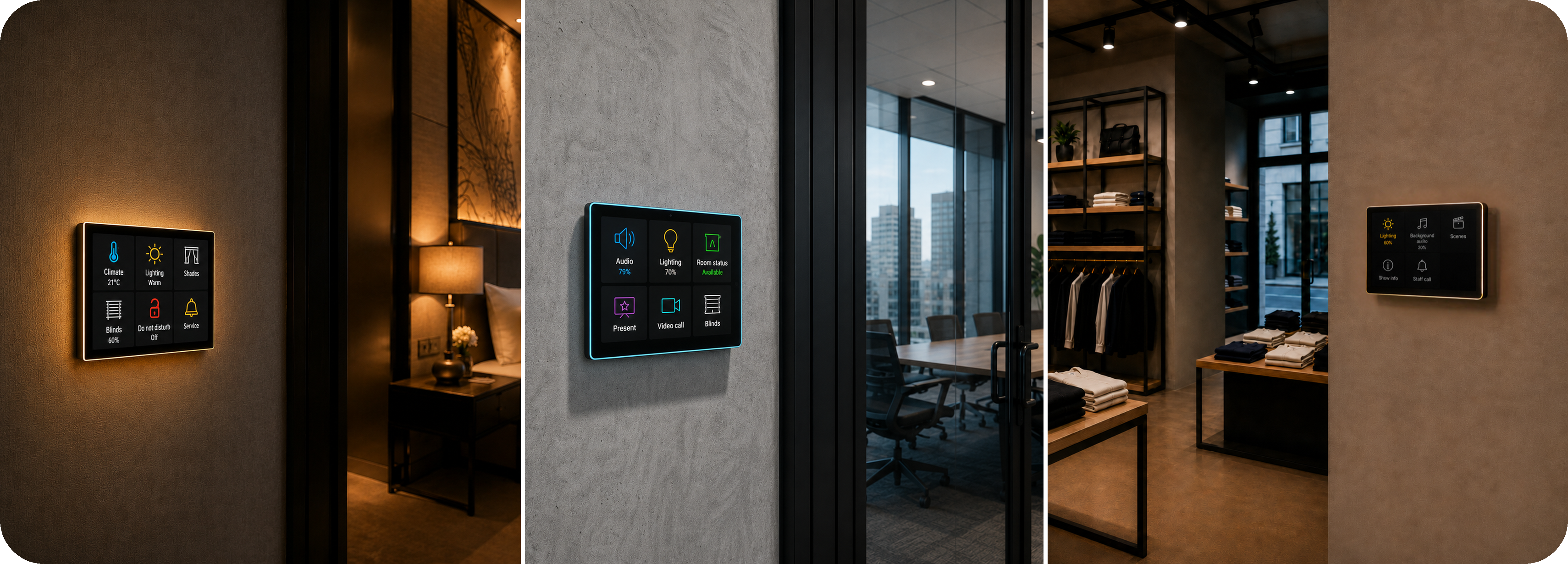
A hotel may use a control panel for climate settings, lighting scenes and blinds. An office might combine meeting-room controls, room availability, lighting and audio. A retail environment may primarily use it to manage lighting and background music.
Although the applications differ, the objective remains the same: creating one clear point of access instead of requiring users to switch between different applications, remotes and control points.
Read the full article to discover how modern control panels bring hardware, software and integrations together.