How IoT Technology Creates New Business Opportunities in Trinidad and Tobago
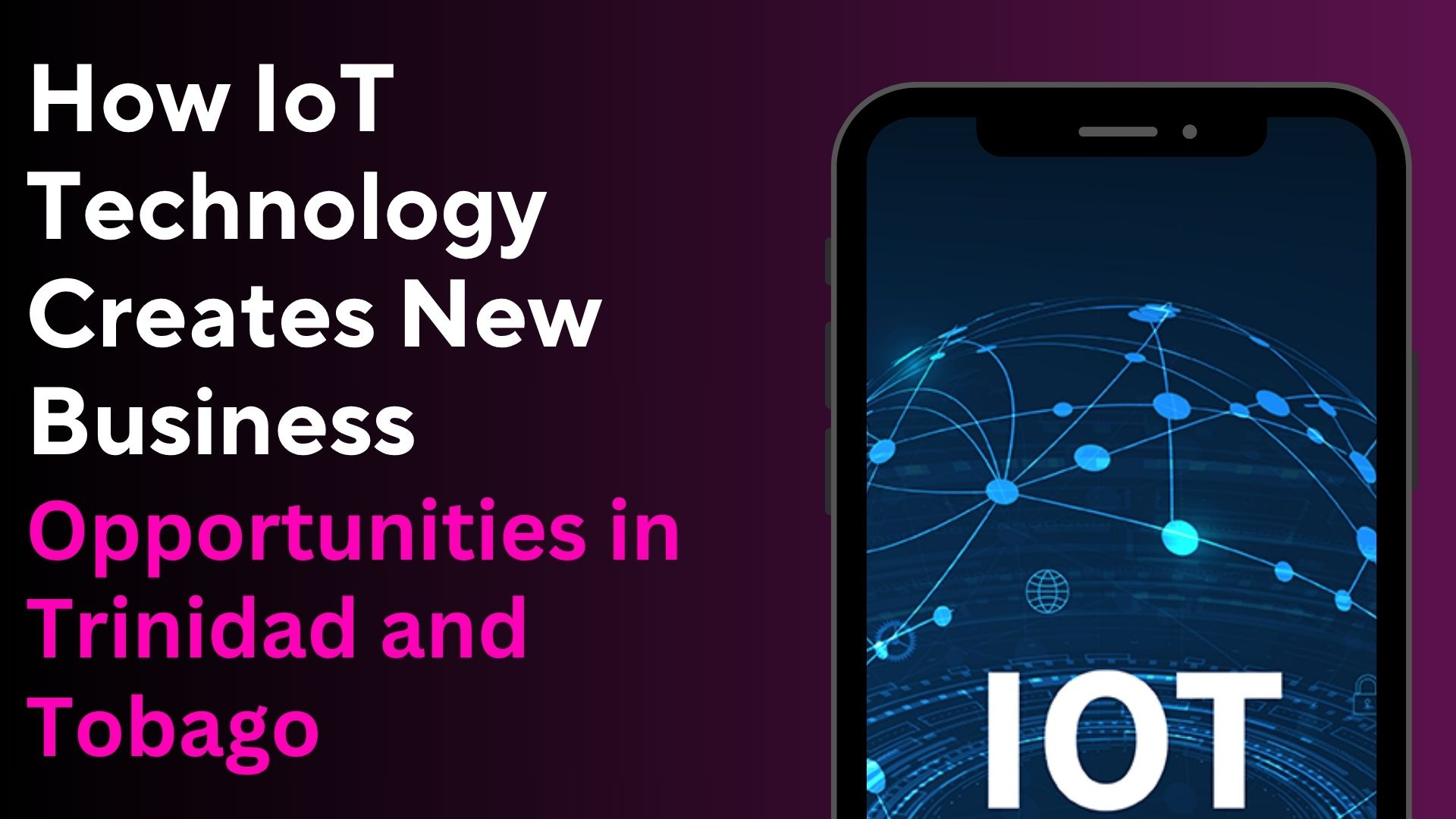
The Internet of Things (IoT) is no longer a futuristic concept it's becoming the backbone of digital transformation across industries worldwide. As businesses continue to embrace connected technologies, Trinidad and Tobago is emerging as a promising market for IoT-driven innovation. With growing investments in digital infrastructure, energy modernization, logistics, healthcare, and smart city initiatives, organizations are beginning to realize how IoT can unlock new revenue streams, improve operational efficiency, and create entirely new business models.
From oil and gas companies using connected sensors to monitor pipelines to retail businesses leveraging smart inventory systems, IoT is reshaping the country's business landscape. Organizations that adopt IoT today are positioning themselves to remain competitive in an increasingly data-driven economy.
In this article, we'll explore how IoT technology is creating new business opportunities in Trinidad and Tobago and why investing in intelligent connected solutions is becoming a strategic advantage.
Understanding IoT Technology
The Internet of Things refers to a network of physical devices embedded with sensors, software, and communication technologies that collect and exchange data over the internet. These connected devices enable businesses to monitor assets, automate operations, analyze real-time information, and make informed decisions without constant human intervention.
Modern IoT ecosystems combine:
- Smart sensors
- Cloud computing
- Edge computing
- Artificial Intelligence (AI)
- Machine Learning (ML)
- Big Data Analytics
- Mobile applications
When integrated effectively, these technologies create intelligent systems capable of improving efficiency while reducing operational costs.
Why Trinidad and Tobago Is Ready for IoT Growth
As one of the Caribbean's leading economies, Trinidad and Tobago has several industries that can significantly benefit from IoT adoption. The country's economy is strongly supported by energy, manufacturing, transportation, agriculture, financial services, and tourism all sectors where connected technologies can drive measurable improvements.
Several factors are accelerating IoT adoption:
- Expansion of digital transformation initiatives
- Increased cloud adoption
- Growing investment in telecommunications infrastructure
- Rising demand for automation
- Focus on operational efficiency
- Government interest in smart infrastructure
Businesses are increasingly recognizing that digital innovation is not optional it is becoming essential for long-term growth.
Business Opportunities Created by IoT
1. Smart Energy Management
Energy remains one of Trinidad and Tobago's most important industries. IoT enables companies to monitor equipment performance, detect anomalies, predict maintenance requirements, and reduce operational downtime.
Connected sensors can monitor:
- Pipeline pressure
- Equipment temperature
- Fuel consumption
- Leak detection
- Power distribution systems
Predictive maintenance minimizes unexpected equipment failures while significantly reducing maintenance costs.
Industrial Automation
Manufacturing companies are adopting IoT to automate production processes and optimize resource utilization.
Benefits include:
- Real-time machine monitoring
- Automated quality control
- Reduced production downtime
- Improved workplace safety
- Better inventory management
These improvements increase productivity while lowering operational expenses.
Logistics and Supply Chain Optimization
Supply chain visibility has become a major priority for businesses across the Caribbean.
IoT enables companies to track:
- Fleet vehicles
- Cargo shipments
- Warehouse inventory
- Cold chain transportation
- Delivery performance
Real-time tracking helps businesses reduce delays, improve customer satisfaction, and optimize transportation routes.
Smart Agriculture
Agriculture in Trinidad and Tobago can benefit significantly from precision farming technologies.
IoT solutions allow farmers to monitor:
- Soil moisture
- Weather conditions
- Livestock health
- Irrigation systems
- Crop growth
These data-driven insights improve yields while reducing water consumption and resource waste.
Healthcare Innovation
Healthcare providers are increasingly adopting connected medical devices that improve patient care and operational efficiency.
IoT applications include:
- Remote patient monitoring
- Wearable health devices
- Connected medical equipment
- Smart hospital asset tracking
- Medication management
These solutions improve healthcare accessibility while reducing hospital workloads.
Smart Buildings and Real Estate
Commercial property owners are integrating IoT systems to create intelligent buildings.
Connected solutions manage:
- HVAC systems
- Lighting
- Security
- Access control
- Energy consumption
The result is lower operational costs, improved occupant comfort, and enhanced building security.
Retail Transformation
Retail businesses are embracing IoT to deliver better customer experiences while improving inventory accuracy.
Common IoT applications include:
- Smart shelves
- Automated inventory management
- Customer behavior analytics
- Contactless payments
- Personalized shopping experiences
Retailers gain valuable insights that support more informed business decisions.
Tourism and Hospitality
Tourism remains an important contributor to Trinidad and Tobago's economy.
Hotels and hospitality providers are implementing IoT to enhance guest experiences through:
- Smart room controls
- Automated check-in systems
- Energy-efficient buildings
- Connected security systems
- Predictive maintenance
These innovations improve operational efficiency while increasing customer satisfaction.
Data as a New Business Asset
One of the greatest advantages of IoT is the continuous generation of business intelligence.
Organizations can analyze data to:
- Identify customer trends
- Forecast demand
- Optimize pricing
- Improve operational planning
- Develop new products
- Reduce business risks
Instead of relying on assumptions, businesses make decisions backed by real-time insights.
Emerging IoT Trends in Trinidad and Tobago
The IoT landscape continues to evolve rapidly. Businesses that stay ahead of technological trends are more likely to gain a competitive advantage.
Some of the most influential trends include:
AI-Powered IoT
Artificial Intelligence is enabling IoT systems to make autonomous decisions based on real-time data. Businesses can automate processes while improving prediction accuracy.
Edge Computing
Instead of sending all data to the cloud, edge computing processes information closer to connected devices, reducing latency and improving system responsiveness.
Digital Twins
Organizations are creating digital replicas of physical assets to simulate operations, monitor equipment performance, and predict failures before they occur.
5G Connectivity
As high-speed networks continue expanding, IoT devices will communicate faster with lower latency, enabling more advanced real-time applications.
Cybersecurity for Connected Devices
With the increasing number of connected devices, cybersecurity has become a top priority. Businesses are investing in secure device management, encrypted communications, identity authentication, and continuous monitoring to protect sensitive data and maintain regulatory compliance.
Challenges Businesses Should Consider
Although IoT offers tremendous opportunities, successful implementation requires careful planning.
Organizations should address:
- Cybersecurity risks
- Data privacy
- Integration with existing systems
- Network reliability
- Device management
- Scalability
- Employee training
Working with experienced technology partners can help businesses navigate these challenges while maximizing return on investment.
Choosing the Right IoT Development Partner
Building a successful IoT ecosystem requires expertise in hardware integration, cloud platforms, mobile applications, cybersecurity, AI, and data analytics.
Businesses looking for the best IoT app development company should evaluate potential partners based on:
- Proven experience in IoT projects
- Industry-specific expertise
- End-to-end development capabilities
- Strong security practices
- Scalable architecture design
- Post-deployment support and maintenance
A capable development partner doesn't just build connected applications they help organizations design scalable digital ecosystems that continue delivering value as business needs evolve.
The Future of IoT in Trinidad and Tobago
The future of IoT in Trinidad and Tobago looks increasingly promising. As digital infrastructure continues to improve and organizations invest in automation, connected technologies will play a larger role in driving innovation across every major industry.
Businesses that embrace IoT today will be better equipped to optimize operations, reduce costs, improve customer experiences, and unlock new revenue opportunities. Whether it's smart energy systems, connected healthcare, intelligent logistics, or precision agriculture, IoT is becoming a catalyst for sustainable economic growth.
Organizations that combine IoT with AI, cloud computing, edge computing, and advanced analytics will be well-positioned to lead the next wave of digital transformation. In an increasingly connected world, IoT is no longer just a technological upgrade it's a strategic investment that enables businesses in Trinidad and Tobago to innovate, compete, and thrive.
FAQs
1. What industries benefit the most from IoT in Trinidad and Tobago?
Manufacturing, agriculture, logistics, healthcare, retail, energy, and smart infrastructure are among the biggest beneficiaries.
2. How does IoT improve business efficiency?
IoT enables real-time monitoring, predictive maintenance, automation, data collection, and smarter decision-making.
3. Is IoT suitable for small businesses?
Yes. Small businesses can use IoT for inventory management, asset tracking, smart energy management, and customer engagement.
4. What are the main challenges of IoT implementation?
Common challenges include cybersecurity, device compatibility, connectivity issues, integration with legacy systems, and initial investment costs.
5. Can IoT solutions be customized for different industries?
Absolutely. IoT applications are designed according to specific business needs, operational workflows, and industry requirements.

A results-driven Senior Business Development Manager with extensive experience in technology consulting, strategic partnerships, and client relationship management. Specializing in digital transformation, mobile app development, custom AI integration solutions, and custom software development, he helps startups, SMEs, and enterprises identify growth opportunities and bring innovative ideas to market.
With a strong understanding of emerging technologies and business strategy, he excels at aligning client objectives with scalable digital solutions. His expertise includes lead generation, stakeholder engagement, solution consulting, contract negotiations, and revenue growth. Passionate about delivering value-driven outcomes, he focuses on building long-term partnerships and helping businesses achieve sustainable success through technology.