7 Tips for Smarter and Safer AV Management
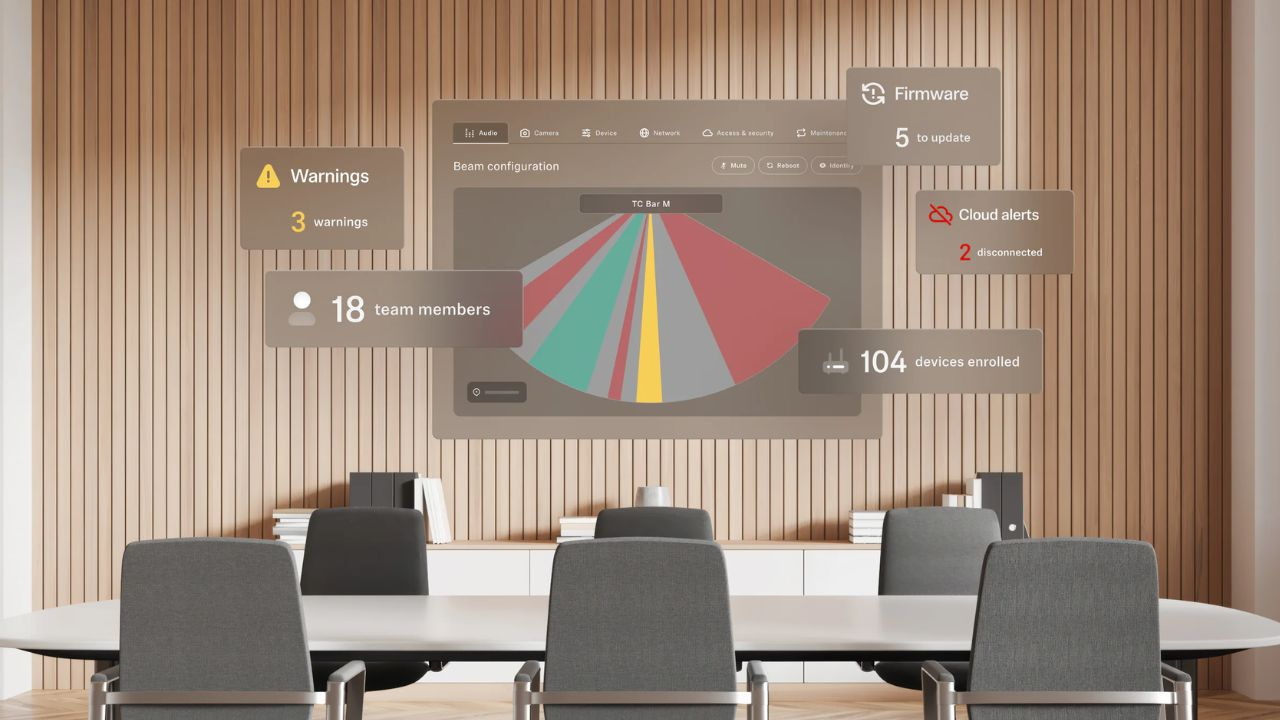




Recently, manufacturers such as Sennheiser have launched cloud-based platforms focused on making centralized AV management easier. These developments reflect market trends that can be translated into operational best practices for integrators, IT managers, and project managers.
Here are seven key recommendations for smarter and more reliable audiovisual management.
1. Centralize Monitoring and Control
Cloud-based platforms make it possible to see the status of multiple AV devices (microphones, mixing, distribution, etc.,) all in one place. This enables:
- Remote diagnostics.
- Automatic alerts.
- Failure prevention before issues impact the user.
“This approach reduces manual interventions and improves system availability,” said Hernán Domínguez, Sales Manager at Sennheiser for Latin America.
2. Prioritize Security from the Design Stage
In enterprise solutions, security is no longer limited to the data network. It also affects AV systems. Centralized management through secure platforms enables:
- User authentication.
- Role-based access control.
- Remote updates with verification.
This protects both device integrity and the privacy of transmitted events.
3. Take Advantage of IP Connectivity
More and more AV devices are becoming “network devices.” This creates an opportunity to:
- Integrate audio, video, and control over the same infrastructure.
- Reduce physical points of failure.
- Enable scalability without unnecessary rewiring.
“Integrators who adopt AV over IP gain flexibility when designing modular systems,” Hernán noted.
4. Use Data to make Operational Decisions
Modern management platforms offer dashboards and key metrics such as room usage, hardware alerts, signal quality, and more.
This makes it possible to:
- Identify usage trends.
- Plan preventive maintenance.
- Justify investments based on real data.
Without data, decisions are based on perceptions. But with data, they become strategic.
5. Make Updates and Scalability Easier
A good platform:
- Allows equipment firmware to be updated simultaneously.
- Centralizes bulk configuration changes.
- Manages devices without requiring physical intervention.
This is especially useful in large or distributed installations.
6. Simplify Operation for End Users
Not everyone who uses an AV system is a technical user. Intuitive interfaces make it possible to:
- Adjust volume or switch sources without specialized support.
- Define presets for different scenarios, such as presentations, conferences, or events.
- Train internal teams without a steep learning curve.
Smart management considers the user, not just the equipment.
7. Integrate Platforms and Thinking about the Complete Ecosystem
AV management should not be isolated. Ideally, it should integrate with:
- Meeting systems, such as Teams or Zoom.
- Digital signage platforms.
- Room control systems, including sensors, calendars, and booking tools.
This transforms the audiovisual room into a truly connected and efficient space.
Why do these Practices Matter Today?
The adoption of cloud-based AV management platforms is a response to the growing complexity of modern AV systems. When an organization can view, control, maintain, and scale its infrastructure from a secure, centralized dashboard, downtime is reduced, administration is simplified, and collaboration between AV and IT teams becomes easier.
One concrete example is Sennheiser’s launch of DeviceHub, a secure cloud-based platform designed to simplify the monitoring, management, and remote updating of AV devices.
Its value proposition points precisely to what the market is demanding: centralized control, greater visibility into equipment status, efficient updates, and a smoother experience for both integrators and internal IT and AV teams.
Today, with hybrid rooms, distributed offices, and teams working from different locations, managing AV devices can no longer depend on manual checks or constant on-site support. Platforms such as DeviceHub respond to this reality with tools designed for remote operation and greater visibility.
Connect with the Sennheiser team and others during InfoComm América Latina 2026. Sign up here and receive all our updates!
A University of Central Florida double-alum with a Master’s in Digital Media, I'm a content creator who loves bringing people together over shared interests. As AVIXA's Coordinator of Digital Content, I produce articles on a myriad of technology topics. I've also worked on virtual reality projects, transforming Romanian folk tales into VR narratives.