
10 Ways RTM Wearable Integration Enhances Patient Monitoring and Engagement
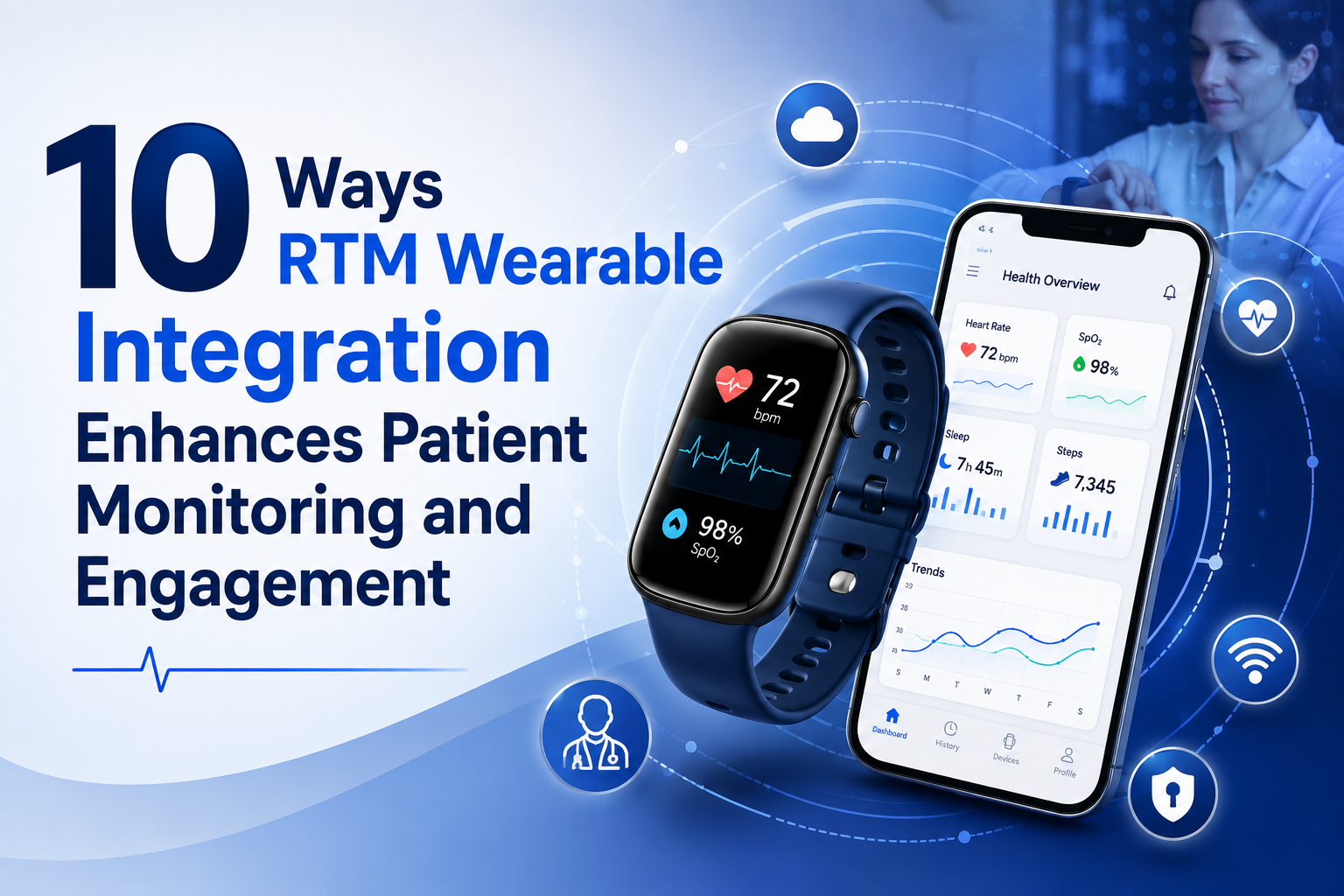
Remote Therapeutic Monitoring (RTM) is becoming an increasingly important part of modern healthcare. By allowing providers to track treatment adherence, therapy progress, mobility, respiratory health, and other non-physiological patient data, RTM helps bridge the gap between in-person visits and ongoing care.
At the same time, wearable devices such as smartwatches, fitness trackers, and connected health devices are generating valuable patient data that can improve clinical decision-making and patient engagement. When these devices are connected through RTM wearable integration, healthcare organizations gain better visibility into patient progress while reducing the administrative burden of manual data collection.
As healthcare providers continue to expand remote care programs, wearable integration is helping transform how patient monitoring is delivered. Here are ten ways RTM wearable integration enhances patient monitoring and engagement.
1. Improves Real-Time Visibility into Patient Progress
One of the biggest advantages of RTM wearable integration is access to continuous patient data.
Instead of relying solely on information collected during office visits, providers can monitor patient activity, therapy participation, mobility levels, and treatment adherence between appointments. This ongoing visibility helps care teams make more informed decisions and identify potential issues earlier.
2. Encourages Better Treatment Adherence
Patient adherence is critical to successful treatment outcomes.
Wearable devices can help track whether patients are following prescribed therapy plans, completing exercises, or participating in rehabilitation programs. This visibility allows providers to identify patients who may be struggling with adherence and intervene before treatment progress is affected.
Improved accountability often leads to better patient participation and stronger outcomes.
3. Enhances Patient Engagement
Patients who actively use wearable devices are often more engaged in their healthcare journey.
Wearables provide individuals with greater awareness of their progress and encourage active participation in treatment plans. By integrating this data into RTM programs, healthcare providers can create more interactive and patient-centered care experiences.
Engaged patients are more likely to follow recommendations and remain committed to their care plans.
4. Supports Personalized Care Plans
Every patient responds differently to treatment.
RTM wearable integration provides healthcare teams with ongoing insights that can be used to personalize treatment strategies based on real-world patient performance. Instead of relying only on periodic assessments, providers can adjust care plans using current patient-generated data.
This personalized approach can improve both patient satisfaction and clinical outcomes.
5. Reduces Administrative Burden
Manual data collection can consume valuable staff time.
Wearable integrations automate much of the monitoring process by collecting and transmitting information directly to healthcare systems. This reduces the need for phone calls, paper logs, and manual documentation while helping staff focus on patient care rather than administrative tasks.
Automation also improves data consistency and accuracy.
6. Improves Early Intervention Opportunities
Continuous monitoring makes it easier to identify changes in patient behavior or treatment progress.
When providers can detect warning signs earlier, they can intervene before minor issues become more serious health concerns. Early intervention often leads to better outcomes, reduced complications, and fewer emergency visits.
RTM wearable integration supports a more proactive approach to patient care.
7. Strengthens Remote Therapeutic Monitoring Programs
Successful RTM programs depend on reliable patient data.
Wearable devices provide a convenient and consistent method for collecting treatment-related information. By integrating these devices into monitoring workflows, healthcare organizations can build stronger RTM programs that deliver more meaningful insights while improving patient participation.
The result is a more scalable and efficient remote care model.
8. Enhances Communication Between Patients and Providers
Wearable-generated data creates new opportunities for meaningful patient-provider interactions.
Providers can use monitoring insights to discuss treatment progress, address concerns, and offer personalized guidance during follow-up appointments. These conversations become more productive because they are supported by objective patient data rather than relying solely on patient recollection.
Better communication often leads to stronger patient relationships and improved trust.
9. Provides Valuable Data for Clinical Decision-Making
Healthcare providers need accurate information to make informed treatment decisions.
RTM wearable integration gives clinicians access to ongoing data that can reveal patterns, trends, and changes over time. This information helps providers evaluate treatment effectiveness and determine whether modifications are necessary.
Data-driven decision-making contributes to more effective care delivery and improved patient outcomes.
10. Supports Scalable Remote Care Initiatives
As healthcare organizations expand remote monitoring programs, scalability becomes increasingly important.
Wearable integration allows providers to monitor larger patient populations without significantly increasing administrative workloads. Automated data collection and centralized monitoring capabilities help organizations manage remote care programs more efficiently while maintaining high-quality patient experiences.
This scalability is especially valuable for growing practices, multi-location healthcare organizations, and specialty care providers.
The Role of ClinIQ Healthcare in Connected Care
As RTM programs continue to evolve, healthcare organizations need technology that supports patient engagement, workflow automation, communication, and operational visibility.
ClinIQ Healthcare helps providers streamline healthcare operations through a connected platform that supports patient communication, scheduling, workflow management, and care coordination. By improving visibility across the patient journey, healthcare organizations can build more effective monitoring programs and enhance patient experiences.
When combined with wearable integration strategies, ClinIQ helps organizations create a more connected and efficient approach to healthcare delivery.
Conclusion
RTM wearable integration is transforming how healthcare providers monitor patients and deliver care outside traditional clinical settings. By connecting wearable devices with healthcare workflows, organizations can improve patient engagement, enhance treatment adherence, reduce administrative burden, and gain valuable insights into patient progress.
From personalized care plans and real-time monitoring to scalable remote care programs and improved communication, wearable integration provides significant benefits for both patients and providers.
As remote therapeutic monitoring continues to expand, healthcare organizations that invest in connected care technologies and wearable integration will be better positioned to improve outcomes, strengthen patient relationships, and deliver more efficient healthcare experiences.

Please sign in
If you are a registered user on AVIXA Xchange, please sign in